
Guide to essential oils

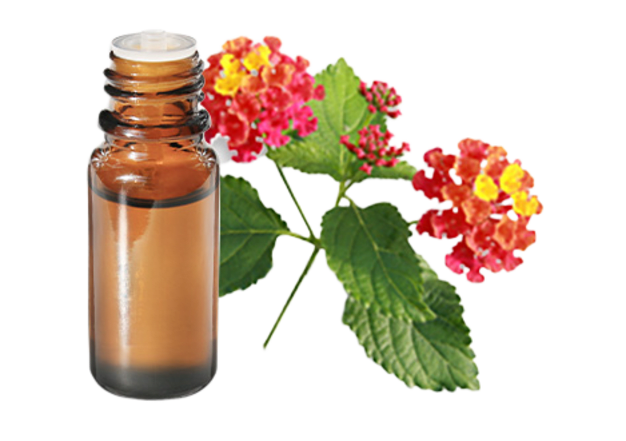
Essential oil of Lantana

Lantanta essential oil is known for its calming properties, helping to relieve everyday stress and promote sleep. Lantana essential oil is also renowned for its soothing properties and is traditionally used for joint health.

How to use

  • Skin application and massage

    Skin application and massage

    Appropriate

  • Cosmetic active ingredient

    Cosmetic active ingredient

  • Diffusion

    Diffusion

  • Aromatherapy bath

    Aromatherapy bath

Features

Properties and uses

Precautions

Find out more

Features

Production process

Complete steam distillation

Part of the plant used

Aerial parts

Botanical name

Lantana camara

Warning

The properties, information and methods of use below are quotes from reference books or websites on aromatherapy, hydrolatherapy and phytotherapy. This general information is provided for informative purposes only and in no way constitutes medical guidance. Under no circumstances can this information be used as a substitute for a medical diagnosis, consultation or follow-up, nor can it incur our liability. We recommend that you consult the guide to essential oils before using them, so that you are aware of any precautions that need to be taken. If in doubt, consult a doctor before using essential oils.

Properties and uses

Health

Find out more

Properties

Lantana essential oil is recognised for its health benefits:

  • Helps to clear the respiratory tract

  • Traditionally known as an antiviral

  • Menstrual flow stimulant

  • Reputed to promote healing

Uses

It is traditionally used to improve the following conditions:

  • Chronic bronchitis

  • Asthma

  • Reproductive cycle disorders

In practice

Respiratory relaxant: blend into your oil blend. Massage or rub your blend into the chest and upper back.

Precautions

  • Essential oil prohibited for babies, children, pregnant or breastfeeding women, and individuals with epilepsy or sensitivity (contains ketones, compounds that pose neurotoxic and abortifacient risks).

  • Use with caution, in low doses, and for a limited duration.

  • For external use only.

  • Dermatotoxic; must be used in a highly diluted form in your oil-based skincare formulations.

  • Keep out of reach of children.

  • Avoid contact with eyes.

  • Some natural compounds contained in this essential oil may present an allergy risk for certain sensitive individuals when the essential oil is incorporated into a cosmetic formulation (according to the 7th Amendment of the European Directive on cosmetic products (2003/15/EC)): linalool, limonene.

  • As a general rule, always perform a patch test of your mixture in the crook of your elbow at least 48 hours before using it.

  • Dangerous. Follow safety precautions.

  • Flammable liquid and vapours. May cause skin allergy. Can be fatal if ingested and enters the respiratory tract (if the product is accidentally swallowed, do not induce vomiting). Toxic to aquatic life, with long-lasting effects (in case of large spills into waterways).

Find out more

Native to the Antilles, Lantana is a shrub that has spread to many regions around the world, including India, Australia, and Africa. Its propagation occurs through fruits eaten by birds, which disperse the seeds wherever they go! In the Pacific islands of the Indian Ocean and in India, it can form impenetrable thickets, choking out native vegetation.

The fruit of Lantana, a black drupe, contains triterpenic acids that are toxic to humans and livestock.

Equivalents

Essential Oils

1 ml = approximately 35 drops (with our Aroma-Zone dropper caps)

Carrier oils

1 pump (Aroma-Zone aluminium pump) = approx. 0.15 ml

Mass / Volume conversion (for a liquid)

Mass (g) = Density x Volume (ml) at 20°C

Further information

1 full teaspoon = between 3 and 4.5 ml

1 full tablespoon = between 7.5 and 10 ml


However, these spoon ratios depend on a number of factors (e.g. viscosity of the liquid, temperature, depth and size of the spoon, rheological behaviour of the liquid), and we strongly advise you to use precise measuring equipment, such as graduated test tubes, graduated pipettes, and precision scales.

Bibliography

1

L'aromathérapie exactement

P. Franchomme, R. Jollois and D. Pénoël

2

'Le formulaire d'aromathérapie pratique pour le prescripteur et le conseil pharmaceutique'

Dominique Baudoux