
Guide to essential oils

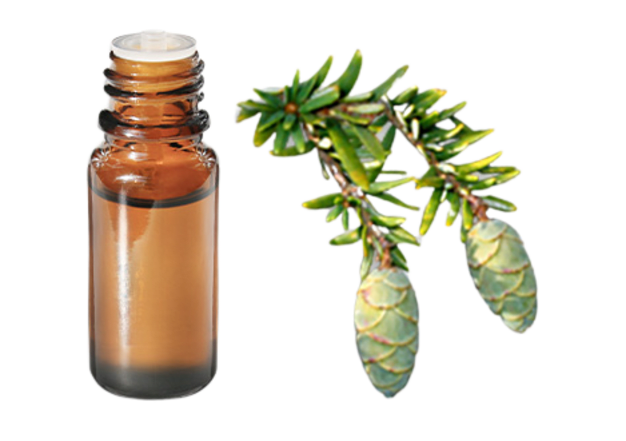
Essential oil of Hemlock

Balancing, hemlock essential oil makes it easier to let go and dispel anxieties. It is often used in olfaction to help people through all kinds of transitions, or at the end of their lives. In psycho-energetics, hemlock essential oil is also known to encourage inspiration and creativity.

How to use

  • Skin application and massage

    Skin application and massage

    Suitable

  • Cosmetic active ingredient

    Cosmetic active ingredient

    Possible but not recommended

  • Aromatherapy bath

    Aromatherapy bath

    Appropriate

  • Diffusion

    Diffusion

    Suitable

  • Food grade

    Food grade

    Not recommended

Features

Properties

Precautions

Find out more

Features

Production process

Complete steam distillation

Part of the plant used

Twigs and needles

Botanical name

Tsuga canadensis

Warning

The properties, information and methods of use below are quotes from reference books or websites on aromatherapy, hydrolatherapy and phytotherapy. This general information is provided for informative purposes only and in no way constitutes medical guidance. Under no circumstances can this information be used as a substitute for a medical diagnosis, consultation or follow-up, nor can it incur our liability. We recommend that you consult the guide to essential oils before using them, so that you are aware of any precautions that need to be taken. If in doubt, consult a doctor before using essential oils.

Bibliographic references

  • Zahalka.JP (2014), Complete Dictionary of Aromatherapy, Dauphin Publishing

  • Couic Marinier.F (2020) The Living Earth Guide to Essential Oils, Terre Vivante Publishing

Properties

Hemlock essential oil is traditionally used for: Depression (nervous), low mood

Health

Wellness

Find out more

Properties

In health, hemlock essential oil is recognized for these properties:

  • Mucolytic

  • Anti-infectious

  • Immunostimulant

Uses

It is traditionally used to improve the following:

  • 'Flu, colds

  • Varicose veins, rosacea, haemorrhoids

In practice

Winter prevention: via air diffusion.

Precautions

  • Not recommended for pregnant or breastfeeding women, or children under 6 years of age.

  • Avoid contact with the eyes and mucous membranes.

  • Keep out of reach of children.

  • Always use diluted.

  • Certain natural compounds contained in this essential oil may present a risk of allergy in some sensitive individuals when the essential oil is incorporated into a cosmetic composition.

  • Avoid old or oxidized essential oils. Store away from light and air.

  • As a general rule, always test your preparation on the inside of your elbow at least 48 hours before use.

  • For use as a cosmetic ingredient, please refer to the specific precautions.

Find out more

The Canadian Hemlock is a slow-growing tree that has a long life. In North America, the natives used the leafy twigs to make tea and take steam baths.

It was also used for its medicinal properties to combat fevers, colds and digestive problems, and in poultices to slow down bleeding.

Its essential oil, with its rich composition of immunostimulant and nerve-balancing active ingredients, is a precious ally for people under stress, and more particularly for those at the end of life, providing comfort.

ok

L
Lionel

5/5 = perfect

M
M

Excellent oil for stress and letting go

M
Mohamed

This oil has been a great approach and relieves my anxiety. A very good product.

G
Gilles

A very good oil, especially for sleeping, a real pleasure.

C
C

Equivalents

Essential Oils

1 ml = approximately 35 drops (with our Aroma-Zone dropper caps)

Carrier Oils

1 pump (Aroma-Zone aluminium pump) = approx. 0.15 ml

Mass / Volume conversion (for a liquid)

Mass (g) = Density x Volume (ml) at 20°C

Further information

1 full teaspoon = between 3 and 4.5 ml

1 full tablespoon = between 7.5 and 10 ml


However, these spoon ratios depend on a number of factors (e.g. viscosity of the liquid, temperature, depth and size of the spoon, rheological behaviour of the liquid), and we strongly advise you to use precise measuring equipment, such as graduated test tubes, graduated pipettes, and precision scales.