
Guide to essential oils

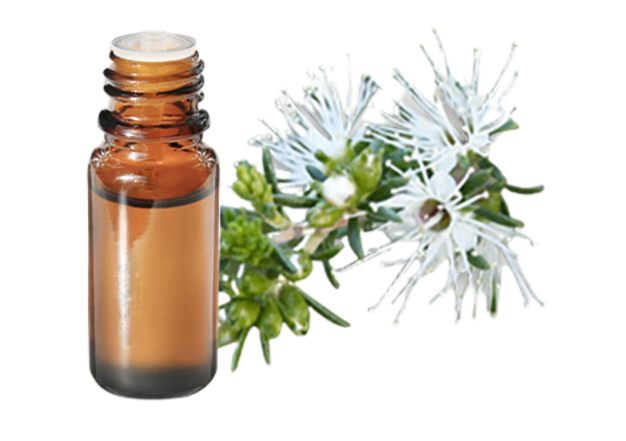
Essential oil of Kunzea

An essential oil for the ENT area, Kunzea essential oil is known for clearing up congestion in the respiratory system. It is particularly famous in energetic aromatherapy, where it embodies the masculine principle alongside Fragonia essential oil, which is associated with the feminine principle. Together, these essential oils represent the "aromatic Tao", the Yin and Yang of Chinese cosmology: separate, opposing entities that complement each other to form a whole. In energetic olfactotherapy, it is used in olfactory synergies to provide strength and courage, and helps to accept physical and mental pain.

How to use

  • Skin application and massage

    Skin application and massage

    Suitable

  • Cosmetic active ingredient

    Cosmetic active ingredient

    Possible but not recommended

  • Aromatherapy bath

    Aromatherapy bath

    Suitable

  • Diffusion

    Diffusion

    Suitable

Features

Properties and uses

Precautions

Find out more

Features

Production process

Complete steam distillation

Part of the plant used

Leaves, twigs and branches

Botanical name

Kunzea ambigua

Warning

The properties, information and methods of use below are quotes from reference books or websites on aromatherapy, hydrolatherapy and phytotherapy. This general information is provided for informative purposes only and in no way constitutes medical guidance. Under no circumstances can this information be used as a substitute for a medical diagnosis, consultation or follow-up, nor can it incur our liability. We recommend that you consult the guide to essential oils before using them, so that you are aware of any precautions that need to be taken. If in doubt, consult a doctor before using essential oils.

Properties and uses

Health

Wellness

Find out more, etc.

Properties

For health, Kunzea essential oil is recognised for the following properties:

  • Its composition, particularly in alpha-pinene and 1,8-cineole, gives it antiviral properties, especially against respiratory infections and ENT viruses.

  • Rich in alpha-pinene and 1,8-cineole, which are known for their decongestant

    and expectorant properties (helps to clear bronchial secretions), Kunzea essential oil helps to clear and purify the respiratory tract.

  • It purifies the air. In Australia, it is often used in retirement homes.

  • Anti-inflammatory, thanks to a very rich sesquiterpene complex (globulol, viridiflorol, spathulenol, ledol, bicyclogermacrene).

  • Antibacterial

  • Active against fungal infections

  • It has a higher concentration of alpha-pinene than 1.8-cineole. It is a very mild oil, non-irritating and well tolerated by even the most sensitive respiratory systems.

Uses

It is traditionally used to improve the following:

  • Viral infections: flu, colds, winter viruses, shingles, etc.

  • Bronchial congestion and breathing difficulties: sinusitis, bronchitis, etc.

  • Chronic inflammatory conditions

  • Skin or nail infections: fungal infections, eczema, insect bites, etc.

Synergies

  • Respiratory health: Iary, Pine, Saro, Ravintsara, Niaouli essential oils.

  • To soothe the skin: Roman chamomile, German Chamomile and yarrow essential oils.

In practice

To soothe and purify the skin: Mix into your oil blend. Apply your mixture locally using a roll-on.

Air purification, respiratory comfort: Air diffusion.

Precautions

  • Not recommended during the first 3 months of pregnancy.

  • This essential oil is not known to be used orally, preferring the cutaneous or olfactory route, and diffusion.

  • Keep out of reach of children.

  • Avoid contact with the eyes.

  • Certain natural compounds contained in this essential oil may present a risk of allergy for some sensitive individuals when the essential oil is incorporated into a cosmetic composition (in accordance with the 7th Amendment to the European Cosmetics Directive (2003/15/EC)): limonene and linalool.

  • As a general rule, always carry out a test application of your mixture in the crease of the elbow at least 48 hours before using it.

  • Dangerous. Observe safety precautions.

  • Flammable liquid and vapour. May cause skin allergies. May be fatal if swallowed or if it enters the respiratory tract (if accidentally swallowed, do not induce vomiting). Very toxic to aquatic organisms, causing long-term adverse effects (in the event of massive spillage of the product into a watercourse).

Find out more

Kunzea is a new essential oil obtained by distillation of the leafy branches of Kunzea ambigua, a shrub growing wild in north-east Tasmania (Australia). Rich in pinenes and sesquiterpenols, Kunzea essential oil is a very mild essential oil and is traditionally used to treat respiratory viral infections.

Its total concentration of sesquiterpenes also gives it a powerful anti-inflammatory action.

Equivalents

Essential Oils

1 ml = approximately 35 drops (with our Aroma-Zone dropper caps)

Carrier oils

1 pump (Aroma-Zone aluminium pump) = approx. 0.15 ml

Mass / Volume conversion (for a liquid)

Mass (g) = Density x Volume (ml) at 20°C

Further information

1 full teaspoon = between 3 and 4.5 ml

1 full tablespoon = between 7.5 and 10 ml


However, these spoon ratios depend on a number of factors (e.g. viscosity of the liquid, temperature, depth and size of the spoon, rheological behaviour of the liquid), and we strongly advise you to use precise measuring equipment, such as graduated test tubes, graduated pipettes, and precision scales.

Bibliography

1

"L'aromathérapie quantique pour se réaliser avec les huiles essentielles"

D. Penoël

2

Essential News

Oct. 2006 (Vol 19)