
Guide to essential oils

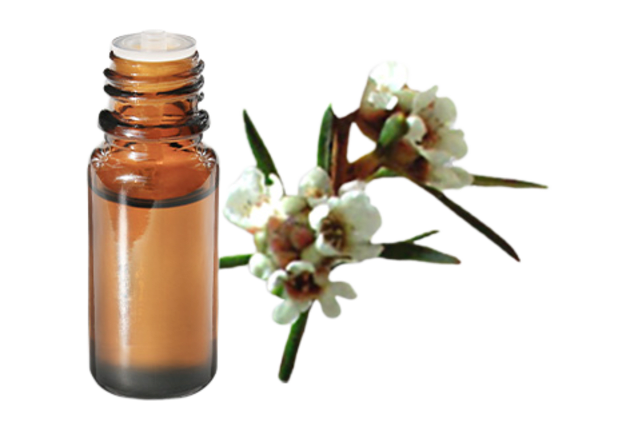
Essential oil of Fragonia

Purifying, Fragonia essential oil is known for purifying blemished and problem skin. It is particularly famous in energetic aromatherapy, where it embodies the feminine principle par excellence, alongside Kunzea essential oil, which is associated with the masculine principle. Together, these essential oils represent the 'aromatic Tao', the Yin and Yang of Chinese cosmology, distinct and opposing entities that complement each other to form a whole. In energetic olfactotherapy, it accompanies people in their quest for reconciliation, with themselves and with others, and for inner peace.

How to use

  • Skin application and massage

    Skin application and massage

    Suitable

  • Cosmetic active ingredient

    Cosmetic active ingredient

    Appropriate

  • Aromatherapy bath

    Aromatherapy bath

    Possible but not recommended

  • Diffusion

    Diffusion

    Suitable

Features

Properties and uses

Precautions

Find out more

Features

Production process

Complete steam distillation

Part of the plant used

Leaves, twigs and branches

Botanical name

Agonis fragrans

Warning

The properties, information and methods of use below are quotes from reference books or websites on aromatherapy, hydrolatherapy and phytotherapy. This general information is provided for informative purposes only and in no way constitutes medical guidance. Under no circumstances can this information be used as a substitute for a medical diagnosis, consultation or follow-up, nor can it incur our liability. We recommend that you consult the guide to essential oils before using them, so that you are aware of any precautions that need to be taken. If in doubt, consult a doctor before using essential oils.

Properties and uses

Fragonia essential oil is traditionally used for : Acne, Pimples

Health

Beauty

Wellness

Find out more, etc.

Properties

For health, Fragonia essential oil is recognised for the following properties:

  • Anti-microbial, Fragonia essential oil has similar in vitro activity to Tea tree, Lemongrass and Oregano essential oils on bacterial strains of Acinetobacter baumannii, Escherichia coli, Pseudomonas aeruginosa, Serratia marcescens, Staphylococcus aureus and Staphylococcus epidermidis.

  • Active against the fungus Candida albicans.

  • Its concentration of 1-8 cineole gives it interesting properties for the respiratory system: expectorant, decongestant.

  • Anti-inflammatory, it inhibits the secretion of molecules responsible for inflammation: calms oedema and redness.

  • Harmonises and balances the immune system.

  • An analgesic, it relieves external pain.

  • Slight anti-viral action

  • Its very flowery fragrance makes it very pleasant to use and easier than Tea tree essential oil.

Uses

Fragonia essential oil is an excellent antimicrobial alternative to Tea tree essential oil, particularly for people who don't necessarily like the smell of Tea tree essential oil.

It is traditionally used to improve the following situations:

  • Skin infections:

    • Impetigo

    • Mycoses

    • Cold sores

  • Muscle or joint pain:

    • Cramps

    • Muscle lengthening

    • Arthritis, osteoarthritis

    • Rheumatism

  • Female problems:

    • Sexual difficulties, lack of desire, etc.

    • Painful, irregular or absent periods

    • Difficulties conceiving

    • Hormonal disorders

    • Migraines accompanying menstruation

    • Hot flushes

Synergies

  • Purifying action: broad-spectrum essential oils (Oregano, Savory, Thyme, Clove essential oils).

  • Joint and muscle comfort: Gaultheria, Black Birch and Helichrysum Italicum essential oils, Arnica and St John's Wort oily macerates.

  • Helps the immune system to function properly: essential oils of Black Spruce, Ravintsara, Gum Rockrose, Holy Basil.

In practice

Respiratory comfort: blend into your oil blend. Massage or rub your mixture into the chest and upper back.

Precautions

  • Not recommended for use during the first three months of pregnancy.

  • This essential oil is not known to be used orally, preferring the cutaneous or olfactory route, and diffusion.

  • Keep out of reach of children.

  • Avoid contact with eyes.

  • Certain natural compounds contained in this essential oil may present a risk of allergy in some sensitive individuals when the essential oil is incorporated into a cosmetic composition (in accordance with the 7th Amendment of the European Cosmetics Directive (2003/15/EC)): linalool and, to a lesser extent, limonene, geraniol, citronellol.

  • As a general rule, always carry out a test application of your mixture, in the crease of the elbow, at least 48 hours before using it.

  • Dangerous. Observe precautions for use.

  • Harmful if swallowed. May cause skin allergy. Causes skin irritation (risk associated with the product in its pure form).

Find out more

Fragonia is a plant from the Australian continent. A member of the Myrtaceae family, its leafy branches are distilled to produce a very precious essential oil.

In terms of its composition, this essential oil is rich in 1.8-cineole, αlpha-pinene and linalool. As a result of this composition, it is just as well-known as Tea Tree essential oil for its help against bacterial infections. But it has the advantage over its cousin of having a much finer, flowery and pleasant scent.

Equivalents

Essential Oils

1 ml = approximately 35 drops (with our Aroma-Zone dropper caps)

Carrier oils

1 pump (Aroma-Zone aluminium pump) = approx. 0.15 ml

Mass / Volume conversion (for a liquid)

Mass (g) = Density x Volume (ml) at 20°C

Further information

1 full teaspoon = between 3 and 4.5 ml

1 full tablespoon = between 7.5 and 10 ml


However, these spoon ratios depend on a number of factors (e.g. viscosity of the liquid, temperature, depth and size of the spoon, rheological behaviour of the liquid), and we strongly advise you to use precise measuring equipment, such as graduated test tubes, graduated pipettes, and precision scales.

Bibliography

1

"L'aromathérapie quantique pour se réaliser avec les huiles essentielles"

D. Penoël

2

Essential News,

Jan. 2008 (Vol 20)

3

C. J. Robinson.A new Essential oil-Agonis fragrans-xhemotypeSeelction and Evaluation.

A report for the rural industries research and Development Corporation. Aug. 2006