
Guide to essential oils

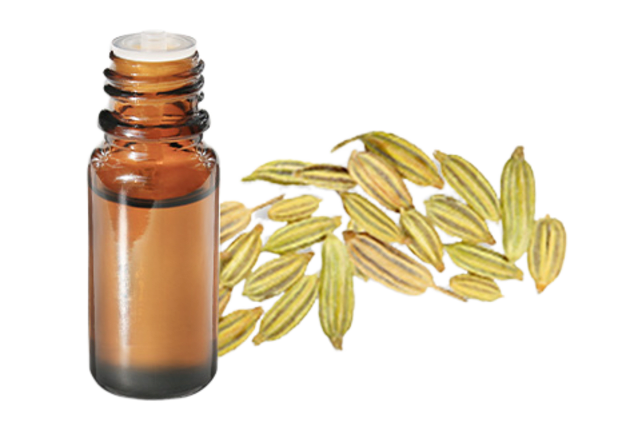
Essential oil of Anise

Anise essential oil is traditionally used for its benefits for the digestive system. Soothing, Anise essential oil is renowned for its contribution to feminine comfort. Calming, Anise essential oil is appreciated for its powerful aniseed scent.

How to use

  • Skin application and massage

    Skin application and massage

    Suitable

  • Cosmetic active ingredient

    Cosmetic active ingredient

    Possible but not recommended

  • Food grade

    Food grade

    Suitable

  • Diffusion

    Diffusion

    Not recommended

  • Aromatherapy bath

    Aromatherapy bath

    Possible but not recommended

Features

Properties

Precautions

Find out more

Features

Production process

Complete steam distillation

Part of the plant used

Seeds

Botanical name

Pimpinella anisum

Warning

The properties, information and methods of use below are quotes from reference books or websites on aromatherapy, hydrolatherapy and phytotherapy. This general information is provided for informative purposes only and in no way constitutes medical guidance. Under no circumstances can this information be used as a substitute for a medical diagnosis, consultation or follow-up, nor can it incur our liability. We recommend that you consult the guide to essential oils before using them, so that you are aware of any precautions that need to be taken. If in doubt, consult a doctor before using essential oils.

Properties

Anise essential oil is traditionally used for: Aerophagia, bloating, flatulence, constipation, poor digestion, menopause, menstruation, etc.

Health

Kitchen

Find out more

Properties

Aniseed essential oil is renowned for the following health properties:

  • Mimics oestrogen, emmenagogue (promotes menstruation), galactogenic (activates milk production)

  • Digestive and neuromuscular antispasmodic

  • Aperitif, helps digestion and elimination of gas

  • Stomachic, carminative (combats intestinal fermentation),

    stimulates intestinal peristalsis

  • General digestive and respiratory stimulant (in very low doses)

Uses

It is traditionally used to improve the following conditions:

  • Digestive problems, dyspepsia, vomiting, aerophagia, spastic colitis, gastralgia, indigestion, constipation, flatulence, bloating, etc.

  • Irregular periods, menstrual pain, menopause, perimenopause

  • Fatigue, back pain, spasmophilia, palpitations

Synergies

Digestive comfort: Coriander and Fennel essential oils

In practice

Digestive comfort: Mix with your oil blend. Massage or rub the mixture into the abdomen.

Precautions

  • Do not use on children or during pregnancy.

  • To be used in small quantities, follow the recommendations carefully. At high doses, it is euphoric and may present neurotoxic risks.

  • Do not use in cases of mastosis or a history of hormone-dependent cancer (breast, ovary, endometrium) , due to its "oestrogen-like" effect.

  • Certain natural compounds contained in this essential oil may present a risk of allergy for certain sensitive individuals when the essential oil is incorporated into a cosmetic composition (in accordance with the 7th Amendment of the European Directive on cosmetic products (2003/15/EC)): limonene.

  • As a general rule, always carry out a test application of your mixture, in the crease of the elbow, at least 48 hours before using it.

Find out more

Green anise has been cultivated in Egypt for several thousand years. Its seeds were used as a diuretic, to treat digestive problems and toothache. Pliny also attributed to it "the power of sleep and youthfulness of the face", and its crushed seeds are still used today to make beauty masks.

Green anise is also used to make Anis de Flavigny in Burgundy. Each sweet consists of a green anise seed coated in a sugar syrup flavoured with anise, violet, orange blossom, rose, mint and liquorice.

It was Benedictine monks who began making this famous sweet when the Abbey of Flavigny was founded in 719, using aniseed brought back by a Roman traveller at the beginning of our era.

In the 17th century, a poem by René Moreau, a professor at the Faculty of Medicine in Paris, summed up the virtues of aniseed:

"The sovereign virtue of anise

Relieves loose limbs

It clears away accumulated ailments

By the effect of its seed alone

Sick kidneys and bladder

Ratella and insipid mouth

Liver full of mutinous winds

Womb and intestines

And other relevant parts

Are relieved by it."

Equivalents

Essential Oils

1 ml = approximately 35 drops (with our Aroma-Zone dropper caps)

Carrier Oils

1 pump (Aroma-Zone aluminium pump) = approx. 0.15 ml

Mass / Volume conversion (for a liquid)

Mass (g) = Density x Volume (ml) at 20°C

Further information

1 full teaspoon = between 3 and 4.5 ml

1 full tablespoon = between 7.5 and 10 ml


However, these spoon ratios depend on a number of factors (e.g. viscosity of the liquid, temperature, depth and size of the spoon, rheological behaviour of the liquid), and we strongly advise you to use precise measuring equipment, such as graduated test tubes, graduated pipettes, and precision scales.

Aromatherapy recipes from the bibliography

EO = Essential Oil VO = Carrier Oil or Macerated Oil

Coq au vin with spices (A. Pataud)

Kitchen

Serves 4 - Preparation time: 50 minutes - Cooking time: 50 minutes

  • 1 rooster weighing 1.5 kg

  • 150 g button mushrooms

  • 2 carrots

  • 1 clove of garlic

  • 8 small onions

  • a few sprigs of flat-leaf parsley

  • 1 bay leaf

  • 1 sprig thyme

  • 3 tbsp peanut oil

  • 1 egg yolk

  • 1 bottle of red wine

  • 2 tbsp cognac

  • fine salt

  • white pepper

  • 1 drop of Anise essential oil

  • 1 drop of Cinnamon bark essential oil

  • 1 drop of Clove essential oil

Method: Cut the rooster into 8 pieces and rub them with half a teaspoon of salt and 1 pinch of pepper. Peel and chop the garlic and onions. Peel and dice the carrots. Chop the parsley. Brown the meat in the peanut oil in a casserole dish. Add the garlic, onions and carrots. Leave to cook for a few minutes. Season with thyme and bay leaf. Add the red wine. Leave to simmer for 40 minutes. Clean the mushrooms and slice finely. Remove the pieces of meat from the pan and keep them warm. Strain the cooking juices and add the mushrooms. Simmer for 10 minutes. Add the essential oils and mix well. Bind the sauce with an egg yolk. Season with salt. Sprinkle with the cognac. Mix well. Coat the pieces of meat with the sauce. Sprinkle with chopped parsley. Then serve.

Tarte Tatin of fennel with orange and aniseed (A. Pataud)

Kitchen

Serves 6 - Preparation: 20 minutes - Cooking time: 50 minutes

  • 250 ml orange juice

  • 4 fresh fennel bulbs

  • 2 tbsp olive oil

  • 2 tbsp acacia honey

  • salt and pepper

  • 2 drops of aniseed essential oil (Pimpinella anisum)

For the shortcrust pastry:

  • 300 g flour

  • 50 ml rapeseed oil

  • 50 ml olive oil

  • 100 ml water

  • Salt

Method: Mix the flour, salt and oils to form a sand-like texture. Add the water and mix until a ball forms. Leave to rest in the fridge for one hour. Flour a work surface and roll out the dough. Clean the fennel bulbs and cut them into 1.5 cm thick slices lengthways. Place a non-stick frying pan over medium heat. Pour in the acacia honey, olive oil and orange juice. Season with salt and pepper and bring to the boil. Arrange the fennel slices (tips towards the centre), turn the heat down to minimum, cover and simmer for around 45 minutes. Check that the fennel cooking juices are syrupy, add the essential oils, salt and pepper and leave to cool completely. Preheat the oven to gas mark 7 (210°). Pour the fennel and its juice into the base of a tart tin. Cover with the shortcrust pastry, tucking the edges inside the tin. Prick the pastry and bake for 10 minutes, then continue baking for a further 15 minutes at gas mark 6 (180°). Turn the tart out onto a plate and serve hot or warm.

Pan-fried vegetables with sun-dried tomatoes, basil and fennel (A. Pataud)

Kitchen

Serves 6 - Preparation: 20 minutes - Cooking time: 10 minutes

  • 3 tbsp olive oil

  • 4 shallots, finely julienned

  • 1 yellow pepper, finely julienned

  • 1 red pepper, finely julienned

  • 1 courgette, julienned

  • 1 stalk celery, julienned

  • 2 cloves garlic, peeled and minced

  • 2 tbsp sundried tomatoes, finely chopped

  • Salt and freshly ground pepper

  • Olive oil

  • 1 drop of aniseed essential oil

  • 1 to 2 drops of Basil essential oil

  • 1 drop of fennel essential oil

Directions: Heat the olive oil in a frying pan over a high heat. Cook the vegetables, except the tomatoes, until al dente (about 10 minutes). Add the essential oils, mixed with a little olive oil, and the dried tomatoes; mix well. Season with salt and pepper.

Citrus gingerbread (A. Pataud)

Kitchen

Serves 8 - Preparation: 20 minutes - Cooking time: 50 minutes.

  • 300 g of acacia honey

  • 250 g of wholemeal flour

  • 50 g of almond powder

  • 100 ml lotion

  • 1 egg

  • 20 g of butter for the tin

  • 1 sachet of baking powder

  • 1 drop of ginger (Zingiber officinalis) essential oil

  • 1 drop of Cinnamon bark (Cinnamomum zeylanicum) essential oil

  • 1 drop of Clove (Syzygium aromaticum) essential oil

  • 1 drop of Anise (Pimpinella anisum) essential oil

  • 1 drop of Lemon (Citrus limomum) essential oil

  • 2 drops of Sweet Orange (Citrus sinensis) essential oil

  • 1 drop of grapefruit (Citrus paradisi) essential oil

Directions: Preheat the oven to 170 °C (gas mark 5–6). Gently heat the lotion and acacia honey, then remove from the heat as soon as it comes to a boil. Mix the flour and baking powder in a bowl. Then add the almond powder. Mix well and make a well. Gradually pour in the lotion and acacia honey mixed with the essential oils, stirring constantly with a spoon. Finish by adding the egg. Grease the tin, pour in the batter and bake for around 50 minutes.

Aniseed oil (A. Pataud)

Kitchen

Method: Mix 2 drops of Anise (Pimpinella anisum) essential oil, 2 drops of Badiane (Illicium verum) essential oil and 6 ml of pure virgin olive oil.

Use: To flavour your savoury dishes or desserts.

Sweet and sour mussels with aniseed and grapefruit (A. Pataud)

Kitchen

Serves 4 - Preparation: 20 minutes - Cooking time: 15 minutes

  • 2 red peppers, seeded and finely chopped

  • 2 cloves of garlic

  • 3 teaspoons oyster sauce

  • 1 tbsp fish sauce

  • 1 kg mussels

  • 4 tbsp chicken stock

  • 1 teaspoon sugar

  • 2 drops of Aniseed essential oil (Pimpinella anisum)

  • 2 drops of Grapefruit (Citrus paradisi) essential oil

  • 1 drop of Lemon (Citrus limomum) essential oil

  • Salt and pepper

  • Olive oil

Method: Lightly crush the peppercorns. Add the peppers and garlic and blend to a thick paste. Heat a wok or frying pan over a medium heat. Heat the oil, add the pepper paste and cook for 3 minutes. Add the oyster sauce and fish sauce. Add the mussels and remove the open shells. Mix everything together. Add the stock and sugar, cover and cook until the mussels have opened. Add the essential oils mixed with a tablespoon of olive oil and continue cooking for a few minutes. Season with salt and pepper, pour the mussels onto a plate and remove any that are still closed. Garnish with coriander leaves.

Aniseed syrup (A. Pataud)

Kitchen

Method: Mix 1 drop of Anise (Pimpinella anisum) essential oil, 1 drop of Badiane (Illicium verum) essential oil and 20 ml of syrup.

Use: A new flavour for your yoghurts or fromage frais.

Bibliography

1

"Huiles essentielles - 2000 ans de découvertes aromathérapeutiques pour une médecine d'avenir"

D. Baudoux

2

"Aromatherapy"

Dr Jean Valnet - Éditions Maloine

3

'L'aromathérapie exactement'

P. Franchomme and Dr D. Pénoël

4

'La bible de l'aromathérapie'

Nerys Purchon

5

'L'ABC des huiles essentielles'

Dr Telphon

6

'Aromatherapy'

Nelly Grosjean

7

'Les huiles essentielles pour votre santé'

G. Roulier

8

'Les cahiers pratiques de l'aromathérapie française - Pédiatrie'

D. Baudoux - Editions Amyris

9

Aroma-News newsletters

NARD Association

10

'Aromatherapy - Healing with essential oils'

D. Baudoux - Editions Amyris

11

"Huiles essentielles chémotypées et leurs synergies"

Dr A. Zhiri and D. Baudoux

12

"La cuisine aux huiles essentielles - Des recettes saines et créatives"

Aymeric Pataud

13