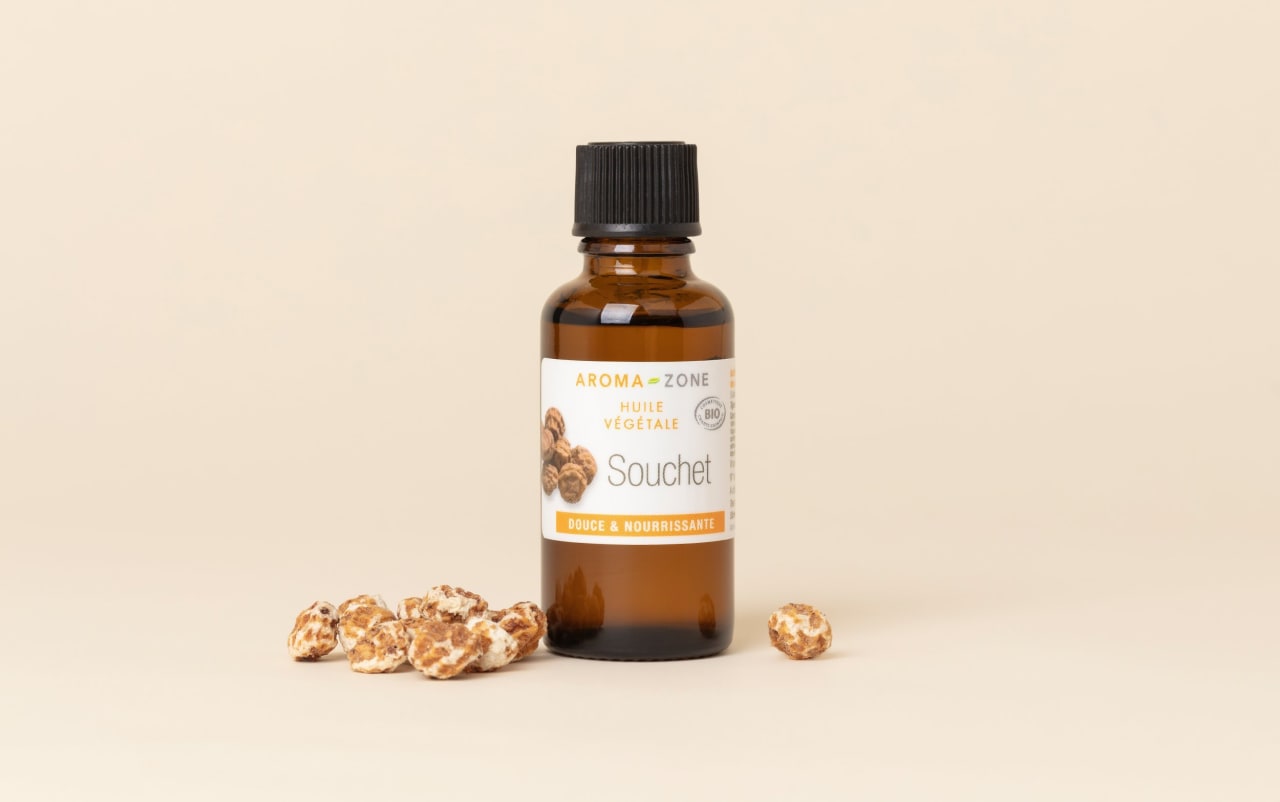
Organic Yellow Nutsedge Oil

  • 100% pure and natural
  • Cold press
  • Ecocert
  • Organic Cosmetic
Incorporated into formulations, organic yellow nutsedge oil helps to maintain skin elasticity and prevent dehydration. It is also known for its hair regrowth-inhibiting properties. Its sweet dried-fruit scent makes it a valued cosmetic ingredient.
£4.00

1 item = 30 ml

Price per L = £133.33

Features

Properties and uses

Traceability and analysis

Storage

Find out more

Features

Our commitments

Culture

Organic, certified by Ecocert Greenlife in accordance with the Ecocert standard available at http://cosmetiques.ecocert.com

Quality

100% pure and natural, virgin, first cold pressed without any chemical treatment, cosmetic and food grade

Production process

First cold pressing

Part of the plant used

Tubercles

Botanical name

Cyperus esculentus

Botanical family

Cyperaceae

Function

Cosmetic ingredients

Oxidative potential

Not very sensitive

Properties and uses

Skin care

Hair care

Properties

As a cosmetic ingredient, organic yellow nutsedge carrier oil is renowned for the following properties:

  • Traditionally used to reduce hair regrowth .

  • Highly nourishing, protects the skin from dehydration.

  • Its antioxidant vitamin E content helps to slow the appearance of signs of skin ageing.

  • Improves skin elasticity , leaving it soft and supple.

Indications

  • Dense hair or hair regrowth

  • Dry and very dry skin

  • Scaly skin

  • Mature skin

Uses

Use as an ingredient in the following skin care blends

  • Nourishing oils and balms

  • Post-depilation or aftershave care

  • Men's skincare

  • Rejuvenating, intensely moisturising lotions and creams

  • Lip products

In practice

Organic nutsedge carrier oil can be used as an ingredient in your cosmetic blends.

Traceability and analysis

Organoleptic properties

  • Appearance: runny oily liquid

  • Colour: golden yellow to amber

  • Odour: light

  • Feel: initially greasy. Penetrates the skin fairly quickly

  • Taste: soft and pleasant, slightly sweet, with notes of hazelnut

Density

0.910 - 0.925

Saponification index

190-194

Storage

Stable carrier oil. Store in a dry place away from heat and light.

Find out more

Nutsedge is an edible plant native toNorth Africa andtropical Africa.

The Nutsedge plant has short, conical rhizomatous tubers more commonly known as "ground kernels" , from whichvirgin Nutsedge oil is extracted.

An excellent table oil, it was widely used by the Egyptians 4,000 years ago. Today, Nutsedge is sometimes found in Arab grocery shops and bazaars under the name of "Tigernut " .

Warning

The properties, information and methods of use below are quotes from reference books or websites on aromatherapy, hydrolatherapy and phytotherapy. This general information is provided for informative purposes only and in no way constitutes medical guidance. Under no circumstances can this information be used as a substitute for a medical diagnosis, consultation or follow-up, nor can it incur our liability. We recommend that you consult the guide to essential oils before using them, so that you are aware of any precautions that need to be taken. If in doubt, consult a doctor before using essential oils.

Responsible Person

  • EU responsible person: Aroma-Zone FR-84220 Cabrières d’Avignon

  • UK responsible person: Obelis UK Ltd, Sandford Gate, Oxford, OX4 6LB, UK

Equivalents

Essential Oils

1 ml = approximately 35 drops (with our Aroma-Zone dropper caps)

Carrier oils

1 pump (Aroma-Zone aluminium pump) = approx. 0.15 ml

Mass / Volume conversion (for a liquid)

Mass (g) = Density x Volume (ml) at 20°C

Further information

1 full teaspoon = between 3 and 4.5 ml

1 full tablespoon = between 7.5 and 10 ml


However, these spoon ratios depend on a number of factors (e.g. viscosity of the liquid, temperature, depth and size of the spoon, rheological behaviour of the liquid), and we strongly advise you to use precise measuring equipment, such as graduated test tubes, graduated pipettes, and precision scales.

Bibliography

1

Supplier documents

2

3

Adejuyitan J.A., 'Tigernut processing: its food uses and health benefits', Am. J. Food Technol. 2011, 6(3), 197-201.