
Guide to essential oils

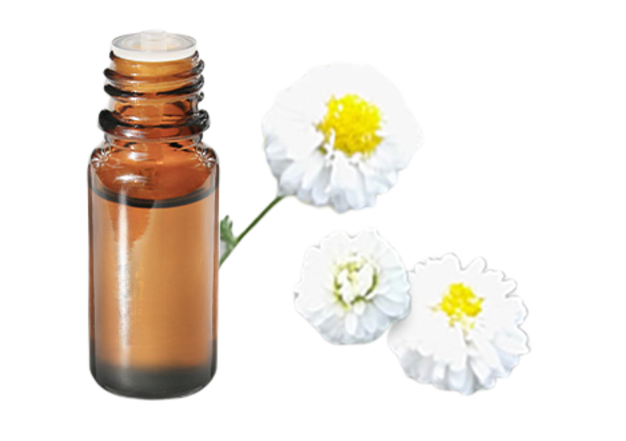
Essential oil of Roman chamomile

Traditionally, Roman chamomile flowers were used to improve digestive health and make it easier to fall asleep. A powerful calming agent for the nervous system, Roman chamomile essential oil is reputed to help relieve tension and combat stress, insomnia and nightmares. Soothing, Roman chamomile essential oil also works wonders in skincare products for sensitive skin.

How to use

  • Skin application and massage

    Skin application and massage

    Suitable

  • Cosmetic active ingredient

    Cosmetic active ingredient

    Appropriate

  • Diffusion

    Diffusion

    Appropriate

  • Aromatherapy bath

    Aromatherapy bath

    Appropriate

  • Food grade

    Food grade

    Appropriate

Features

Properties and uses

Precautions

Find out more

Features

Production process

Complete steam distillation

Part of the plant used

Flowers

Botanical name

Chamaemelum nobile (former name: Anthemis nobilis)

Warning

The properties, information and methods of use below are quotes from reference books or websites on aromatherapy, hydrolatherapy and phytotherapy. This general information is provided for informative purposes only and in no way constitutes medical guidance. Under no circumstances can this information be used as a substitute for a medical diagnosis, consultation or follow-up, nor can it incur our liability. We recommend that you consult the guide to essential oils before using them, so that you are aware of any precautions that need to be taken. If in doubt, consult a doctor before using essential oils.

Properties and uses

Roman chamomile essential oil is traditionally used for : Skin allergies, distress, anxiety, panic attacks, asthma, mild depression, low mood, insomnia, stomach aches, stress, stiff neck, intestinal worms

Health

Wellness

Beauty

Find out more

Thanks to its high terpene ester content, Roman chamomile essential oil has powerful antispasmodic properties and is excellent for combating all types of spasm. It is traditionally used for stomach aches, asthma and neuralgia. Soothing and rich in anti-inflammatory active ingredients, it is also recommended for soothing itching and skin inflammation.

Properties

Roman chamomile essential oil is recognised for its health properties:

  • Powerful antispasmodic

  • Rich in analgesic compounds known for their pre-anaesthetic effect, it is reputed to help soothe pain.

  • Anti-inflammatory and anti-pruritic, it helps to calm itching and skin prone to allergies

  • pest repellent

  • Relieves gas, cholagogue

Uses

Roman chamomile essential oil is traditionally used to improve the following situations:

  • Skin problems : allergy-prone skin, itching, eczema, psoriasis, acne, dermatitis, rosacea, inflamed sensitive skin, razor burn, etc.

  • Nervous asthma

  • Stomach aches

  • Digestive problems : slow digestion, flatulence, bloating, nausea

  • Spasms, colic, neuritis, neuralgia, toothache

Synergies

  • For allergy-prone skin : Annual Tansy and German chamomile essential oils.

  • Action on digestive problems : Cumin, Cardamom, Dill essential oils

In practice

Digestive well-being: Mix into your oil blend. Massage the mixture into the abdomen.

Precautions

  • Not recommended during the first three months of pregnancy.

  • Keep out of reach of children.

  • Some natural compounds in this essential oil may present an allergy risk for sensitive individuals when the essential oil is incorporated into a cosmetic formulation (according to the 7th Amendment of the European Cosmetic Products Directive (2003/15/EC)): limonene.

  • As a general rule, always perform a patch test of your mixture in the crease of the elbow at least 48 hours before use.

Find out more

Roman chamomile is native to Western Europe and North Africa. Very similar to German chamomile, it is distinguished by the presence of small "hairs" covering its leaves, giving them a whitish appearance. Its name comes from the Greek "Khamaimêlon", meaning "apple of the ground", because of the apple-like smell that emanates from the ground when you walk on it. In ancient Egypt, Roman chamomile symbolised the sun and was dedicated to the god Ra. The Egyptians also used it to embalm their dead.

Aromatherapy recipes from the bibliography

EO = Essential Oil VO = Carrier Oil or Macerated Oil

Anxieties (D. Festy)

Health & wellbeingNerve pain and disorders

  • 4 ml Rosewood Essential Oil
  • 1 ml Roman chamomile Essential Oil
  • 3 ml Ylang-ylang Essential Oil
  • 1 ml Frankincense Essential Oil
  • 1 ml Myrrh Essential Oil

Use: Diffuse this mixture for 20 minutes. Repeat if necessary up to 3 times a day.

Nightmares in adults (J-P. Willem)

Health & wellbeingNerve pain and disorders

  • 1 drop of Roman chamomile essential oil
  • 1 drop of Marjoram Essential Oil
  • 1 drop Ravintsara essential oil

Use: Apply this mixture to the solar plexus, in the evening at bedtime, for 15 days.

Stiff neck, torticollis in adults (J-P. Willem)

Health & wellbeingMuscles and joints

  • 5 drops Roman chamomile Essential Oil
  • 15 drops Ravintsara Essential Oil
  • 10 drops Lemon Eucalyptus Essential Oil
  • 20 ml St John's wort OIL

Use : A few drops of the mixture in a gentle, then energetic massage of the back and neck muscles.

Aroma-Zone Note : St John's wort macerated oil may cause photosensitivity. Do not expose yourself to the sun after applying this mixture.

Skin allergy: rash (D. Baudoux)

Health & wellbeingSkin problems

  • 3 drops of Roman chamomile essential oil
  • 3 drops of Lemon Eucalyptus essential oil
  • 4 drops of Immortelle essential oil (Helichrysum italicum)
  • 90 drops Calendula macerated oil

Directions for use: 4 to 10 drops depending on the extent of the skin reaction, 3 to 5 times a day depending on the extent and need, until healed (2 to 3 days).

Itchy skin (pruritus) (D. Baudoux)

Health & wellbeingSkin problems

  • 2 drops true lavender essential oil
  • 1 drop Immortelle essential oil
  • 2 drops Roman chamomile essential oil
  • 1 drop of peppermint essential oil
  • 2 ml Calendula macerated oil

Use: 3 to 4 drops of the mixture applied locally to the skin 3 to 4 times a day until improvement.

Hives (D. Festy)

Health & wellbeingSkin problems

  • 1 drop Spike Lavender essential oil
  • 1 drop Chamomile essential oil
  • 1 drop of peppermint essential oil
  • 3 drops Calendula oil

Directions for use: Apply this mixture to the entire itchy area. Repeat 3 to 4 times a day until you see improvement.

Respiratory allergy (D. Festy)

Health & wellbeingRespiratory problems

  • 5 drops of Tarragon essential oil
  • 5 drops of Niaouli essential oil
  • 2 drops of Roman chamomile essential oil
  • 1 tablespoon of tamanu oil

Apply this mixture to the sinuses, chest and upper back, 2 to 3 times a day, for 3 to 6 days. Gently massage the entire congested area, but avoid getting too close to the eyes.

  • Niaouli essential oil
  • Narrow-leaved eucalyptus essential oil
  • Lemon essential oil

Diffuse this mixture in living areas (home, office), 3 times for 20 minutes a day, during the sensitive period.

  • 2 ml Tarragon essential oil
  • 2 ml Niaouli essential oil
  • 1 ml Roman chamomile essential oil

4 drops, 2 to 3 times a day, for 3 to 6 days

Allergic asthma (D. Festy)

Health & wellbeingRespiratory problems

  • 1 ml Artemisia dracunculus (Tarragon) essential oil
  • 1 ml Chamaemelum nobile (Roman chamomile) essential oil
  • 1 ml Tanacetum annuum (Annual Tansy) essential oil
  • 1 ml Amni visnaga (Khella) essential oil
  • 6 ml tamanu macerated oil

Apply 5 drops to the solar plexus, upper back and along the spine. Repeat every ¼ hour until improvement.

Heartburn (D. Baudoux)

Health & wellbeingDigestive problems

  • 2 drops Chamomile Essential Oil
  • 1 drop of peppermint essential oil
  • 2 drops Basil Essential Oil

Directions for use: 2 drops of the mixture on 1/4 lump of cane sugar or in a teaspoon of olive oil before meals and, in addition, 3 drops of the mixture on the solar plexus after meals.

Depression in children (over 6 years and with medical advice) (D. Baudoux)

Health & wellbeingChildren's medical care

  • 2 ml of Cinnamomum camphora (Ravintsara) essential oil
  • 2 ml of Chamaemelum nobile (Roman chamomile) essential oil
  • 10 ml of Citrus aurantium ssp aurantium (Seville orange) essential oil
  • 3 ml of Origanum majorana (Sweet marjoram) essential oil
  • 1 ml Commiphora molmol essential oil (Myrrh)

Use: Diffuse the blend 10 minutes an hour to support nervous system health.

Eczema in children (over 6 years and on medical advice) (D. Festy)

Health & wellbeingChildren's medical care

  • 2 ml Geranium Essential Oil
  • 1 ml Palmarosa Essential Oil
  • 1 ml Chamomile Essential Oil
  • 2 ml True Lavender essential oil
  • 8 ml Calendula oil
  • 8 ml Rose hip oil
  • 8 ml Evening primrose oil

Use: Apply a few drops of this formula (depending on the surface to be treated) at least 3 times a day. You can repeat as many times as necessary, without any limitation.

Sleep disorders in children (over 6 years and on medical advice) (D. Baudoux)

Health & wellbeingChildren's medical care

  • 1 ml Pinus ponderosa (Patagonian pine) Essential oil
  • 2 ml Chamaemelum nobile (Roman chamomile) Essential oil
  • 1 ml Origanum majorana essential oil (Marjoram)
  • 2 ml of Cinnamomum camphora (Ravintsara) essential oil
  • 3 ml of hazelnut oil as a carrier oil
  • add Jojoba oil to make up 15 ml

Use: Apply 3 to 4 drops of the mixture to the solar plexus, the arch of the foot, the inside of the wrists or along the spine, repeating as required.

Equivalents

Essential Oils

1 ml = approximately 35 drops (with our Aroma-Zone dropper caps)

Carrier oils

1 pump (Aroma-Zone aluminium pump) = approx. 0.15 ml

Mass / Volume conversion (for a liquid)

Mass (g) = Density x Volume (ml) at 20°C

Further information

1 full teaspoon = between 3 and 4.5 ml

1 full tablespoon = between 7.5 and 10 ml


However, these spoon ratios depend on a number of factors (e.g. viscosity of the liquid, temperature, depth and size of the spoon, rheological behaviour of the liquid), and we strongly advise you to use precise measuring equipment, such as graduated test tubes, graduated pipettes, and precision scales.

Bibliography

1

'Huiles essentielles - 2000 ans de découvertes aromathérapeutiques pour une médecine d'avenir'

Dominique Baudoux

2

'The Practice Of Aromatherapy'

Dr Jean Valnet Éditions Maloine

3

'L'Aromathérapie exactement'

P. Franchomme and Dr D. Pénoël

4

'La bible de l'aromathérapie'

Nerys Purchon

5

'L'ABC des huiles essentielles'

Dr Telphon

6

"Aromatherapy"

Nelly Grosjean

7

"Les huiles essentielles pour votre santé"

G. Roulier

8

"Les cahiers pratiques de l'aromathérapie française - Pédiatrie"

Dominique Baudoux

9

Aroma-News newsletters

NARD Association

10

'Aromatherapy - Healing with essential oils'

Dominique Baudoux