
Guide to essential oils

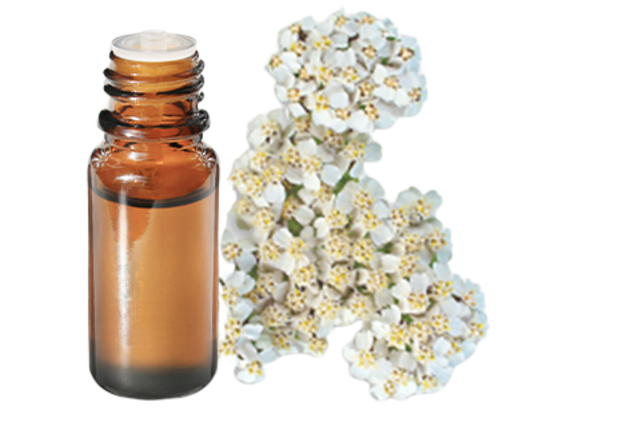
Essential oil of Yarrow

This soothing and restorative oil is traditionally used for irritated skin or blemishes, to calm razor burn and to combat the signs of skin ageing.

How to use

  • Skin application and massage

    Skin application and massage

    Suitable

  • Cosmetic active ingredient

    Cosmetic active ingredient

    Suitable

  • Aromatherapy bath

    Aromatherapy bath

    Possible but not recommended

  • Food grade

    Food grade

    Possible but not recommended

  • Diffusion

    Diffusion

Features

Properties and uses

Precautions

Find out more

Features

Production process

Complete steam distillation

Part of the plant used

Flowering tops

Botanical name

Achillea millefolium

Warning

The properties, information and methods of use below are quotes from reference books or websites on aromatherapy, hydrolatherapy and phytotherapy. This general information is provided for informative purposes only and in no way constitutes medical guidance. Under no circumstances can this information be used as a substitute for a medical diagnosis, consultation or follow-up, nor can it incur our liability. We recommend that you consult the guide to essential oils before using them, so that you are aware of any precautions that need to be taken. If in doubt, consult a doctor before using essential oils.

Properties and uses

Yarrow essential oil is traditionally used for: Eczema, chapped, cracked skin, abrasions, cuts and bruises.

Health

Wellness

Beauty

Find out more

Properties

Yarrow essential oil is renowned for the following health benefits:

  • Renowned for its powerful anti-inflammatory and antispasmodic properties

  • Traditionally used as a healing agent, and to stop minor bleeding.

  • Known to be decongestant and astringent

  • Studies demonsrate the potential of Yarrow to encourage the discharge of bile and as a choleretic

  • Anti-allergic, relieves itching

  • Long used as an emmenagogue (stimulates menstrual periods)

Uses

It is traditionally used in the following situations:

  • Cracked skin, chapping, small cuts, eczema

  • Hepatobiliary and digestive disorders

  • Sprains

  • Neuritis, neuralgia

  • Painful or infrequent periods

Synergies

  • Restorative action : essential oils of Blue Tansy, German chamomile, Blue Cypress, St John's wort, Fine Lavender, Gum Rockrose, etc.

  • Digestive problems : essential oils of Tropical Basil, Tarragon, Khella

In practice

Poor digestion: Mix with your oil blend. Massage or rub your mixture into the abdomen.

Precautions

  • Not recommended for use while pregnant or breastfeeding, by children, those with epilepsy or sensitive elderly people (due to its ketone content, a compound which may be neurotoxic and abortifacient in high doses).

  • Certain natural compounds contained in this essential oil may present a risk of allergy for some sensitive individuals when the essential oil is incorporated into a cosmetic composition (according to the 7th Amendment to the European Cosmetics Directive (2003/15/EC)): limonene and linalool.

  • As a general rule, always carry out a test application of your mixture in the crease of the elbow at least 48 hours before using it.

  • Do not use internally, except under therapeutic supervision.

Find out more

According to Pliny the Elder, Achilles, the legendary Greek warrior and hero of the Trojan War, used yarrow to heal Telaphe's wound, on the advice of Centaurus. yarrow derives its Latin name of "Achilleas" from this legend. Until the 19th century, soldiers used it to reduce bleeding, prevent wounds from getting infected and speed up healing. It is these traditional uses that have earned yarrow its nickname of "the military herb". The term "yarrow" refers to the shape of the plant's leaves, which are finely divided, giving the illusion of a multitude of leaves.

Equivalents

Essential Oils

1 ml = approximately 35 drops (with our Aroma-Zone dropper caps)

Carrier oils

1 pump (Aroma-Zone aluminium pump) = approx. 0.15 ml

Mass / Volume conversion (for a liquid)

Mass (g) = Density x Volume (ml) at 20°C

Further information

1 full teaspoon = between 3 and 4.5 ml

1 full tablespoon = between 7.5 and 10 ml


However, these spoon ratios depend on a number of factors (e.g. viscosity of the liquid, temperature, depth and size of the spoon, rheological behaviour of the liquid), and we strongly advise you to use precise measuring equipment, such as graduated test tubes, graduated pipettes, and precision scales.

Aromatherapy recipes from the bibliography

EO = Essential Oil VO = Carrier Oil or Macerated Oil

Allergic eczema (T. Telphon)

Health & wellbeingSkin problems

  • Yarrow essential oil 1 ml

  • Roman chamomile essential oil 1 ml

  • Lavender essential oil 1 ml

  • Apricot kernel oil 10 ml

  • Sweet almond carrier oil 10 ml

  • 10 ml sesame carrier oil

  • Borage or jojoba or wheat germ carrier oil 20 ml

Use: Apply the mixture to the lesions morning and evening.

Nummular eczema (D. Baudoux)

Health & wellbeingSkin problems

  • Thymus vulgaris ct geraniol (Geraniol thyme) essential oil: 0.5 ml

  • Laurus nobilis (bay laurel) essential oil: 0.5 ml

  • Trachyspermum ammi essential oil (ajwain): 0.3 ml

  • Achillea millefolium essential oil (yarrow): 0.2 ml

  • Mentha piperita essential oil (Peppermint): 0.5 ml

  • Rosa rubiginosa oil: 5 ml

  • Calophyllum inophyllum oil: 10 ml

Use: 3 topical applications a day until noticeable improvement.

Bleeding gums (T. Telphon)

Health & wellbeingMouth care

  • Gum Rockrose essential oil: 1 drop

  • Yarrow essential oil: 1 drop

  • Rose Geranium essential oil: 1 drop

Use: Apply locally with a cotton bud. Application may be repeated several times a day.

Blotchy skin (M-C. Laparé)

Health & wellbeingSkin problems

  • Yarrow essential oil 20 drops

  • Carrot essential oil 20 drops

  • apricot Kernel carrier oil 10 ml

Use: Apply a very small amount twice a day to clean skin.

Bibliography

1

"Huiles essentielles - 2000 ans de découvertes aromathérapeutiques pour une médecine d'avenir"

Dominique Baudoux

2

"Aromatherapy"

Dr Jean Valnet - Éditions Maloine

3

'L'Aromathérapie exactement'

P. Franchomme and Dr D. Pénoël

4

'La bible de l'aromathérapie'

Nerys Purchon

5

'L'ABC des huiles essentielles'

Dr Telphon

6

'Aromatherapy'

Nelly Grosjean

7

"Les huiles essentielles pour votre santé"

G. Roulier

8

"Les cahiers pratiques de l'aromathérapie française - Pédiatrie"

Dominique Baudoux - Editions Amyris

9

Aroma-News newsletters

The NARD association

10

"L'aromathérapie - Se soigner par les huiles essentielles"

Dominique Baudoux - Editions Amyris