
Guide to essential oils

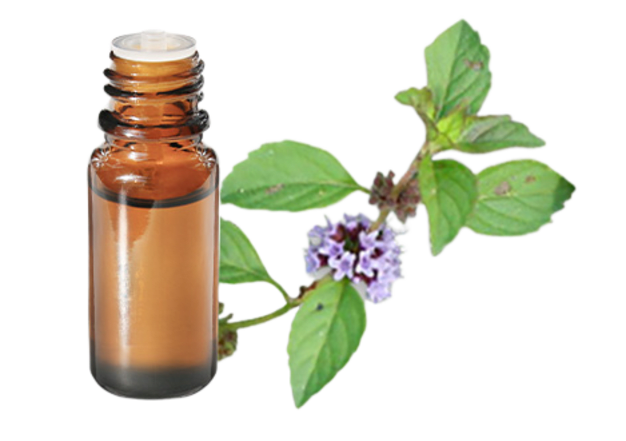
Essential oil of Wild mint

Tonic, Wild Mint essential oil is ideal for diffusing, or blending with other oils to invigorate body and mind. Refreshing, Wild Mint essential oil improves breathing. Its soothing active ingredients make Wild Mint essential oil an asset for helping to calm itching.

How to use

  • Skin application and massage

    Skin application and massage

    Suitable

  • Diffusion

    Diffusion

    Appropriate

  • Cosmetic active ingredient

    Cosmetic active ingredient

    Possible but not recommended

  • Aromatherapy bath

    Aromatherapy bath

  • Food grade

    Food grade

    Suitable

Features

Properties and uses

Precautions

Find out more

Features

Production process

Complete steam distillation

Part of the plant used

Aerial parts

Botanical name

Mentha arvensis

Chemotype

Menthol, menthone

Odour

Fresh, minty, slightly spicy

Warning

The properties, information and methods of use below are quotes from reference books or websites on aromatherapy, hydrolatherapy and phytotherapy. This general information is provided for informative purposes only and in no way constitutes medical guidance. Under no circumstances can this information be used as a substitute for a medical diagnosis, consultation or follow-up, nor can it incur our liability. We recommend that you consult the guide to essential oils before using them, so that you are aware of any precautions that need to be taken. If in doubt, consult a doctor before using essential oils.

Properties and uses

Wild Mint Essential Oil is traditionally used for: Itching, arthritis, osteoarthritis, rheumatism, digestive problems, toothache (cavities, abscesses), sinusitis, vomiting, nausea, migraine and headaches.

Health

Kitchen

Find out more

Properties

For health, Wild Mint essential oil is recognised for the following properties:

  • Tonic and stimulating for the nervous system, liver and digestive system.

  • **Rich in anaesthetic, analgesic and antipruritic active ingredients (**due to their cooling effect), it calms itching.

  • Refreshing

  • Vasoconstrictive

  • Rich in anti-infectious active ingredients

Uses

It is traditionally used to improve the following:

  • Indigestion, nausea, vomiting, flatulence, constipation

  • Headaches, migraines, toothache, sciatica, arthritis, rheumatism, tendonitis

  • Rhinitis, sinusitis

  • Pruritus (hives, eczema)

Synergies

  • Digestive comfort: Turmeric, Ginger and Cumin essential oils.

  • Calming, joint health: Wintergreen, Lemon Eucalyptus, Bay Laurel essential oils.

  • Headache relief: True lavender essential oil.

  • Respiratory comfort: Eucalyptus Radiata essential oil.

In practice

Joint relief: Mix into your oil blend. Lightly massage the mixture into the affected area in a localised manner (very powerful cooling effect).

To soothe headaches: mix in your oil blend. Apply your mixture locally, massaging lightly into the temples (very powerful cooling effect).

To freshen the atmosphere: Use as an air diffuser, in synergy with other essential oils.

Precautions

  • Prohibited when pregnant and breastfeeding, by those with epilepsy, children under 6 and the elderly.

  • Strictly forbidden for infants under 30 MONTHS (toxicity due to local contact: laryngeal or nasal reflex that may lead to respiratory arrest).

  • Use only occasionally and in limited quantities. Do not use for prolonged periods without the advice of an aromatherapist. For internal use by therapists only.

  • Irritant and powerful cooling effect: always dilute well, using no more than 30% for skin application. For very localised or diluted use only. Do not use in baths.

  • For diffusion, dilute with other milder essential oils (15% maximum).

  • Avoid contact with the eyes, do not apply too close to the eyes. Wash hands thoroughly after use.

  • Keep out of reach of children.

  • Certain natural compounds contained in this essential oil may present a risk of allergy for some sensitive individuals when the essential oil is incorporated into a cosmetic composition (according to the 7th Amendment to the European Cosmetics Directive (2003/15/EC)): limonene and, to a lesser extent, linalool.

  • As a general rule, always carry out a test application of your mixture in the crease of the elbow at least 48 hours before using it.

Find out more

There are several species in the mint family, and therefore several scents. Wild Mint has a very fresh minty scent. A member of the Lamiaceae family, this botanical perennial plant is used as a condiment in cooking, where it is nicknamed "field mint" or "corn mint" . It is also used as an infusion, in phytotherapy and as an ornamental plant.

Antibacterial due to its menthol content, it was once considered a panacea. Its essential oil, obtained by hydrodistillation of the plant's aerial parts, was also reputed to contain a wealth of stimulating and soothing active ingredients to help relieve headaches and muscular and joint pain.

Equivalents

Essential Oils

1 ml = approximately 35 drops (with our Aroma-Zone dropper caps)

Carrier oils

1 pump (Aroma-Zone aluminium pump) = approx. 0.15 ml

Mass / Volume conversion (for a liquid)

Mass (g) = Density x Volume (ml) at 20°C

Further information

1 full teaspoon = between 3 and 4.5 ml

1 full tablespoon = between 7.5 and 10 ml


However, these spoon ratios depend on a number of factors (e.g. viscosity of the liquid, temperature, depth and size of the spoon, rheological behaviour of the liquid), and we strongly advise you to use precise measuring equipment, such as graduated test tubes, graduated pipettes, and precision scales.

Aromatherapy recipes from the bibliography

EO = Essential Oil VO = Carrier Oil or Macerated Oil

Water retention - cellulite (D. Baudoux)

Health & wellbeingHormonal and metabolic disorders

  • Lemon essential oil: 0.3 ml

  • Eastern red cedar essential oil: 0.6 ml

  • Mastic essential oil: 0.3 ml

  • Vetiver essential oil: 0.3 ml

  • helichrysum essential oil: 0.3 ml

  • Niaouli essential oil: 0.6 ml

  • Wild mint essential oil: 0.3 ml

  • St John's wort carrier oil: 20 ml

  • apricot kernel carrier oil: 50 ml or more

Use: 1 topical application (8 to 10 drops) twice a day, starting at the ankles and working up towards the thighs.

Aroma-Zone Note: St John's wort macerated oil presents a risk of photosensitisation. Do not expose yourself to the sun after applying this preparation.

Stiff neck (D. Festy)

Health & wellbeingMuscles and joints

Massage

Mix:

  • Rosemary camphor essential oil 1 drop

  • Helichrysum italicum essential oil 1 drop

  • Wild mint essential oil 1 drop

  • American wintergreen essential oil 1 drop

  • St John's wort oil 3 drops

  • Arnica oil 3 drops

Directions for use: Massage locally with this formula, 3 to 5 times a day for 2 to 3 days if necessary.

Aroma-Zone Note: St John's wort macerated oil may cause photosensitivity. Do not expose yourself to the sun after applying this mixture.

Bibliography

1

'Huiles essentielles - 2000 ans de découvertes aromathérapeutiques pour une médecine d'avenir'

Dominique Baudoux

2

'The Practice Of Aromatherapy'

by Dr Jean Valnet Éditions Maloine

3

"L'Aromathérapie exactement"

by P. Franchomme and Dr D. Pénoël

4

'La bible de l'aromathérapie'

Nerys Purchon

5

"ABC des huiles essentielles"

by Dr Telphon

6

'Aromatherapy'

Nelly Grosjean

7

'Les huiles essentielles pour votre santé'

G. Roulier

8

'Les cahiers pratiques de l'aromathérapie française - Pédiatrie'

Dominique Baudoux

9

Aroma-News newsletters

The NARD association

10

'Aromatherapy - Healing with essential oils'

Dominique Baudoux