
Guide to essential oils

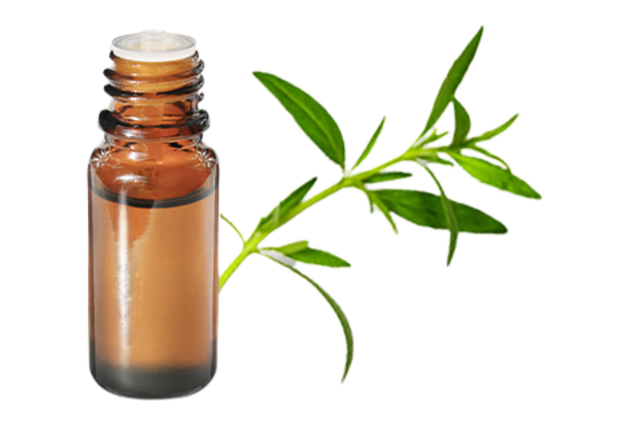
Essential oil of Tarragon

Tarragon essential oil has long been known for its calming properties, particularly for the digestive system. Tarragon essential oil has a soothing effect and a reputation for being effective against hiccups. With its characteristic aniseed fragrance, Tarragon essential oil gives off a very pleasant scent.

How to use

  • Skin application and massage

    Skin application and massage

    Suitable

  • Food grade

    Food grade

    Appropriate

  • Diffusion

    Diffusion

    Appropriate

  • Aromatherapy bath

    Aromatherapy bath

    Possible but not recommended

  • Cosmetic active ingredient

    Cosmetic active ingredient

Features

Properties and uses

Precautions

Find out more

Features

Production process

Complete steam distillation

Part of the plant used

Flowering tops

Botanical name

Artemisia dracunculus

Warning

The properties, information and methods of use below are quotes from reference books or websites on aromatherapy, hydrolatherapy and phytotherapy. This general information is provided for informative purposes only and in no way constitutes medical guidance. Under no circumstances can this information be used as a substitute for a medical diagnosis, consultation or follow-up, nor can it incur our liability. We recommend that you consult the guide to essential oils before using them, so that you are aware of any precautions that need to be taken. If in doubt, consult a doctor before using essential oils.

Properties and uses

Tarragon essential oil is traditionally used for : Aerophagia, bloating and flatulence, asthma, constipation, muscle cramps, poor digestion, gastroenteritis and intestinal infections, hiccups, stomach aches, menstruation.

Health

Wellness

Find out more

Rich in antispasmodic compounds, tarragon essential oil is traditionally used for hiccups, digestive spasms and stomach aches, as well as to help with asthma attacks andseasonal allergies.

Properties

Tarragon essential oil is recognised for its health properties:

  • General digestive tonic: supports digestion, aperitive, carminative, fights gas

  • Powerful antispasmodic, particularly effective against hiccups

  • Reputed to modify allergic conditions

  • Rich in antiviral and antifermentary active ingredients

Uses

Tarragon essential oil is traditionally used to improve the following conditions:

  • Aerophagia, slow digestion, gastritis and colitis

  • Hiccups

  • Spasmophilia

  • Motion sickness

  • Premenstrual pain, dysmenorrhoea (painful periods)

  • Muscle cramps and contractures

  • Spastic coughs, allergic asthma

In practice

Belly comfort: Mix with your oil blend. Massage the mixture into the abdomen.

Precautions

  • Do not use during pregnancy or while breastfeeding, or on children under the age of 6.

  • May be irritating when used undiluted, always dilute well before applying to the skin.

  • Do not use for prolonged or regular periods without the advice of a therapist, especially if used internally. Avoid internal use, prefer the percutaneous route.

  • Not recommended for people taking anticoagulants or with coagulation disorders, oral use prohibited.

  • Keep out of reach of children.

  • Certain natural compounds contained in this essential oil may present a risk of allergy in certain sensitive individuals when the essential oil is incorporated into a cosmetic composition (in accordance with the 7th Amendment of the European Directive relating to cosmetic products (2003/15/EC)): limonene.

  • As a general rule, always carry out a test application of your mixture, in the crease of the elbow, at least 48 hours before using it.

Find out more

Its Latin origin, Dracunculus, meaning little dragon, comes from the fact that tarragon has the ability to cure snake bites. It originated on the steppes of Siberia and China, where it is still used. This essential oil is renowned for being extremely helpful, and is traditionally used to soothe spasmodic pain.

Equivalents

Essential Oils

1 ml = approximately 35 drops (with our Aroma-Zone dropper caps)

Carrier oils

1 pump (Aroma-Zone aluminium pump) = approx. 0.15 ml

Mass / Volume conversion (for a liquid)

Mass (g) = Density x Volume (ml) at 20°C

Further information

1 full teaspoon = between 3 and 4.5 ml

1 full tablespoon = between 7.5 and 10 ml


However, these spoon ratios depend on a number of factors (e.g. viscosity of the liquid, temperature, depth and size of the spoon, rheological behaviour of the liquid), and we strongly advise you to use precise measuring equipment, such as graduated test tubes, graduated pipettes, and precision scales.

Aromatherapy recipes from the bibliography

EO = Essential Oil VO = Carrier Oil or Macerated Oil

Golden frog legs with lime and spinach velouté with tarragon (A. Pataud)

Kitchen

Serves 4; Preparation: 45 minutes; Cooking time: 30 minutes

  • Spinach leaves : 400 g

  • Poultry stock : 1 litre

  • Tarragon Essential Oil: 1 to 2 drops

  • Olive oil : 2 tablespoons

  • Frog legs : 40

  • Wheat flour : 150 g

  • Cider vinegar

  • Lime Essential Oil: 3 drops

  • Grape seed oil: 2 tablespoons

  • Salt

  • Pepper

Prepare the soup: Wash the spinach leaves and spin-dry. Cook them in boiling salted water until they crumble between your fingers. Cool quickly in iced water to retain their green colour. Drain and blend in a blender until you obtain the consistency of a purée. Bring the chicken stock to the boil, then add the olive oil, tarragon essential oil and the purée. Mix, season with salt and pepper.

Prepare the frogs' legs: Soak the frogs' legs in cold water with vinegar for 15 minutes. Drain. Dry in a cloth. Flour and fry in the grapeseed oil for a few minutes. Add the essential oil at the end of cooking and mix. Season with salt. Season with pepper. Arrange the frogs' legs around the plate, about 10 per person. Pour the soup into the centre of the plate.

Bibliography

1

'Huiles essentielles - 2000 ans de découvertes aromathérapeutiques pour une médecine d'avenir'

Dominique Baudoux

2

Aromatherapy

Dr Jean Valnet - Éditions Maloine

3

"L'Aromathérapie exactement"

P. Franchomme and Dr D. Pénoël

4

'La Bible de l'aromathérapie'

Nerys Purchon

5

"ABC des huiles essentielles"

Dr Telphon

6

Aromatherapy

Nelly Grosjean

7

'Les huiles essentielles pour votre santé'

G. Roulier

8

'Les cahiers pratiques de l'aromathérapie française - Pédiatrie'

Dominique Baudoux - Editions Amyris

9

Aroma-News newsletters

The NARD association

10

'Aromatherapy - Healing with essential oils'

Dominique Baudoux - Edtions Amyris