
Guide to essential oils

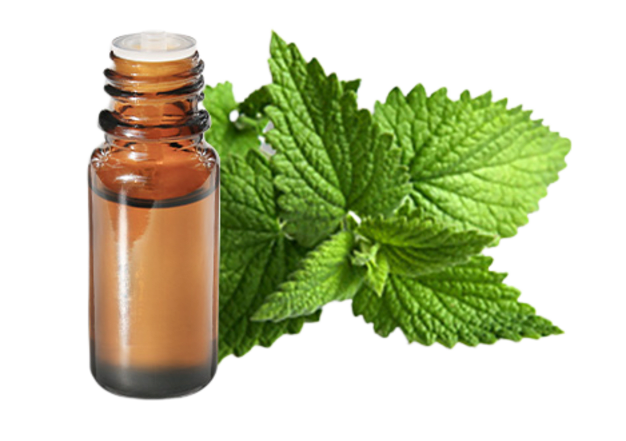
Essential oil of Organic Provençal peppermint

Grown in the south of France, Provençal Peppermint essential oil has stimulating effects that are much popular for invigorating body and mind. Powerfully refreshing, its virtues are also known to relieve nausea and headaches. It is also used to relieve itching. On a psycho-energetic level and for olfactory use, Provençal Peppermint essential oil will assist in keeping a "cool head", promoting clarity of mind and concentration and calming mental chatter.

How to use

  • Skin application and massage

    Skin application and massage

    Possible but not recommended

  • Diffusion

    Diffusion

    Possible but not recommended

  • Cosmetic active ingredient

    Cosmetic active ingredient

    Possible but not recommended

  • Aromatherapy bath

    Aromatherapy bath

    Not recommended

  • Food grade

    Food grade

    Suitable

Features

Properties

Precautions

Find out more

Features

Production process

Complete steam distillation

Part of the plant used

Aerial parts

Botanical name

Mentha x piperita Franco-Mitcham

Warning

The properties, information and methods of use below are quotes from reference books or websites on aromatherapy, hydrolatherapy and phytotherapy. This general information is provided for informative purposes only and in no way constitutes medical guidance. Under no circumstances can this information be used as a substitute for a medical diagnosis, consultation or follow-up, nor can it incur our liability. We recommend that you consult the guide to essential oils before using them, so that you are aware of any precautions that need to be taken. If in doubt, consult a doctor before using essential oils.

Properties

Provençal Peppermint essential oil is traditionally used for: Arthritis, osteoarthritis, rheumatism, concentration (helps with) and exam periods, liver health, poor digestion, dental pain (cavities, abscesses), fatigue, exhaustion, motion sickness, bad breath, migraines and headaches, vomiting, nausea, etc.

Health

Wellness

Find out more

A must-have in any natural first-aid kit, Provençal Peppermint essential oil is traditionally recommended by aromatherapists for topical use to help soothe headaches and localised pain. It is also known to relieve nausea and digestive problems.

Properties

For health, Provençal Peppermint essential oil is recognised for the following properties:

  • Tonic and stimulant for the digestive, pancreatic and nervous systems

  • Anti-nausea

  • Hypertensive, vasoconstrictor

  • Local anaesthetic and analgesic by cold effect, antipruritic, calms itching

  • Refreshing

  • Nasal decongestant

  • Promotes healthy liver and prostate function

...but also

  • Antibacterial, antifungal and antiviral

  • Intestinal and urinary anti-inflammatory

Uses

Provençal Peppermint essential oil is traditionally used to improve the following:

  • Nausea, motion sickness, dizziness

  • Indigestion, dyspepsia, vomiting, flatulence, bad breath, gastro-oesophageal reflux, irritable bowel syndrome.

  • Headaches, migraines, neuralgia, sciatica, arthritis, rheumatism, tendonitis

  • Shock, trauma

  • Shingles, herpes, viral neuritis

  • Rhinitis, sinusitis, ear infections

  • Itching (hives, eczema, chickenpox)

  • Low blood pressure

Synergies

  • Nausea: Ginger and Lemon essential oils

  • Digestion: Coriander, Cumin, Cardamom essential oils

  • Respiratory health: Ravintsara, Eucalyptus Radiata, Eucalyptus Globulus essential oils

  • To help relieve itching: Annual Tansy, German chamomile essential oils

  • Fatigue: Black Spruce, Scots Pine essential oils

  • Joint health: American Wintergreen, Lemon Eucalyptus, Katafray essential oils

  • To help relieve headaches: Fine Lavender essential oil, American or Sweet Wintergreen essential oils

In practice

Joint health: Mix in your oil blend. Apply a few drops of your mixture locally, massaging lightly into the area concerned over a small area (powerful cooling effect).

Refreshing effect for headaches: Mix into your oil blend. Apply a few drops of your mixture locally, massaging lightly into the temples, taking care not to get any on the eyes or mucous membranes.

Soothing, calming (shock, pain) : Mix into your oil blend. Apply your mixture locally, massaging lightly into the area concerned.

Precautions

  • Do not use in pregnant or breastfeeding women, or in children under 6 years old.

  • May have a stimulating effect on ovarian function, thus stimulating estrogen. Not recommended in cases of estrogen-dependent pathologies: mastosis, endometriosis, fibroids, or estrogen-dependent cancer (breast, ovary, endometrium).

  • Keep out of reach of children.

  • At high doses, may cause skin irritation.

  • Internal use only in limited doses and for short durations, on the advice of a therapist.

  • Avoid contact with eyes and mucous membranes.

  • Always use diluted.

  • Some natural compounds in this essential oil may cause allergic reactions in sensitive individuals when incorporated into a cosmetic formulation.

  • Avoid using old or oxidized essential oils. Store away from light and air.

  • As a general rule, always perform a patch test by applying your preparation to the inside of your elbow at least 48 hours before use.

  • For use as a cosmetic ingredient, refer to specific precautions.

Find out more

Used since ancient Egypt for its digestive properties, peppermint is a perennial plant belonging to the Lamiaceae family. It owes its Latin name "piperita" to its characteristic strongly peppery odour. Its name "mentha" comes from Greek mythology. Legend has it that Proserpine, daughter of Zeus and Demeter, furious and jealous of the budding love between Hades, her man, and Minthe, a nymph from mythology, transformed the latter into a plant so that passers-by could walk on it.

Outraged by his wife's interference, Hades is said to have impregnated the plant with a menthol scent, so that passers-by would notice this wonderful aroma. Its essential oil contains a high level of menthol. Particularly renowned for its aromatic and digestive properties, it has a very wide range of uses. It has been used for centuries to soothe headaches, nausea and motion sickness. Stimulating and invigorating, it has long been recommended to help with mental, physical or sexual fatigue. An analgesic and local anaesthetic thanks to its intense cold effect, it is a precious ally for soothing localised pain, particularly in the joints or in cases of mild shock. When diffused, it purifies and refreshes the air!

No surprises

B
Béatrice

The most present product in my daily life.

S
Souad

Formidable against headaches

E
Elodie

As usual, great product

V
V

super pour les maux de tête

B
B

Equivalents

Essential Oils

1 ml = approximately 35 drops (with our Aroma-Zone dropper caps)

Carrier Oils

1 pump (Aroma-Zone aluminium pump) = approx. 0.15 ml

Mass / Volume conversion (for a liquid)

Mass (g) = Density x Volume (ml) at 20°C

Further information

1 full teaspoon = between 3 and 4.5 ml

1 full tablespoon = between 7.5 and 10 ml


However, these spoon ratios depend on a number of factors (e.g. viscosity of the liquid, temperature, depth and size of the spoon, rheological behaviour of the liquid), and we strongly advise you to use precise measuring equipment, such as graduated test tubes, graduated pipettes, and precision scales.

Aromatherapy recipes from the bibliography

EO = Essential Oil VO = Carrier Oil or Macerated Oil

Persistent fatigue (D. Festy)

Health & wellbeingLow energy, fatigue

  • Lemon essential oil
  • Peppermint essential oil
  • Basil essential oil
  • Scots Pine essential oil

Use : mix in equal parts in a 10 ml bottle and diffuse in living areas for 1 hour in the morning and afternoon.

Headache in adults (D. Baudoux)

Health & wellbeingNerve pain and disorders

  • 1 ml Lavandin super essential oil
  • 1 ml Tropical Basil essential oil
  • 2 ml Peppermint essential oil

Directions for use: 2 to 3 drops of the mixture applied locally to painful areas as required.

Migraines, headaches (Aroma news - Nard)

Health & wellbeingNerve pain and disorders

  • 2 ml of Artemisia dracunculus (Tarragon) essential oil
  • 2 ml Mentha Piperita essential oil (Peppermint)
  • 3 ml Lavandula latifolia Spica essential oil (Spike Lavender)
  • 1 ml Gaultheria procumbens (American wintergreen) essential oil
  • Supplement with 15 ml St John's wort oil

Directions for use: 3 drops locally until improvement

Aroma-Zone Note: St John's wort macerated oil presents a risk of photosensitisation. Do not expose yourself to the sun after applying this mixture.

Arthritis / sciatica in adults (D. Baudoux)

Health & wellbeingMuscles and joints

  • 2 drops Immortelle EO essential oil
  • 1 drop of American Wintergreen essential oil
  • 1 drop of peppermint essential oil
  • 3 drops Lemon Eucalyptus essential oil
  • 1 drop Vetiver essential oil

Directions for use: apply 3 to 4 drops of the mixture locally to the painful area 3 to 4 times a day for 10 days.

Hives (D. Festy)

Health & wellbeingSkin problems

  • 1 drop Spike Lavender essential oil
  • 1 drop Chamomile essential oil
  • 1 drop of peppermint essential oil
  • 3 drops Calendula oil

Directions for use: Apply this mixture to the entire itchy area. Repeat 3 to 4 times a day until you see improvement.

Shingles in adults (D. Baudoux)

Health & wellbeingSkin problems

  • 1 drop Ravintsara essential oil
  • 1 drop of peppermint essential oil
  • 1 drop of Exotic Basil essential oil
  • 1 drop Lemon Eucalyptus essential oil

Directions for use: 2 to 4 drops of the mixture on the pustules or painful area 8 times a day until symptoms disappear.

Heartburn (D. Baudoux)

Health & wellbeingDigestive problems

  • 2 drops Chamomile essential oil
  • 1 drop of peppermint essential oil
  • 2 drops Basil essential oil

Directions for use: 2 drops of the mixture on 1/4 lump of cane sugar or in a teaspoon of olive oil before meals and, in addition, 3 drops of the mixture on the solar plexus after meals.

Indigestion (D. Baudoux)

Health & wellbeingDigestive problems

  • 3 ml Peppermint essential oil
  • 2 ml Exotic Basil essential oil
  • 1 ml Lemon essential oil
  • 1 ml kaffir lime essential oil

Directions for use: 3 drops of the mixture on 1/4 lump of sugar or in a teaspoon of olive oil 3 times a day before meals for 1 to 2 days.

Nausea/vomiting (D. Baudoux)

Health & wellbeingDigestive problems

  • 3 ml of Peppermint essential oil
  • 2 ml of Tarragon essential oil
  • 2 ml Lemon essential oil

Directions for use: 3 drops of the mixture on 1/4 sugar to suck as required.

Tooth abscess (Aroma news - Nard)

Health & wellbeingMouth care

  • 1 ml Zingiber officinale essential oil (Ginger)
  • 0.5 ml Eugenia caryophyllus essential oil (Clove)
  • 0.5 ml Mentha piperita essential oil (Peppermint)
  • 1 ml Lavandula spica essential oil (Spike Lavender)
  • 10 ml supplement of St John's wort macerated oil

Directions for use: 3 drops applied locally to the sensitive area 5 times a day for 5 to 7 days.

Foul breath (D. Baudoux)

Health & wellbeingMouth care

  • 2 ml Peppermint essential oil
  • 1 ml of Exotic basil essential oil
  • 2 ml Lemon essential oil

Directions for use: 2 drops of the mixture 3 times a day before meals on 1/4 sugar or in 1 teaspoon of olive oil.

Concentration problems in children (over 6 years and on medical advice) (D. Baudoux)

Health & wellbeingChildren's care

  • 1 ml Ravintsara essential oil
  • 0.2 ml Clove essential oil
  • 1 ml Peppermint essential oil
  • Top up with 15 ml Jojoba oil as a carrier oil

Directions for use: Apply 3 drops of the mixture to the solar plexus and the inside of the wrists, repeating as required

Excessive sweating (D. Festy)

Health & wellbeingHormonal and metabolic disorders

Impulses: mint

  • 1 teaspoon 90% alcohol
  • 10 drops Peppermint essential oil

Directions for use: Apply two drops of this mixture morning and evening to areas of the body that sweat excessively.