
Guide to essential oils

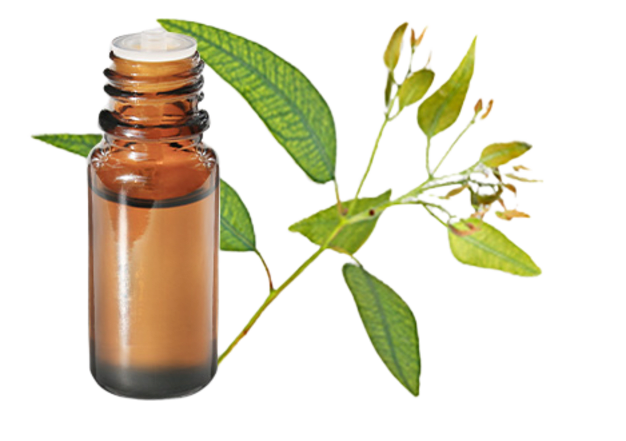
Essential oil of Menthol Eucalyptus

Purifying and mucolytic, Menthol Eucalyptus essential oil is traditionally used to aid breathing. Its draining effects make Menthol Eucalyptus essential oil an essential ingredient to help reduce the appearance of cellulite. In skincare products for oily skin and skin with blemishes, Menthol Eucalyptus essential oil has a purifying and cleansing action.

How to use

  • Skin application and massage

    Skin application and massage

    Suitable

  • Food grade

    Food grade

    Possible but not recommended

  • Diffusion

    Diffusion

    Appropriate

  • Aromatherapy bath

    Aromatherapy bath

  • Cosmetic active ingredient

    Cosmetic active ingredient

Features

Properties and uses

Precautions

Find out more

Features

Production process

Complete steam distillation

Part of the plant used

Leaves, twigs and branches

Botanical name

Eucalyptus dives piperitoniferum

Warning

The properties, information and methods of use below are quotes from reference books or websites on aromatherapy, hydrolatherapy and phytotherapy. This general information is provided for informative purposes only and in no way constitutes medical guidance. Under no circumstances can this information be used as a substitute for a medical diagnosis, consultation or follow-up, nor can it incur our liability. We recommend that you consult the guide to essential oils before using them, so that you are aware of any precautions that need to be taken. If in doubt, consult a doctor before using essential oils.

Properties and uses

Menthol Eucalyptus essential oil is traditionally used for : acne, spots, cellulite, bronchitis, laryngitis, pharyngitis, ear infection, cold, blocked nose, runny nose, sinusitis, chesty cough.

Health

Find out more

Properties

Menthol Eucalyptus essential oil is recognised for its health properties:

  • Anticatarrhal and mucolytic

  • Lipolytic, helping to burn fat.

  • Liver and kidney drainage , diuretic

  • Antibacterial

Uses

It is traditionally used to improve the following conditions:

  • Sinusitis, ear infection, bronchitis

  • chesty cough

  • Hydrolipid retention, adiposity, cellulite

  • Acne-prone skin, scaly skin, dull wounds, oily skin

  • To help relieve urinary and gynaecological discomforts: urinary tract infection, cystitis, leucorrhoeic vaginitis, etc.

In practice

Respiratory and sinus comfort: Mix in your oil blend. Massage or rub your blend into the chest and upper back.

Urinary and gynaecological comfort: Mix in your oil blend. Massage or rub your mixture into the lower abdomen and back.

Precautions

  • Not for use by pregnant or breastfeeding women, people suffering from epilepsy or children under 6 years of age (due to its ketone content, compounds which present neurotoxic and abortifacient risks in high doses).

  • Do not use for prolonged periods without the advice of an aromatherapist.

  • If the product is for internal use this should only be done by a therapist.

  • Always dilute well for cutaneous use.

  • Allergic sensitisation possible.

  • Keep out of reach of children.

  • Certain natural compounds contained in this essential oil may present a risk of allergy in certain sensitive individuals when the essential oil is incorporated into a cosmetic composition (in accordance with the 7th Amendment of the European Directive on cosmetic products (2003/15/EC)): limonene, linalool.

  • As a general rule, always carry out a test application of your mixture, in the crease of the elbow, at least 48 hours before using it.

Find out more

Menthol Eucalyptus, whose Latin name is Eucalyptus dives piperitoniferum, belongs to the Myrtaceae family. Native toAustralia andSouth Africa, it has a distinctive bark thatpeels off into long brown strips over time. In Australia, Eucalyptus dives is one of the native species from which the piperitone-rich essential oil from the tree's leaves is extracted. Its composition is very different from that of other eucalyptus, and its smell is therefore different too.

Aromatherapy recipes from the bibliography

EO = Essential Oil VO = Carrier Oil or Macerated Oil

Stopping smoking (A. Maillard)

Health & wellbeingNerve pain and disorders

Olfactory use: Aroma-advice for smoking cessation In a 10 ml tinted glass bottle fitted with a dropper.

  • 1.5 ml Sandalwood essential oil, Indian sandalwood
  • 0.5 ml frankincense essential oil, Boswelia carterii
  • 0.5 ml menthol eucalyptus essential oil, Eucalyptus dives
  • 0.5 ml or 10 to 15 drops of peppermint essential oil, Mentha x piperita
  • 7 ml apricot kernel oil

For each compulsion : 1 drop on the inside of the wrists, breathe deeply 5 times in a row. Repeat 6 to 8 times a day throughout the withdrawal period.

CONTRAINDICATIONS : people with heart disease and/or high blood pressure, people suffering from epilespy, pregnant and breastfeeding women.

Extract from the book Le grand guide de l'aromathérapie et des soins beauté naturels, by Aude Maillard and Aroma-Zone, published by J'ai Lu, 2016.

Acne / blackheads (D. Baudoux)

Health & wellbeingSkin problems

  • 1 ml Menthol Eucalyptus Essential Oil
  • 1 ml spike lavender essential oil
  • 2 ml Tea Tree Essential Oil
  • 1 ml Rosemary verbenone Essential Oil

Use: A few drops of the mixture, applied individually, twice a day.

Seborrhoeic dermatitis (A. Maillard)

Health & wellbeingSkin problems

To be made in a 50 g container

  • 1 g rose geranium Essential Oil, Pelargonium graveolens CV Egypt
  • 1 g menthol eucalyptus Essential Oil, Eucalyptus dives
  • 1 g palmarosa Essential Oil, Cymbopogon martinii
  • 1 g Tea Tree Essential Oil, Melaleuca alternifolia
  • 1 g Copaiba balm, Copaifera officinalis
  • 1 g jojoba oil
  • 44 g aloe vera gel

Use : Apply generously to the areas to be treated (skin or scalp), at least 2 times a day (every evening for the scalp and shampoo the next morning), for 15 days.

: equipment required: a mini-mortar, a mini-scale, a mini-pilon or a mini-whip. Place the mortar on the balance and tare it. Weigh in all the essential oils in the quantities indicated, then the jojoba oil, and blend using the whisk. Then add aloe vera gel to make up 50g. Mix, off the scales, until the two phases are completely miscible. This gel should be kept in a cool place and used within two months.

Extract from the book Le grand guide de l'aromathérapie et des soins beauté naturels, by Aude Maillard and Aroma-Zone, published by J'ai Lu, 2016

Sinusitis (D. Baudoux)

Health & wellbeingENT problems

  • 2 ml Tea Tree Essential Oil
  • 2 ml Menthol Eucalyptus Essential Oil
  • 2 ml Ravintsara essential oil
  • 1 ml Peppermint essential oil

Use: 2 drops of the mixture applied locally to the forehead 4 times a day for 3 days and 2 drops on 1/4 sugar twice a day.

Sinusitis (Aroma news - Nard)

Health & wellbeingENT problems

  • 3 ml Mentha piperita Essential Oil (Peppermint)
  • 2 ml Lavandula latifolia EO (Spike Lavender)
  • 4 ml Melaleuca alternifolia Essential Oil (tea tree)
  • 1 ml Eucalyptus dives Essential Oil (menthol eucalyptus)

Use: 3 drops 3 times a day on the forehead and on a handkerchief to inhale as much as you like.

Equivalents

Essential Oils

1 ml = approximately 35 drops (with our Aroma-Zone dropper caps)

Carrier oils

1 pump (Aroma-Zone aluminium pump) = approx. 0.15 ml

Mass / Volume conversion (for a liquid)

Mass (g) = Density x Volume (ml) at 20°C

Further information

1 full teaspoon = between 3 and 4.5 ml

1 full tablespoon = between 7.5 and 10 ml


However, these spoon ratios depend on a number of factors (e.g. viscosity of the liquid, temperature, depth and size of the spoon, rheological behaviour of the liquid), and we strongly advise you to use precise measuring equipment, such as graduated test tubes, graduated pipettes, and precision scales.

Bibliography

1

'Huiles essentielles - 2000 ans de découvertes aromathérapeutiques pour une médecine d'avenir'

Dominique Baudoux

2

'The Practice Of Aromatherapy'

Dr Jean Valnet - Éditions Maloine

3

'L'aromathérapie exactement'

P. Franchomme and Dr D. Pénoël

4

'La bible de l'aromathérapie'

Nerys Purchon

5

'L'ABC des huiles essentielles'

Dr Telphon

6

'Aromatherapy'

Nelly Grosjean

7

'Les huiles essentielles pour votre santé'

G. Roulier

8

"Les cahiers pratiques de l'aromathérapie française - Pédiatrie"

Dominique Baudoux - Editions Amyris

9

Aroma-News newsletters from the NARD association

10

"L'aromathérapie - Se soigner par les huiles essentielles"

Dominique Baudoux - Editions Amyris