
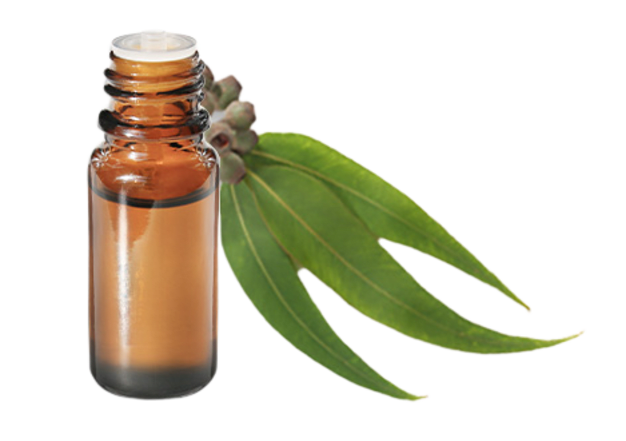
Guide to essential oils

Essential oil of Gully gum eucalyptus

Very mild, Eucalyptus smithii essential oil is known to be a natural refresher and purifier in winter. When diffused, Eucalyptus smithii essential oil improves breathing.

How to use

  • Skin application and massage

    Skin application and massage

    Suitable

  • Diffusion

    Diffusion

    Suitable

  • Aromatherapy bath

    Aromatherapy bath

    Possible but not recommended

  • Food grade

    Food grade

    Possible but not recommended

  • Cosmetic active ingredient

    Cosmetic active ingredient

    Possible but not recommended

Features

Properties and uses

Precautions

Find out more

Features

Production process

Complete steam distillation

Part of the plant used

Leaves

Botanical name

Gully gum eucalyptus

Warning

The properties, information and methods of use below are quotes from reference books or websites on aromatherapy, hydrolatherapy and phytotherapy. This general information is provided for informative purposes only and in no way constitutes medical guidance. Under no circumstances can this information be used as a substitute for a medical diagnosis, consultation or follow-up, nor can it incur our liability. We recommend that you consult the guide to essential oils before using them, so that you are aware of any precautions that need to be taken. If in doubt, consult a doctor before using essential oils.

Properties and uses

Eucalyptus smithii essential oil is traditionally used for: The flu, stimulating immunity, laryngitis, pharyngitis, cold, blocked nose, runny nose, sinusitis, chesty cough, etc.

Health

Beauty

Kitchen

Find out more

Rich in eucalyptol, Eucalyptus smithii essential oil has beneficial expectorant properties for clearing bronchial tubes and unblocking the nose. It is traditionally known to help with colds, the flu, sinusitis and chesty cough, and is recommended for inhalation, diffusion or as an ingredient in your massage preparations. Anti-infectious, it is an excellent ally for your natural immunity in winter!

Properties

Eucalyptus smithii essential oil is renowned for the following health benefits:

  • Rich in antiseptic, antibacterialand antiviral active ingredients

  • Promotes the proper functioning of the immune system

  • Anti-catarrh, expectorant, antitussive, helps to clear the nose and bronchial tubes

… But also

  • Rich in anti-inflammatory active ingredients

Uses

Eucalyptus smithii essential oil is traditionally used to improve the following conditions:

  • Rhinitis, nasopharyngitis, the flu, colds

  • Ear infections, sinusitis, coughs…

  • Cystitis, vaginitis

In practice

Respiratory comfort: blend into your oil blend. Massage or rub your blend into the chest and upper back.

Air purification, respiratory comfort: for air diffusion, alone or blended with other essential oils (Lemon, Scots pine, Silver fir…).

Precautions

  • Do not use during the first three months of pregnancy or while breast-feeding, or on children under 6 years of age (except on medical advice).

  • Not recommended for asthmatics (especially for inhalation or diffusion) due to its 1,8-cineole content.

  • Preferably for use on the skin or by diffusion/inhalation, oral use is less suitable for this essential oil.

  • Possible interactions with medication (due to its 1,8-cineole content, which has an inducing effect on certain enzymes), do not use orally without medical advice at the same time as taking medication.

  • This essential oil is gentler on the respiratory tract than Eucalyptus globulus. Preferable for sensitive individuals compared with Eucalyptus globulus essential oil, which is more irritating.

  • Keep out of reach of children.

  • Certain natural compounds contained in this essential oil may present a risk of allergy for certain sensitive individuals when the essential oil is incorporated into a cosmetic composition (in accordance with the 7th Amendment to the European Directive on cosmetic products (2003/15/EC)): limonene.

  • As a general rule, always test-apply your mixture in the crease of the elbow at least 48 hours before use.

  • For use as a cosmetic ingredient, please refer to the specific precautions.

Find out more

Eucalytus smithii essential oil is often considered to be the mildest of the Eucalyptus essential oils, making it easier to use, especially for sensitive people.

Aromatherapy recipes from the bibliography

EO = Essential oil VO = Vegetal oil (carrier oil)

Childhood illnesses: chickenpox, measles, scarlet fever (children over 6 years of age, after consulting a doctor and on medical advice) (Aroma news - Nard)

Health & wellbeingChildren's care

  • 1 ml of Melaleuca alternifolia (tea tree) essential oil
  • 2 ml of Cistus ladaniferus, pinene chemotype (Gum rockrose) essential oil
  • 2 ml of Cinnamomum camphora (Ravintsara) essential oil
  • 2 ml of Eucalyptus smithii (Gully gum eucalyptus) essential oil
  • Top up with 15 ml of hazelnut carrier oil

Use: 6 drops on the chest and back 3 to 4 times a day for 1 week

Equivalents

Essential Oils

1 ml = approximately 35 drops (with our Aroma-Zone dropper caps)

Carrier oils

1 pump (Aroma-Zone aluminium pump) = approx. 0.15 ml

Mass / Volume conversion (for a liquid)

Mass (g) = Density x Volume (ml) at 20°C

Further information

1 full teaspoon = between 3 and 4.5 ml

1 full tablespoon = between 7.5 and 10 ml


However, these spoon ratios depend on a number of factors (e.g. viscosity of the liquid, temperature, depth and size of the spoon, rheological behaviour of the liquid), and we strongly advise you to use precise measuring equipment, such as graduated test tubes, graduated pipettes, and precision scales.

Bibliography

1

L'aromathérapie exactement

Franchomme, Jollois and Pénoël

2

L'Aromathérapie, se soigner par les huiles essentielles - Editions Amyris

D. Baudoux