
Guide to essential oils

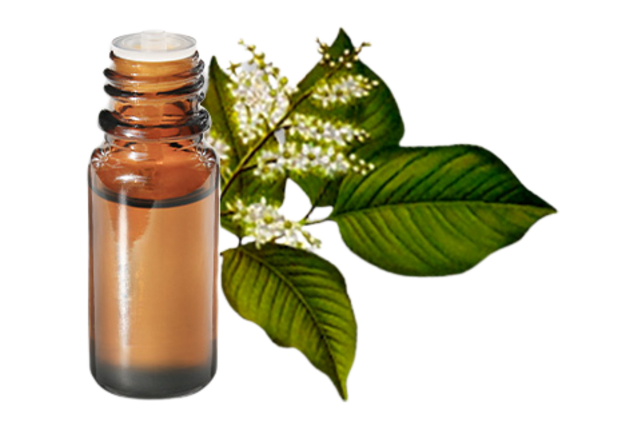
Essential oil of Copaiba balm

Renowned for its soothing and restorative properties, Copaiba Balsam, also known as Copaiba oil, is traditionally recommended for preparing massage oils for joint health. Copaiba Balsam can also be used in skincare products for skin with imperfections.

How to use

  • Skin application and massage

    Skin application and massage

    Suitable

  • Food grade

    Food grade

  • Diffusion

    Diffusion

    Appropriate

  • Aromatherapy bath

    Aromatherapy bath

    Appropriate

  • Cosmetic active ingredient

    Cosmetic active ingredient

    Appropriate

Features

Properties and uses

Precautions

Find out more

Features

Production process

Oleoresin (balsam) traditionally extracted from the heart of the tree

Part of the plant used

Oleoresin

Botanical name

Copaifera officinalis

Warning

The properties, information and methods of use below are quotes from reference books or websites on aromatherapy, hydrolatherapy and phytotherapy. This general information is provided for informative purposes only and in no way constitutes medical guidance. Under no circumstances can this information be used as a substitute for a medical diagnosis, consultation or follow-up, nor can it incur our liability. We recommend that you consult the guide to essential oils before using them, so that you are aware of any precautions that need to be taken. If in doubt, consult a doctor before using essential oils.

Properties and uses

Copaiba Balsam is traditionally used for: Acne, pimples, skin allergies, arthritis, osteoarthritis, rheumatism, abrasions, cuts, sprains, strains, etc.

Health

Beauty

Wellness

Find out more

Properties

For health, Copaiba Balsam is renowned for the following properties:

  • Powerful anti-inflammatory

  • Pain relief

  • Stimulates blood circulation

Uses

Copaiba Balsam is traditionally used to improve the following conditions:

  • Catarrhal urinary tract infections, urethritis, cystitis

  • Catarrhal bronchopulmonary infections

  • Injuries and muscular pain: contusions, strains, minor sprains, strains, aches, haematomas, etc.

  • Joint pain, inflammatory pain, osteoarthritis of the spine and limbs, rheumatism, arthritis

  • Sports preparation and recovery

In practice

Soothe sore areas before or after exercise: Mix into your oil blend. Apply your mixture locally, massaging lightly into the area concerned.

Precautions

  • Keep out of reach of children.

  • Not recommended during the first 3 months of pregnancy.

  • Use with caution over a short period.

  • As a general rule, always test-apply your mixture in the crease of the elbow at least 48 hours before use.

  • Dangerous. Observe precautions for use.

  • Danger. May be fatal if swallowed or if it enters the respiratory tract (if the product is accidentally swallowed, do not induce vomiting).

Find out more

Copaiba Balsam is an oleoresin extracted from various species of South American Copaifera trees. It is recovered directly by piercing the trunk of these trees. This oleoresin can be steam distilled to obtain an essential oil.

First recorded in Europe in the early 17th century, Copaiba Balsam is used by pharmacists as a powerful anti-inflammatory and healing agent, and by perfumers for its powerful scent.

Equivalents

Essential Oils

1 ml = approximately 35 drops (with our Aroma-Zone dropper caps)

Carrier oils

1 pump (Aroma-Zone aluminium pump) = approx. 0.15 ml

Mass / Volume conversion (for a liquid)

Mass (g) = Density x Volume (ml) at 20°C

Further information

1 full teaspoon = between 3 and 4.5 ml

1 full tablespoon = between 7.5 and 10 ml


However, these spoon ratios depend on a number of factors (e.g. viscosity of the liquid, temperature, depth and size of the spoon, rheological behaviour of the liquid), and we strongly advise you to use precise measuring equipment, such as graduated test tubes, graduated pipettes, and precision scales.

Aromatherapy recipes from the bibliography

EO = Essential Oil VO = Carrier Oil or Macerated Oil

Acne rosacea (A. Maillard)

Health & wellbeingSkin problems

Applied to the skin: Aroma-Zone Rosacea tip

Make in a 30-ml tinted glass bottle with dropper

  • 10 drops of mastic tree essential oil, Pistacia lentiscus
  • 10 drops of Mediterranean cypress essential oil, Cupressus sempervirens
  • 10 drops of Corsican helichrysum italicum essential oil, Helichrysum italicum
  • 20 drops of German chamomile essential oil, Matricaria recutita
  • 10 drops of Copahu balsam, Copaifera officinalis
  • 10 ml of tamanu carrier oil
  • 5 ml of calendula macerated oil
  • 23 ml of safflower carrier oil

Apply to the face in the morning and evening, massaging in gently but deeply (to encourage circulation), every day until the skin is satisfactorily treated.

Extract from the book "Le grand guide de l'aromathérapie et des soins beauté naturels" by Aude Maillard and Aroma-Zone, published by J'ai Lu, 2016

Acne (A. Maillard)

Health & wellbeingSkin problems

Dermal use: Aroma-tip to stop pimples or micro-cysts

In a 10 ml tinted glass bottle, fitted with a dropper.

  • 4 ml Tea Tree Essential Oil (Melaleuca alternifolia)
  • 2 ml Copaiba balsam (Copaifera officinalis)
  • 4 ml Atlas Cedar essential oil (Cedrus atlantica)

Use: Apply one drop with the tip of your finger, 2 times a day.

WARNINGS: for those with epilepsy, replace Atlas Cedar essential oil with Bay Laurel essential oil.

Extract from the book Le Grand Guide de l'Aromathérapie et des Soins Beauté Naturels, by Aude Maillard and Aroma-Zone, published by J'ai Lu, 2016.

Seborrhoeic dermatitis (A. Maillard)

Health & wellbeingSkin problems

To be made in a 50 g jar

  • 1 g Rose geranium essential oil, Pelargonium graveolens CV Egypt

  • 1 g Menthol eucalyptus essential oil, Eucalyptus dives

  • 1 g Palmarosa essential oil, Cymbopogon martinii

  • 1 g Tea tree essential oil, Melaleuca alternifolia

  • 1 g Copaiba balsam, Copaifera officinalis

  • 1 g Jojoba oil

  • 44 g Aloe vera gel

Use: Apply generously to the areas to be treated (skin or scalp), at least twice a day (every evening for the scalp and shampoo the next morning), for 15 days

DIRECTIONS: equipment required: a mini-mortar, a mini-scale, a mini-pestle and a mini-whisk. Place the mortar on the scale and tare it. Weigh all the essential oils in the quantities indicated, then add the Jojoba oil and blend with the whisk. Then add up to 50 g of Aloe vera gel. Mix off the scales until the two phases are completely homogenous. This gel should be kept in a cool place and used within two months.

Extract from the book 'Le Grand Guide de l'Aromathérapie et des Soins Beauté Naturels', by Aude Maillard and Aroma-Zone, published by J'ai Lu, 2016

Cystitis (T. Telphon)

Health & wellbeingUrinary issues

  • 2 ml Birch essential oil

  • 2 ml Cinnamon bark essential oil

  • 2 ml Copaiba essential oil

  • 20 ml Evening primrose oil

  • 20 ml Macadamia oil

Directions for use: Gently massage the mixture into the lower abdomen. Repeat 1 or 2 times a day if necessary until healed, in addition to a curative treatment

Aroma-Zone Note: Sri Lankan Cinnamon Bark essential oil has the same properties as Chinese Cinnamon essential oil and can therefore be used in place of it.

Bibliography

1

'Huiles essentielles - 2000 ans de découvertes aromathérapeutiques pour une médecine d'avenir'

Dominique Baudoux

2

'The Practice Of Aromatherapy'

Dr Jean Valnet - Éditions Maloine

3

'L'aromathérapie exactement'

P. Franchomme and Dr D. Pénoël

4

'La bible de l'aromathérapie'

Nerys Purchon

5

'L'ABC des huiles essentielles'

Dr Telphon

6

'Aromatherapy'

Nelly Grosjean

7

'Les huiles essentielles pour votre santé'

G. Roulier

8

"Les cahiers pratiques de l'aromathérapie française - Pédiatrie"

Dominique Baudoux - Editions Amyris

9

Aroma-News newsletters

NARD Association

10

"L'aromathérapie - Se soigner par les huiles essentielles"

Dominique Baudoux - Editions Amyris