
Guide to essential oils

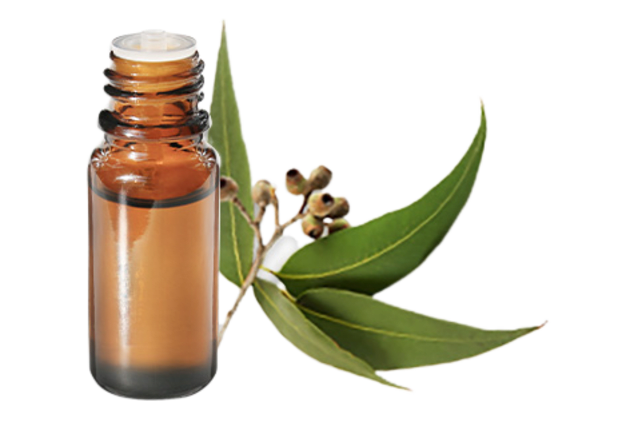
Essential oil of Eucalyptus globulus

Refreshing, Eucalyptus globulus essential oil is known for its many benefits for the respiratory system. Powerful, Eucalyptus globulus essential oil is traditionally used to clear the air. Purifying, Eucalyptus globulus essential oil helps to combat winter discomforts.

How to use

  • Skin application and massage

    Skin application and massage

    Appropriate

  • Diffusion

    Diffusion

    Appropriate

  • Food grade

    Food grade

    Possible but not recommended

  • Aromatherapy bath

    Aromatherapy bath

    Possible but not recommended

  • Cosmetic active ingredient

    Cosmetic active ingredient

Features

Properties and uses

Precautions

Find out more

Features

Production process

Complete distillation by steam distillation and rectification by successive distillation

Part of the plant used

Leaves

Botanical name

Blue Gum Eucalyptus

Warning

The properties, information and methods of use below are quotes from reference books or websites on aromatherapy, hydrolatherapy and phytotherapy. This general information is provided for informative purposes only and in no way constitutes medical guidance. Under no circumstances can this information be used as a substitute for a medical diagnosis, consultation or follow-up, nor can it incur our liability. We recommend that you consult the guide to essential oils before using them, so that you are aware of any precautions that need to be taken. If in doubt, consult a doctor before using essential oils.

Properties and uses

Eucalyptus globulus essential oil is traditionally used for: Bronchitis, the flu, immunity (stimulating the bodyʹ), laryngitis, pharyngitis, colds, blocked nose, runny nose, sinusitis, chesty cough, etc.

Health

Find out more

Properties

Eucalyptus globulus essential oil is renowned for its health benefits :

  • Anticatarrhal, powerful expectorant and mucolytic, thanks to its high content of 1.8-cineole (eucalyptol) and alpha-pinene.

  • Antibacterial

  • Antifungal

  • Antiviral

  • Air antiseptic

  • Positivising

  • Refreshing

Uses

It is traditionally used to improve the following conditions:

  • Respiratory tract disorders: asthmatic bronchitis, rhinopharyngitis, laryngitis, sinusitis…

  • Viral infections: flu, colds…

  • To thin bronchial sputum

  • Viral adenitis (mononucleosis)

  • Skin candidiasis

Synergies

Purifying for the respiratory tract: Summer savoury, Thyme, Clove, Pine, Rosemary and Lavender essential oils.

In practice

Respiratory comfort: Mix in your oil blend. Massage or rub your blend into the chest and upper back.

Air purification: Atmospheric diffusion (10 minutes/hour)

Precautions

  • Do not use during the first three months of pregnancy or while breastfeeding, or on children under the age of 6.

  • Not recommended for asthmatics due to its high 1.8-cineole content (especially when inhaled or diffused).

  • Preferably for use on the skin (massage over the organ concerned, along the spinal column or on the arches of the feet) or as a vapour/inhalation, as the oral route is unsuitable****for this essential oil.

  • Irritating in large doses, always dilute well for skin application.

  • May interact with medication (due to its 1.8-cineole content, which has an inducing effect on certain enzymes), do not use orally without medical advice at the same time as taking medication.

  • Very powerful, it may irritate some people when diffused. In this case, mix it with milder essential oils (True lavender, Balsam fir, etc.) or prefer Eucalyptus smithii or radiata.

  • Keep out of reach of children.

  • Some natural compounds in this essential oil may present an allergy risk for sensitive individuals when the oil is incorporated into a cosmetic composition (in accordance with the 7th Amendment to the European Cosmetics Directive (2003/15/EC)): limonene.

  • As a general rule, always perform a patch test of your mixture in the crease of your elbow at least 48 hours before use.

Find out more

Eucalyptus trees originated in Australia and Tasmania. Today they can be found in Europe, Africa and America.

Its Latin name 'globulus' refers to the shape of the fruit's cap. In southern Europe,Blue Eucalyptus has long been used to produce paper pulp.

Equivalents

Essential Oils

1 ml = approximately 35 drops (with our Aroma-Zone dropper caps)

Carrier oils

1 pump (Aroma-Zone aluminium pump) = approx. 0.15 ml

Mass / Volume conversion (for a liquid)

Mass (g) = Density x Volume (ml) at 20°C

Further information

1 full teaspoon = between 3 and 4.5 ml

1 full tablespoon = between 7.5 and 10 ml


However, these spoon ratios depend on a number of factors (e.g. viscosity of the liquid, temperature, depth and size of the spoon, rheological behaviour of the liquid), and we strongly advise you to use precise measuring equipment, such as graduated test tubes, graduated pipettes, and precision scales.

Aromatherapy recipes from the bibliography

EO = Essential Oil VO = Carrier Oil or Macerated Oil

Acute bronchitis (T. Telphon)

Health & wellbeingRespiratory problems

  • True lavender essential oil: 2 to 3 ml

  • Sweet marjoram essential oil: 2 to 3 ml

  • Blue gum eucalyptus essential oil: 2 to 3 ml

  • Arnica oil: 10 ml

  • Sweet almond carrier oil: 10 ml

  • Sunflower oil: 10 ml

Use: Rub your chest vigorously with a few drops of the mixture. Repeat 2 to 4 times a day, if necessary.

Bacterial catarrhal bronchitis in adults (P. Franchomme)

Health & wellbeingRespiratory problems

Applied to the skin for mucolytic, expectorant and anti-infectious purposes:

  • Eucalyptus globulus essential oil

  • Menthol eucalyptus essential oil

  • Niaouli essential oil

  • in the same proportions

Use: Thoracic unctions 2 to 3 times a day for 5 to 10 days, depending on the course of the infection.

Bronchitis (chesty cough) (D. Festy)

Health & wellbeingRespiratory problems

  • Niaouli essential oil

  • Eucalyptus globulus essential oil

  • Ravintsara essential oil

Use: Mix equal parts of the essential oils in a bottle. Diffuse 10 ml morning and evening in living areas.

Bibliography

1

'Huiles essentielles - 2000 ans de découvertes aromathérapeutiques pour une médecine d'avenir'

Dominique Baudoux

2

'Aromathérapie' Éditions Maloine

Dr Jean Valnet

3

'L'aromathérapie exactement'

P. Franchomme and Dr D. Pénoël

4

'La bible de l'aromathérapie'

Nerys Purchon

5

ABC des huiles essentielles

Dr Telphon

6

'Aromatherapy'

Nelly Grosjean

7

'Les huiles essentielles pour votre santé'

G. Roulier

8

" Les cahiers pratiques de l'aromathérapie française - Pédiatrie" - Editions Amyris

Dominique Baudoux

9

Aroma-News newsletters from the NARD association

10

"L'aromathérapie - Se soigner par les huiles essentielles" - Editions Amyris

Dominique Baudoux