
Guide to essential oils

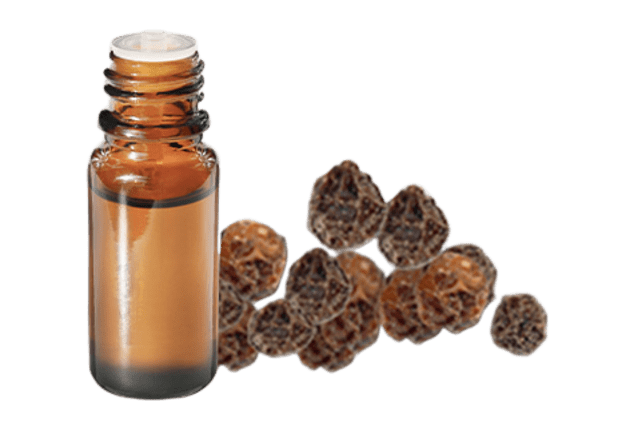
Essential oil of Organic black pepper

Black Pepper essential oil, with its warm, spicy fragrance, warms the body during the cold seasons. Stimulating and invigorating, Black Pepper essential oil invigorates when you're exhausted. Black pepper essential oil is renowned for its aphrodisiac qualities. Useful before sport, Black Pepper essential oil is known to warm muscles before exercise.

How to use

  • Aromatherapy bath

    Aromatherapy bath

    Appropriate

  • Cosmetic active ingredient

    Cosmetic active ingredient

    Appropriate

  • Diffusion

    Diffusion

    Appropriate

  • Food grade

    Food grade

    Appropriate

  • Skin application and massage

    Skin application and massage

    Suitable

Features

Properties and uses

Precautions

Find out more

Features

Production process

Complete steam distillation

Part of the plant used

Fruit

Botanical name

Piper nigrum

Warning

The properties, information and methods of use below are quotes from reference books or websites on aromatherapy, hydrolatherapy and phytotherapy. This general information is provided for informative purposes only and in no way constitutes medical guidance. Under no circumstances can this information be used as a substitute for a medical diagnosis, consultation or follow-up, nor can it incur our liability. We recommend that you consult the guide to essential oils before using them, so that you are aware of any precautions that need to be taken. If in doubt, consult a doctor before using essential oils.

Properties and uses

Black pepper essential oil is traditionally used for : Arthritis, osteoarthritis, rheumatism, poor digestion, toothache (cavities, abscesses), back pain, etc.

Health

Wellness

Find out more

Properties

Black pepper essential oil is recognised for its health properties:

  • Analgesic, odontalgic (highly effective against dental pain)

  • Tonic, powerful stimulant of the digestive glands

  • Anticatarrhal, expectorant, fluidifier

  • Circulatory tonic

  • Febrifuge

Uses

It is traditionally used to improve the following situations:

  • Odontalgia (toothache)

  • Angina, laryngitis, chronic bronchitis

  • Digestive problems

  • Rheumatic pain

  • Muscle p;

  • Preparation for sport

In practice

Soothing mouthwash: Mix into your mixture.

Respiratory comfort: For air diffusion, in synergy with other oils.

Precautions

  • May be irritating for sensitive skin; always use diluted on the skin.

  • Keep out of reach of children.

  • Avoid contact with eyes.

  • Certain natural compounds in this essential oil may present an allergy risk for sensitive individuals when the oil is used in cosmetic formulations (according to the 7th Amendment to the European Cosmetics Directive (2003/15/EC)): limonene and, to a lesser extent, linalool.

  • As a general rule, always carry out a patch test on the inside of the elbow at least 48 hours before use.

Find out more

The black pepper tree is a climbing tree that can reach several metres in height. It is grown mainly in South and West India, but also in Madagascar, Malaysia and Brazil. To obtain black pepper, the berries are fermented and then dried. In the Middle Ages, it was considered "black gold" and was the subject of much controversy.

Aromatherapy recipes from the bibliography

EO = Essential Oil VO = Carrier Oil or Macerated Oil

Reduced concentration (D. Baudoux)

Health & wellbeingNerve pain and disorders

  • 2 ml Exotic Basil essential oil
  • 1 ml Scots Pine essential oil
  • 2 ml Peppermint essential oil
  • 1 ml black pepper essential oil

Use: 2 drops of the mixture on 1/4 sugar cube morning and noon before meals.

Joint pain in sportsmen and women (N. Purchon)

Health & wellbeingMuscles and joints

  • 10 drops of Black Pepper essential oil
  • 8 drops of Clove essential oil
  • 16 drops Ginger essential oil
  • 2 tablespoons grape seed oil

Use: Gently massage the aching limb two or three times a day.

Muscle pain in adults (N. Purchon)

Health & wellbeingMuscles and joints

  • 5 drops of Black Pepper essential oil
  • 15 drops of Marjoram essential oil
  • 15 drops of Juniper essential oil
  • 15 drops of Rosemary Camphor essential oil
  • 3 tablespoons grape seed oil

Use: Apply by massage or in the bath (one tablespoon).

Treatment oil - rheumatoid arthritis (N. Purchon)

Health & wellbeingMuscles and joints

  • 1 teaspoon Benzoin Absolute
  • 1 teaspoon Juniper essential oil
  • 1/2 teaspoon black pepper essential oil
  • 1/4 teaspoon Ginger essential oil
  • 1/4 teaspoon rosemary (camphor) essential oil

Procedure: Pour all the ingredients into a dropper and shake vigorously. Leave to stand for 4 days before use, to allow the different substances to amplify their effects through synergy.

Use: Pour 10 drops of product into 10 drops of carrier oil. Add the mixture to a glass filled with magnesium salt, then sprinkle into the bath water. Shake well to mix, then remain immersed for 15 to 30 minutes, gently massaging the painful limbs. For a body massage, mix 14 drops of product in a tablespoon of grapeseed oil or sweet almond oil. Gently massage into the skin.

Transient for constipation in adults (N. Purchon)

Health & wellbeingDigestive problems

  • 2 drops of Black Pepper essential oil
  • 2 drops of Peppermint essential oil
  • 1 teaspoon grape seed oil

Use: Massage the abdomen clockwise two or three times a day.

Oil for restless legs (N. Purchon)

Health & wellbeingCirculatory disorders

  • 30 drops Rosemary essential oil
  • 10 drops of Pepper essential oil
  • 20 drops Garden Marjoram essential oil (shell)
  • 10 drops of Lavender essential oil
  • 4 tablespoons grape seed oil

Use: Massage from the ankles to the top of the thighs before going to bed.

Equivalents

Essential Oils

1 ml = approximately 35 drops (with our Aroma-Zone dropper caps)

Carrier oils

1 pump (Aroma-Zone aluminium pump) = approx. 0.15 ml

Mass / Volume conversion (for a liquid)

Mass (g) = Density x Volume (ml) at 20°C

Further information

1 full teaspoon = between 3 and 4.5 ml

1 full tablespoon = between 7.5 and 10 ml


However, these spoon ratios depend on a number of factors (e.g. viscosity of the liquid, temperature, depth and size of the spoon, rheological behaviour of the liquid), and we strongly advise you to use precise measuring equipment, such as graduated test tubes, graduated pipettes, and precision scales.

Bibliography

1

'Huiles essentielles - 2000 ans de découvertes aromathérapeutiques pour une médecine d'avenir'

Dominique Baudoux

2

"Aromatherapy"

Dr Jean Valnet - Éditions Maloine

3

'L'aromathérapie exactement'

P. Franchomme and Dr D. Pénoël

4

'La bible de l'aromathérapie'

Nerys Purchon

5

'L'ABC des huiles essentielles'

Dr Telphon

6

'Aromatherapy'

Nelly Grosjean

7

'Les huiles essentielles pour votre santé'

G. Roulier

8

'Les cahiers pratiques de l'aromathérapie française - Pédiatrie'

Dominique Baudoux - Editions Amyris

9

Aroma-News newsletters from the NARD association

10

'Aromatherapy - Healing with essential oils'

Dominique Baudoux - Editions Amyris