
Guide to essential oils

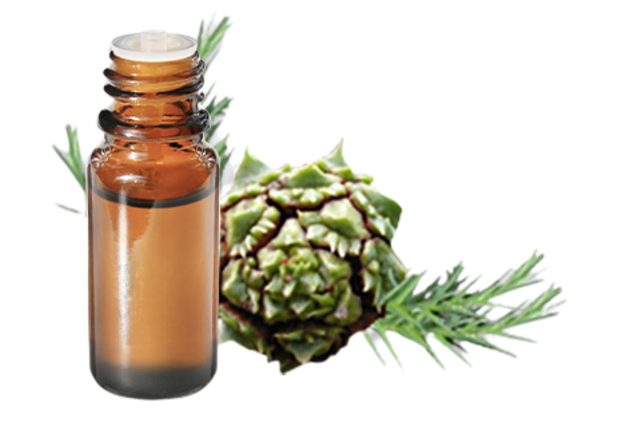
Essential oil of Japanese Cedar

Japanese cedar wood is known to repel insects and termites. The woody-smelling Japanese cedar essential oil extracted from it is perfect for purifying the air. Calming Japanese cedar essential oil is also used in sports massage oils.

How to use

  • Skin application and massage

    Skin application and massage

    Appropriate

  • Diffusion

    Diffusion

    Suitable

  • Aromatherapy bath

    Aromatherapy bath

    Possible but not recommended

  • Cosmetic active ingredient

    Cosmetic active ingredient

    Possible but not recommended

Features

Properties and uses

Precautions

Find out more

Features

Production process

Steam distillation

Part of the plant used

Branches

Botanical name

Cryptomeria japonica

Warning

The properties, information and methods of use below are quotes from reference books or websites on aromatherapy, hydrolatherapy and phytotherapy. This general information is provided for informative purposes only and in no way constitutes medical guidance. Under no circumstances can this information be used as a substitute for a medical diagnosis, consultation or follow-up, nor can it incur our liability. We recommend that you consult the guide to essential oils before using them, so that you are aware of any precautions that need to be taken. If in doubt, consult a doctor before using essential oils.

Properties and uses

Japanese cedar essential oil is traditionally used for: Lice and nits, insect repellent

Health

Find out more

Properties

In terms of health, Japanese cedar essential oil is recognised for the following properties:

  • Antibacterial, particularly active on airborne bacteria

  • Reputed to repel insects, particularly termites

  • Muscle relaxant, painkiller

Uses

It is traditionally used to improve the following situations:

  • Fighting bacterial infections

  • Air purification

  • Repelling insects and larvae

  • Muscle aches and pains, joint problems, rheumatism, tendonitis, neck stiffness and aches, migraines

In practice

Soothe painful areas: mix into your oil blend. Apply your mixture locally, massaging lightly into the area concerned.

As a complement to lice treatments: mix into your shampoo.

Air purification: for air diffusion.

Precautions

  • Not to be used during the first three months of pregnancy or in children under 3 years old.

  • No internal use.

  • Keep out of reach of children.

  • Avoid contact with eyes.

  • Certain natural compounds in this essential oil may present an allergy risk for sensitive individuals when the oil is incorporated into a cosmetic formulation (according to the 7th Amendment to the European Cosmetics Directive (2003/15/EC)): limonene, linalool.

  • As a general rule, always perform a patch test on the inside of the elbow at least 48 hours before use.

  • Dangerous. Observe safety precautions.

  • Flammable liquid and vapours. May cause skin allergy. Causes skin irritation (risk associated with the product in its pure form). May be fatal if ingested and enters the airways (if the product is accidentally swallowed, do not induce vomiting). Toxic to aquatic life, causing long-lasting effects (in the event of a major spillage into water).

Find out more

Considered Japan's national tree, Cryptomeria japonica or Suji is commonly planted around temples. In a pot, it can be used in place of a Christmas tree. Its reddish-pink wood is rot-proof and decay-resistant. It is often used in construction in Japan.

Its essential oil is renowned for purifying the air and your home.

Equivalents

Essential Oils

1 ml = approximately 35 drops (with our Aroma-Zone dropper caps)

Carrier oils

1 pump (Aroma-Zone aluminium pump) = approx. 0.15 ml

Mass / Volume conversion (for a liquid)

Mass (g) = Density x Volume (ml) at 20°C

Further information

1 full teaspoon = between 3 and 4.5 ml

1 full tablespoon = between 7.5 and 10 ml


However, these spoon ratios depend on a number of factors (e.g. viscosity of the liquid, temperature, depth and size of the spoon, rheological behaviour of the liquid), and we strongly advise you to use precise measuring equipment, such as graduated test tubes, graduated pipettes, and precision scales.

Bibliography

1

"Chemical composition and antimicrobial activity of the essential oil of Cryptomeria japonica".

Cha JD, Jeong MR, Jeong SI, Moon SE, Kil BS, Yun SI, Lee KY, Song YH.

2

"Essential oil from the leaves of Cryptomeria japonica acts as a silverfish (Lepisma saccharina) repellent and insecticide"

Wang S-Y, Lai W-C, Chu F-H, Lin C-T, Shen S-Y, Chang S-T. J.

3

"Bioactivity of selected plant essential oils against the yellow fever mosquito Aedes aegypti larvae"

Cheng SS, Chang HT, Chang ST, Tsai KH, Chen WJ.