
Guide to essential oils

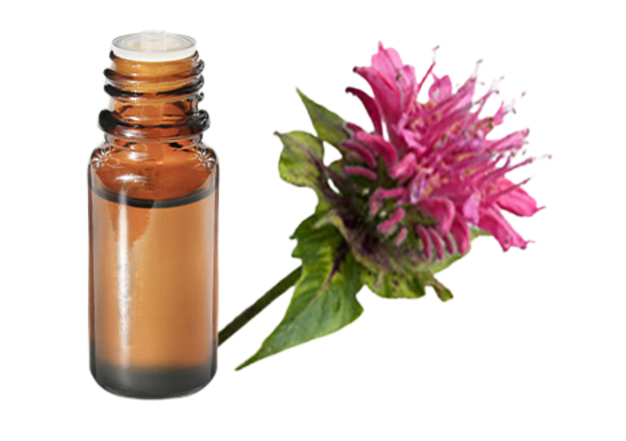
Essential oil of Wild bergamot

A powerful purifier, wild bergamot essential oil is traditionally reputed to help combat many skin problems. With its soft, sweet scent, wild bergamot essential oil has a slightly sweet note that makes it very pleasant to use.

How to use

  • Skin application and massage

    Skin application and massage

    Suitable

  • Aromatherapy bath

    Aromatherapy bath

    Appropriate

  • Diffusion

    Diffusion

    Appropriate

  • Cosmetic active ingredient

    Cosmetic active ingredient

    Appropriate

Features

Properties and uses

Precautions

Find out more

Features

Production process

Complete steam distillation

Part of the plant used

Flowering tops

Botanical name

Monarda fistulosa

Warning

The properties, information and methods of use below are quotes from reference books or websites on aromatherapy, hydrolatherapy and phytotherapy. This general information is provided for informative purposes only and in no way constitutes medical guidance. Under no circumstances can this information be used as a substitute for a medical diagnosis, consultation or follow-up, nor can it incur our liability. We recommend that you consult the guide to essential oils before using them, so that you are aware of any precautions that need to be taken. If in doubt, consult a doctor before using essential oils.

Properties and uses

Wild bergamot essential oil is traditionally used for: Fungal infections

Health

Find out more

Properties

Wild bergamot essential oil is recognised for its health properties:

  • Powerful broad-spectrum antibacterial action

  • An effective antifungal agent, it fights fungus effectively.

  • Antiviral

  • Uterotonic

  • Neurotonic and general tonic

  • Skin tonic

Uses

It is traditionally used to improve the following conditions:

  • Colds, flu, sinusitis, ear infections

  • Skin, gynaecological, nail and subungual fungal infections, dermatitis

  • Urinary tract and genital infections

  • Fatigue

  • Skin care

Precautions

  • Do not use during pregnancy.

  • For external use only.

  • Keep out of reach of children.

  • Avoid contact with eyes.

  • Certain natural compounds contained in this essential oil may present a risk of allergy in certain sensitive individuals when the essential oil is incorporated into a cosmetic composition (according to the 7th Amendment of the European Directive on cosmetic products (2003/15/EC)): geraniol and, to a lesser extent, citral (geranial), linalool.

  • As a general rule, always carry out a test application of your mixture, in the crease of the elbow, at least 48 hours before using it.

  • Dangerous. Observe safety precautions.

  • Causes serious eye damage. May cause skin allergy. Causes skin irritation (risk associated with the product in its pure form).

Find out more

Wild bergamotis a botanical perennial plant native toNorth America, belonging to the Lamiaceae family. Cultivated for its aromatic and medicinal properties, this plant was used by Native American tribes as a decoction and poultice.

Ornamental in gardens, it produces lilac-coloured flowers in late summer. Rich in pollen and nectar, they attract bees and butterflies.

Edible, the flowers are used in a variety of dishes and salads. The leaves, either fresh or dried, can be used as an infusion.

Aromatherapy recipes from the bibliography

EO = Essential Oil VO = Carrier Oil or Macerated Oil

Erysipelas: superficial cellulitis caused by streptococci (D. baudoux)

Health & wellbeingSkin problems

  • 1 ml Monarda fistulosa essential oil (wild bergamot)
  • 1 ml Melaleuca alternifolia essential oil (tea tree)
  • 1 ml Thymus vulgaris ct thuyanol essential oil (Thyme with thuyanol)
  • 0.5 ml Mentha piperita essential oil (Peppermint)
  • 0.5 ml Achillea millefolium essential oil (yarrow)
  • 11 ml Corylus avellana oil (Hazelnut)

Use: 4 to 6 applications a day as needed until marked improvement.

Lichen (D. Baudoux)

Health & wellbeingSkin problems

  • 2 ml Cinnamomum camphora essential oil (Ravintsara)
  • 3 ml Monarda fistulosa essential oil (wild bergamot)
  • 3 ml Cistus ladaniferus ct pinene essential oil (Rock-rose)
  • 1 ml Origanum heracleoticum essential oil (green oregano)
  • 1 ml Melaleuca alternifolia essential oil (tea tree)
  • 20 ml Transcutol

Use: 1 topical application 3 times a day for 3 weeks

Aroma-Zone comment: Transcutol is a little-used pharmaceutical preparation which allows fats such as essential oils to penetrate the skin easily. It can easily be replaced by a dry carrier oil such as Hazelnut, Kukui or Macadamia oil.

Athlete's foot (D. Baudoux)

Health & wellbeingSkin problems

  • 1 ml Laurus nobilis essential oil (bay laurel)
  • 3 ml Lavandula latifolia spica essential oil (Spike lavender)
  • 2 ml Monarda fistulosa essential oil (wild bergamot)
  • 20 ml Transcutol

Use: 3 local applications per day for a minimum of 15 days

Aroma-Zone comment: Transcutol is a little-used pharmaceutical preparation that allows fats such as essential oils to penetrate the skin easily. It can easily be replaced by a dry carrier oil such as Hazelnut, Kukui or Macadamia oil.

Nail fungus in children (over 6 years and on medical advice) (D. Baudoux)

Health & wellbeingChildren's medical care

  • 3 ml Monarda fistulosa essential oil (wild bergamot)
  • 1 ml Thyme CT thujanol essential oil (can be replaced by thujanol marjoram essential oil)
  • 1 ml Eugenia caryophyllus essential oil (Clove)
  • 2 ml Origanum Origanum heracleoticum essential oil (green oregano)

Use : 1 topical application morning and evening for 3 weeks

Aroma-Zone comment : Transcutol is a little-used pharmaceutical preparation which allows fats such as essential oils to penetrate the skin easily. It can easily be replaced by a dry carrier oil such as Hazelnut, Kukui or Macadamia oil.

Equivalents

Essential Oils

1 ml = approximately 35 drops (with our Aroma-Zone dropper caps)

Carrier oils

1 pump (Aroma-Zone aluminium pump) = approx. 0.15 ml

Mass / Volume conversion (for a liquid)

Mass (g) = Density x Volume (ml) at 20°C

Further information

1 full teaspoon = between 3 and 4.5 ml

1 full tablespoon = between 7.5 and 10 ml


However, these spoon ratios depend on a number of factors (e.g. viscosity of the liquid, temperature, depth and size of the spoon, rheological behaviour of the liquid), and we strongly advise you to use precise measuring equipment, such as graduated test tubes, graduated pipettes, and precision scales.

Bibliography

1

"Les cahiers pratiques de l'aromathérapie française - Dermatologie"

D. Baudoux - Editions Amyris

2

"Les cahiers pratique de l'aromathérapie française - Pédiatrie"

D. Baudoux - Editions Amyris