
Guide to essential oils

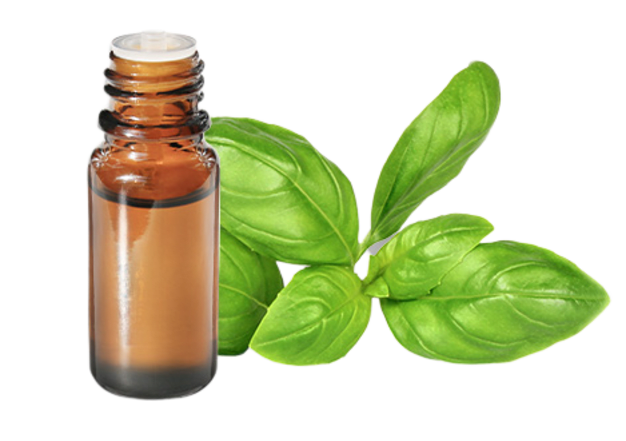
Essential oil of Tropical basil

A powerful calming agent, Tropical Basil essential oil is traditionally used to relieve stress, tension and nervous spasms. Tropical Basil essential oil also relieves intestinal discomfort. Tonic and invigorating, Tropical Basil essential oil combats fatigue.

How to use

  • Skin application and massage

    Skin application and massage

    Appropriate

  • Cosmetic active ingredient

    Cosmetic active ingredient

    Appropriate

  • Aromatherapy bath

    Aromatherapy bath

    Appropriate

  • Food grade

    Food grade

    Appropriate

Features

Properties and uses

Precautions

Find out more

Features

Production process

Complete steam distillation

Part of the plant used

Leaves and flowers

Botanical name

Ocimum basilicum var. basilicum

Warning

The properties, information and methods of use below are quotes from reference books or websites on aromatherapy, hydrolatherapy and phytotherapy. This general information is provided for informative purposes only and in no way constitutes medical guidance. Under no circumstances can this information be used as a substitute for a medical diagnosis, consultation or follow-up, nor can it incur our liability. We recommend that you consult the guide to essential oils before using them, so that you are aware of any precautions that need to be taken. If in doubt, consult a doctor before using essential oils.

Properties and uses

Aroma-Zone Tropical Basil Essential Oil is traditionally used for: Vomiting, nausea

Health

Wellness

Kitchen

Find out more

Properties

Tropical Basil essential oil is renowned for the following health benefits:

  • Powerful antispasmodic

  • Digestive tonic, carminative, helps eliminate gas

  • Analgesic and anti-inflammatory

  • Antiviral, antibacterial

Uses

It is traditionally used to improve the following conditions:

  • Digestive problems: flatulence, indigestion, bloating, gastro-enteritis, nausea, motion sickness, etc.

  • Spasmodic pain: intestinal cramps, menstrual pain, spastic stomach aches, spasmodic colitis, muscle cramps, hiccups, etc.

  • Inflammatory pain: rheumatoid arthritis, rheumatism, muscle strain

  • Tropical infectious diseases, viral hepatitis

  • Nervous disorders: stress, fatigue, depression, insomnia, mental exhaustion, spasmophilia

In practice

Digestive health (spasms) : Mix with your oil blend. Massage the mixture into the stomach.

Support for the female cycle: Mix into your oil blend. Massage the mixture into the lower abdomen.

Precautions

  • Do not use when pregnant or breastfeeding, or on children under the age of 6.

  • May be irritating when used undiluted, always dilute well before applying to the skin.

  • Do not use for prolonged or regular periods without the advice of a professional, especially if used internally. Percutaneous applications are preferred.

  • Not recommended for people taking blood thinners or with blood clotting conditions, oral use prohibited.

  • Certain natural compounds contained in this essential oil may present a risk of allergy in certain sensitive individuals when the essential oil is incorporated into a cosmetic composition (in accordance with the 7th Amendment of the European Directive relating to cosmetic products (2003/15/EC)): linalool, citral (geranial and neral).

  • As a general rule, always carry out a patch test of your preparation on the crook of your elbow, at least 48 hours before using it.

Find out more

The term basil comes from the ancient Greek basilikón meaning "royal plant" and was considered as such in ancient times. In Indian tradition, it is a sacred plant that Indians offer to Krishna, a god who saves the world. It is planted around temples and placed in the hands of the deceased to protect them on their passage to the afterlife. In some parts of Africa, Basil is used to ward off bad luck.

Equivalents

Essential Oils

1 ml = approximately 35 drops (with our Aroma-Zone dropper caps)

Carrier oils

1 pump (Aroma-Zone aluminium pump) = approx. 0.15 ml

Mass / Volume conversion (for a liquid)

Mass (g) = Density x Volume (ml) at 20°C

Further information

1 full teaspoon = between 3 and 4.5 ml

1 full tablespoon = between 7.5 and 10 ml


However, these spoon ratios depend on a number of factors (e.g. viscosity of the liquid, temperature, depth and size of the spoon, rheological behaviour of the liquid), and we strongly advise you to use precise measuring equipment, such as graduated test tubes, graduated pipettes, and precision scales.

Bibliography

1

'Huiles essentielles - 2000 ans de découvertes aromathérapeutiques pour une médecine d'avenir'

Didier Baudoux

2

'Aromathérapie' Éditions Maloine

Dr Jean Valnet

3

'L'aromathérapie exactement'

P. Franchomme and Dr D. Pénoël

4

'La bible de l'aromathérapie'

Nerys Purchon

5

'L'ABC des huiles essentielles'

Dr Telphon

6

'Aromatherapy'

Nelly Grosjean

7

'Les huiles essentielles pour votre santé'

G. Roulier

8

"Les cahiers pratiques de l'aromathérapie française - Pédiatrie" - Editions Amyris

Didier Baudoux

9

Aroma-News newsletters from the NARD association

10

'L'aromathérapie - Se soigner par les huiles essentielles' - Editions Amyris

Didier Baudoux

11

'L'aromathérapie énergétique ; guérir avec l'âme des plantes'

L. Bosson and G. Dietz

12

13

Saveurs et bien-être. La cuisine aux huiles essentielles. Editions Filipacchi.

Le Foll N. and Da Costa B. (2005)

14

Cuisinons avec les huiles essentielles. Des trésors de saveurs et de vitalité. Editions Anagramme.

Davy O. and Fayolle M. (2007)

15

La cuisine aux huiles essentielles. Des recettes saines et créatives. Editions Ambre.

Pataud A. (2004)

16

17

18