
Guide to essential oils

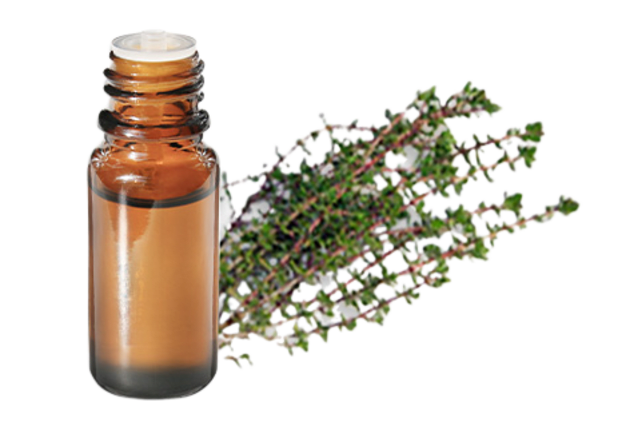
Essential oil of Thymol thyme

An energising nerve tonic, Thymol Thyme essential oil is known for combating physical and mental fatigue. A broad-spectrum purifier, Thymol Thyme essential oil is a precious ally in winter. Thymol Thyme essential oil can also be used to cleanse and treat skin problems. A powerful antiseptic, Thymol Thyme essential oil can be used as a household disinfectant.

How to use

  • Skin application and massage

    Skin application and massage

    Appropriate

  • Diffusion

    Diffusion

    Appropriate

  • Food grade

    Food grade

    Suitable

  • Aromatherapy bath

    Aromatherapy bath

  • Cosmetic active ingredient

    Cosmetic active ingredient

Features

Properties and uses

Precautions

Find out more

Features

Production process

Complete steam distillation

Part of the plant used

Flowering tops

Botanical name

Thymus Vulgaris with Thymol

Warning

The properties, information and methods of use below are quotes from reference books or websites on aromatherapy, hydrolatherapy and phytotherapy. This general information is provided for informative purposes only and in no way constitutes medical guidance. Under no circumstances can this information be used as a substitute for a medical diagnosis, consultation or follow-up, nor can it incur our liability. We recommend that you consult the guide to essential oils before using them, so that you are aware of any precautions that need to be taken. If in doubt, consult a doctor before using essential oils.

Properties and uses

Aroma-Zone thymol thyme essential oil is traditionally used for: abscesses, boils, paronychia, bronchitis, diarrhoea, toothache (cavities, abscesses), gastrointestinal infections, urinary tract infections, laryngitis, pharyngitis, etc.

Health

Wellness

Find out more

Properties

Thymol thyme essential oil is renowned for the following health benefits:

  • A powerful, broad-spectrum disinfectant: antibacterial, antifungal, antiviral and pest repellent.

  • Immune stimulant

  • Digestive, carminative, aperitif

  • Expectorant

Uses

It is traditionally used to improve the following situations:

  • ENT infections: bronchitis, pharyngitis, colds, coughs, sinusitis, sore throat, etc.

  • Intestinal infections: dysentery, diarrhoea

  • Urinary tract infections: cystitis, urethritis

  • Oral infections

  • Sciatica, lumbago, osteoarthritis, rheumatism

Synergies

  • Respiratory health: Eucalyptus and Lavender essential oils

  • Skin problems: Geranium essential oil

  • Diffusion: Eucalyptus, Pine, Rosemary, Cajeput and Lavender essential oils

In practice

Purifying, cleansing: Blend into your oil mixture. Massage or rub the mixture into the area or organ concerned. To soothe the respiratory tract, apply to the chest and back.

Precautions

  • Not suitable for pregnant or breastfeeding women or children.

  • Dermocaustic: never use undiluted on the skin. Always use well diluted for cutaneous use (max. 5% for localised use).

  • Very powerful, use in low doses and for limited periods only.

  • Contraindicated in cases of hepatic insufficiency.

  • Keep out of reach of children.

  • Avoid contact with eyes.

  • Certain natural compounds contained in this essential oil may present a risk of allergy for certain sensitive individuals when the essential oil is incorporated into a cosmetic composition (in accordance with the 7th Amendment of the European Directive on cosmetic products (2003/15/EC)): limonene, linalool.

  • As a general rule, always test-apply your mixture in the crease of the elbow at least 48 hours before use.

  • For any use as a vapour, this powerful essential oil should be strongly diluted (max. 5%) with other milder essential oils.

Find out more

The name Thymus comes from the Greek thumon, meaning "perfume", due to the pleasant smell given off by the plant naturally or when burnt. The ancient Egyptians used thyme to embalm the dead. The Greeks burnt it as an offering to the gods in temples or public squares. At the time, the plant was thought to be a source of courage. They used it to flavour their food and in their baths for its stimulating properties. The Romans used it in cosmetics, to purify their homes and to flavour cheeses and liqueurs.

Aromatherapy recipes from the bibliography

Anthrax and boils (c. Clergeaud)

Health & wellbeingSkin problems

  • 200 ml of Sweet Almond carrier oil
  • 20 drops of Thymol Thyme essential oil
  • 40 drops of wild carrot essential oil
  • 40 drops of Bay Laurel essential oil

Directions: Mix all the ingredients.

Use: Massage into affected areas.

Pressure sores (under medical supervision) (c. Clergeaud)

Health & wellbeingSkin problems

  • 200 ml of Sweet Almond carrier oil
  • 50 drops of Bay Laurel essential oil
  • 50 drops of True Lavender essential oil
  • 80 drops of Thymol Thyme essential oil
  • 80 drops of gum rockrose essential oil
Flu-busting bath salts (M. Bousquet)

Health & wellbeingENT problems

  • 250 g of coarse sea salt
  • 45 g of lotion powder
  • 15 ml of Olive carrier oil
  • 5 drops of Thyme essential oil
  • 5 drops of Narrow-Leaved Eucalyptus essential oil
  • 5 drops of Scots Pine essential oil

Directions: Mix the coarse salt and lotion powder in a bowl. Mix the essential and carrier oils, then add to the previous mixture, stirring well to avoid clumps. Pour into an airtight jar to prevent moisture from penetrating and dissolving the salt.

Use: Throw a handful into hot bath water.

Equivalents

Essential Oils

1 ml = approximately 35 drops (with our Aroma-Zone dropper caps)

Carrier oils

1 pump (Aroma-Zone aluminium pump) = approx. 0.15 ml

Mass / Volume conversion (for a liquid)

Mass (g) = Density x Volume (ml) at 20°C

Further information

1 full teaspoon = between 3 and 4.5 ml

1 full tablespoon = between 7.5 and 10 ml


However, these spoon ratios depend on a number of factors (e.g. viscosity of the liquid, temperature, depth and size of the spoon, rheological behaviour of the liquid), and we strongly advise you to use precise measuring equipment, such as graduated test tubes, graduated pipettes, and precision scales.

Bibliography

1

'Huiles essentielles - 2000 ans de découvertes aromathérapeutiques pour une médecine d'avenir'

Dominique Baudoux

2

'Aromathérapie' Éditions Maloine

Dr Jean Valnet

3

'L'aromathérapie exactement'

P. Franchomme and Dr D. Pénoël

4

'La bible de l'aromathérapie'

Nerys Purchon

5

'L'ABC des huiles essentielles'

Dr Telphon

6

'Aromatherapy'

Nelly Grosjean

7

"Les huiles essentielles pour votre santé"

G. Roulier

8

'Les cahiers pratiques de l'aromathérapie française - Pédiatrie'- Editions Amyris

Dominique Baudoux

9

Aroma-News newsletters from the NARD association

10

'L'aromathérapie - Se soigner par les huiles essentielles' - Editions Amyris

Dominique Baudoux

11

La cuisine aux huiles essentielles. Des recettes saines et créatives. Editions Ambre.

Pataud A. (2004)

12