
Guide to essential oils

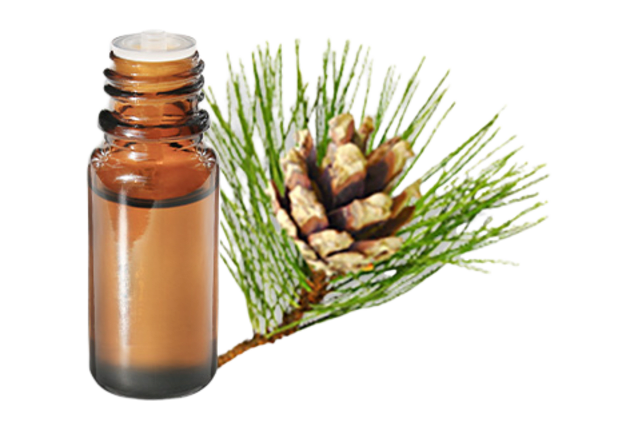
Essential oil of Scots pine

With its fresh forest and pine sap fragrance, Scots Pine essential oil is wonderful for air diffusion. Invigorating and fortifying, Scots Pine essential oil invigorates the body and stimulates the mind. Refreshing, Scots Pine essential oil is also reputed to clear the air.

How to use

  • Skin application and massage

    Skin application and massage

    Appropriate

  • Aromatherapy bath

    Aromatherapy bath

    Appropriate

  • Diffusion

    Diffusion

    Possible but not recommended

  • Food use

    Food use

    Possible but not recommended

  • Cosmetic active ingredient

    Cosmetic active ingredient

    Possible but not recommended

Features

Properties

Precautions

Find out more

Features

Production process

Complete steam distillation

Part of the plant used

Needles

Botanical name

Pinus sylvestris

Warning

The properties, information and methods of use below are quotes from reference books or websites on aromatherapy, hydrolatherapy and phytotherapy. This general information is provided for informative purposes only and in no way constitutes medical guidance. Under no circumstances can this information be used as a substitute for a medical diagnosis, consultation or follow-up, nor can it incur our liability. We recommend that you consult the guide to essential oils before using them, so that you are aware of any precautions that need to be taken. If in doubt, consult a doctor before using essential oils.

Bibliographic references

Franchomme P., Jollois R. et Pénoël D. (2001) L'Aromathérapie exactement. Editions Roger Jollois. Baudoux D. (2002) L'Aromathérapie - Se soigner par les huiles essentielles. Editions Amyris. Willem J.-P. (2005) Les huiles essentielles - Médecine d'avenir. Editions Dauphin. Festy.D (2008) Ma bible des huiles essentielles, Edition Leduc

Properties

Scots Pine essential oil is traditionally used for: Fatigue, exhaustion

Health

Wellness

Find out more

Properties

In the field of health, Scots pine essential oil is recognised for its properties:

  • Hypertensive

  • "cortison-like": effect similar to cortisone, tonic and stimulating

  • Respiratory antiseptic and expectorant

  • Rubbing, warming, skin analgesic

  • Moderately antibacterial

  • Lymphatic decongestant

Uses

It is traditionally used to improve the following conditions:

  • Bronchitis, catarrh, sinusitis, coughs, laryngitis

  • Low blood pressure, physical fatigue

  • Pain: sciatica, lumbago, arthritis, cramp, rheumatism

  • Congestion

Synergies

Respiratory comfort and purification: Ravintsara and Peppermint essential oils for inhalation.

In practice

Respiratory comfort: Mix in your oil blend. Massage or rub your blend into the chest and upper back.

Air purification, prevention: For Air diffusion.

Precautions

  • Irritant in its pure state. Use strongly diluted for cutaneous application.

  • Not recommended during the first three months of pregnancy or for children under 6 years of age.

  • Possible "cortison- like" effect, to be taken into account in the event of a related pathology.

  • Keep out of reach of children.

  • Avoid contact with eyes.

  • Certain natural compounds contained in this essential oil may present a risk of allergy for certain sensitive individuals when the essential oil is incorporated into a cosmetic composition (in accordance with the 7th Amendment to the European Directive on cosmetic products (2003/15/EC)): limonene.

  • As a general rule, always carry out a test application of your mixture, in the crease of the elbow, at least 48 hours before using it.

Find out more

Scots Pine is a resinous tree belonging to the Pinaceae family. Naturally present in a large part of****temperate Europe and Siberia, it is also known as the Northern Pine or Riga Pine. It is the woody species with the widest natural distribution. This conifer can reach 40 metres high and live up to 500 years! Its characteristic orange-red ochre bark makes it easy to recognise among all pine species.

Mainly used for joinery, it is also used for reforestation and to produceturpentine , which is used to make rosin for stringed instruments.

Scots Pine essential oil is obtained by steam distillation of the needles. Its properties include its action in purifying the lungs and clearing the respiratory tract. It has therefore long been traditionally used as a valuable ally for breathing problems. Invigorating, with its forest fragrance, it will restore your energy and dynamism.

Excellent essential oil for the respiratory tract. Purifying, it clears the airways. Used regardless of the season, this essential oil has effective and super pleasant properties. I use it in conjunction with other essential oils so as not to alter the scent, mixed with 70% alcohol. To purify and sanitize the surrounding air...

V
Véronique

Very useful in synergy for inhalations.

C
Claude

Very good product

B
B

RECOMMENDED - ESSENTIAL

A
Armelle

Good smell

J
Joelle

Aromatherapy recipes from the bibliography

EO = Essential Oil VO = Carrier Oil or Macerated Oil

Respiratory conditions in adults: colds, bronchitis, asthma (J-P. Willem)

Health & wellbeingRespiratory problems

Use: A few drops of Scots Pine essential oil in a bowl of hot water. Inhale several times a day.

Persistent fatigue (D. Festy)

Health & wellbeingLow energy, fatigue

  • Lemon essential oil
  • Peppermint essential oil
  • Basil essential oil
  • Scots Pine essential oil

Use : mix equal parts in a 10 ml bottle and diffuse in living areas for 1 hour in the morning and afternoon.

Physical fatigue in adults (D. Baudoux)

Health & wellbeingLow energy, fatigue

  • 1 ml Black Pepper Essential Oil
  • 2 ml Black Spruce essential oil
  • 2 ml Scots Pine essential oil
  • 1 ml Peppermint essential oil
  • 1 ml Balsam Fir essential oil

Use: 4 drops of the blend on the lower back (at kidney level) morning and noon for one week.

Aroma-Zone Note : Dilute this blend in a little carrier oil before application.

Equivalents

Essential Oils

1 ml = approximately 35 drops (with our Aroma-Zone dropper caps)

Carrier Oils

1 pump (Aroma-Zone aluminium pump) = approx. 0.15 ml

Mass / Volume conversion (for a liquid)

Mass (g) = Density x Volume (ml) at 20°C

Further information

1 full teaspoon = between 3 and 4.5 ml

1 full tablespoon = between 7.5 and 10 ml


However, these spoon ratios depend on a number of factors (e.g. viscosity of the liquid, temperature, depth and size of the spoon, rheological behaviour of the liquid), and we strongly advise you to use precise measuring equipment, such as graduated test tubes, graduated pipettes, and precision scales.