
Guide to essential oils

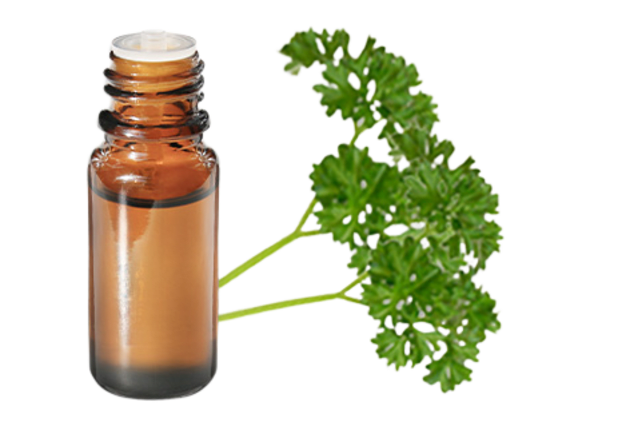
Essential oil of Parsley

Derived from the seeds, parsley essential oil is traditionally recommended to help promote and regulate menstrual cycles. Parsley essential oil has long been used to treat minor asthma attacks.

How to use

  • Skin application and massage

    Skin application and massage

    Suitable

  • Aromatherapy bath

    Aromatherapy bath

    Possible but not recommended

  • Diffusion

    Diffusion

    Possible but not recommended

  • Food grade

    Food grade

    Appropriate

  • Cosmetic active ingredient

    Cosmetic active ingredient

    Possible but not recommended

Features

Properties and uses

Precautions

Find out more

Features

Production process

Complete steam distillation

Part of the plant used

Seeds

Botanical name

Petroselinum sativum (syn. Petroselinum crispum)

Warning

The properties, information and methods of use below are quotes from reference books or websites on aromatherapy, hydrolatherapy and phytotherapy. This general information is provided for informative purposes only and in no way constitutes medical guidance. Under no circumstances can this information be used as a substitute for a medical diagnosis, consultation or follow-up, nor can it incur our liability. We recommend that you consult the guide to essential oils before using them, so that you are aware of any precautions that need to be taken. If in doubt, consult a doctor before using essential oils.

Properties and uses

Health

Find out more

Properties

In health care, parsley essential oil is recognised for these properties:

  • Neurotonic, excitement then cerebral overexcitement

  • Muscle tonic, uterotonic,emmenagogue, promotes and regulates periods.

  • Catarrh remedy, expectorant

  • Diuretic

  • Detoxifying

  • Anti-rheumatic

Uses

It is traditionally used to improve the following conditions:

  • Asthma

  • Urogenital infections and disorders

  • Amenorrhoea (absence of periods), helps with periods


.

In practice

To help relieve urinary and gynaecological discomfort: Mix into your oil blend. Massage or rub your mixture into the abdomen.

Precautions

  • Do not use on pregnant or breastfeeding women, children under 6 years of age, epileptics or the elderly (neurotoxic and abortifacient risk at high doses).

  • Irritating to the skin in its pure state, always use well diluted when applying to the skin.

  • By mouth, use only in low doses and for limited periods, on therapeutic advice.

  • Keep out of reach of children.

  • Avoid contact with the eyes.

  • Certain natural compounds contained in this essential oil may present a risk of allergy for certain sensitive individuals when the essential oil is incorporated into a cosmetic composition (in accordance with the 7th Amendment of the European Cosmetics Directive (2003/15/EC)): limonene.

  • As a general rule, always test your product, in the crease of the elbow, at least 48 hours before using it.

Find out more

Parsley, native to southern Europe, is one of the most popular herbs. It has been cultivated for thousands of years. In ancient Greece, it was given to athletes as a reward, the Greeks believing that this umbelliferous plant sprang from the blood of heroes.

Until the Middle Ages, parsley was primarily used as a stimulant, tonic and diuretic medicinal plant. It was therefore strongly recommended to those suffering from liver and kidney disease.

Equivalents

Essential Oils

1 ml = approximately 35 drops (with our Aroma-Zone dropper caps)

Carrier oils

1 pump (Aroma-Zone aluminium pump) = approx. 0.15 ml

Mass / Volume conversion (for a liquid)

Mass (g) = Density x Volume (ml) at 20°C

Further information

1 full teaspoon = between 3 and 4.5 ml

1 full tablespoon = between 7.5 and 10 ml


However, these spoon ratios depend on a number of factors (e.g. viscosity of the liquid, temperature, depth and size of the spoon, rheological behaviour of the liquid), and we strongly advise you to use precise measuring equipment, such as graduated test tubes, graduated pipettes, and precision scales.

Bibliography

1

"L'Aromathérapie exactement"

Pénoël, Jollois, Franchomme

2

"ABC des huiles essentielles"

Dr Telphon, Editions Grancher