
Guide to essential oils

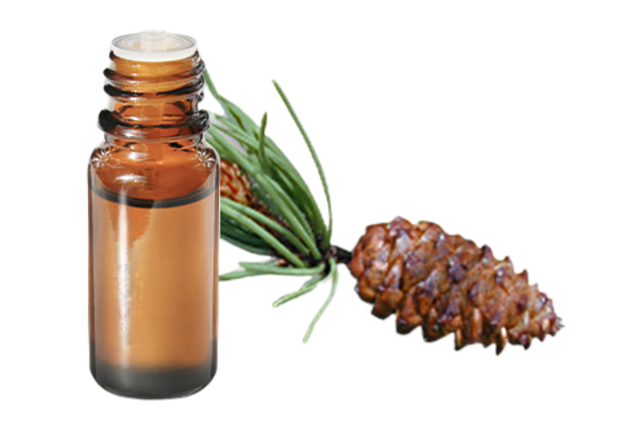
Essential oil of Turpentine

Widely reputed as an oxygenating agent, turpentine essential oil is also recommended for joint and muscle health. Soothing, turpentine essential oil is appreciated by sports enthusiasts. Stimulating and supporting health, turpentine essential oil is useful in cases of fatigue.

How to use

  • Skin application and massage

    Skin application and massage

    Appropriate

  • Diffusion

    Diffusion

    Suitable

  • Food grade

    Food grade

  • Aromatherapy bath

    Aromatherapy bath

    Appropriate

  • Cosmetic active ingredient

    Cosmetic active ingredient

    Possible but not recommended

Find out more

Properties and uses

Precautions

Find out more

Turpentine often has a 'synthetic' connotation and is too quickly associated with paint and solvents. However, turpentine is an entirely natural substance, obtained by steam distillation of the resin of the maritime pine or cluster pine (Pinus pinaster), and has well-known medicinal properties.

Historically, its essential oil was widely used for its properties in clearing and purifying the respiratory and urinary tracts. It is also traditionally reputed to be a valuable addition to treatments for joint and muscle ailments.

Warning

The properties, information and methods of use below are quotes from reference books or websites on aromatherapy, hydrolatherapy and phytotherapy. This general information is provided for informative purposes only and in no way constitutes medical guidance. Under no circumstances can this information be used as a substitute for a medical diagnosis, consultation or follow-up, nor can it incur our liability. We recommend that you consult the guide to essential oils before using them, so that you are aware of any precautions that need to be taken. If in doubt, consult a doctor before using essential oils.

Properties and uses

Health

Wellness

Find out more

Properties

Turpentine essential oil is known for its health properties:

  • Anticatarrhal, expectorant

  • Purifying and cleansing

  • Analgesic

Uses

It is traditionally used to improve the following conditions:

  • Respiratory catarrhal infections (bronchitis, catarrh)

  • Muscle and joint pain: rheumatism, gout, sciatica

In practice

Respiratory comfort: blend into your oil blend. Massage or rub your blend into the chest and upper back.

Soothing for sore areas: Mix into your oil blend. Lightly massage the mixture into the affected area.

Respiratory health: for inhalation, in synergy with other oils.

Precautions

  • May cause skin irritation, always dilute well before applying to the skin.

  • Allergic sensitisation possible, caution for sensitive or allergic skin.

  • Not recommended during the first 3 months of pregnancy.

  • Keep out of reach of children.

  • Avoid contact with eyes.

  • Certain natural compounds contained in this essential oil may present a risk of allergy for certain sensitive individuals when the essential oil is incorporated into a cosmetic composition (in accordance with the 7th Amendment to the European Directive on cosmetic products (2003/15/EC)): limonene and, to a lesser extent, linalool. As a general rule, always carry out a test application of your mixture, in the crease of the elbow, at least 48 hours before using it.

  • Dangerous. Follow the precautions for use.

  • Danger. Flammable liquid and vapour. Harmful if swallowed, in contact with skin or inhaled. Causes skin irritation. May cause skin allergy. Causes severe eye irritation. May be fatal if swallowed or if it enters the respiratory tract (if accidentally swallowed, do not induce vomiting). Toxic to aquatic life causing long lasting effects (in the event of massive spillage of the product into a watercourse).

Equivalents

Essential Oils

1 ml = approximately 35 drops (with our Aroma-Zone dropper caps)

Carrier oils

1 pump (Aroma-Zone aluminium pump) = approx. 0.15 ml

Mass / Volume conversion (for a liquid)

Mass (g) = Density x Volume (ml) at 20°C

Further information

1 full teaspoon = between 3 and 4.5 ml

1 full tablespoon = between 7.5 and 10 ml


However, these spoon ratios depend on a number of factors (e.g. viscosity of the liquid, temperature, depth and size of the spoon, rheological behaviour of the liquid), and we strongly advise you to use precise measuring equipment, such as graduated test tubes, graduated pipettes, and precision scales.

Aromatherapy recipes from the bibliography

EO = Essential Oil VO = Carrier Oil or Macerated Oil

Constipation (D. Baudoux)

Health & wellbeingDigestive problems

  • Aniba rosaedora essential oil (Rosewood): 2 ml

  • Ocimum basilicum ssp basilicum essential oil (Basil): 2 ml

  • Pinus pinaster oleoresin essential oil (Maritime pine): 2 ml

  • Zingiber officinale essential oil (Ginger): 4 ml

  • Corylus avellana OIL (Hazelnut) or Transcutol: additional 30ml

Use: 8 to 10 drops of the mixture, 3 times a day on the lower abdomen and lower back as required.

Aroma-Zone comment: Transcutol is a little-used pharmaceutical preparation which allows fats such as essential oils to penetrate the skin easily. It can easily be replaced by a dry carrier oil such as Hazelnut, Kukui or Macadamia oil.

Calluses (D. Baudoux)

Health & wellbeingSkin problems

  • Maritime pine essential oil 3 ml

  • Rosemary camphor essential oil 2 ml

  • Menthol eucalyptus essential oil 2 ml

Directions for use: 3 to 4 drops of the mixture applied topically twice a day for 10 days.

Arthritis-Arthrosis-Rheumatism (D. Festy)

Health & wellbeingMuscles and joints

  • Juniper essential oil: 5 drops

  • Turpentine essential oil: 5 drops

  • Wintergreen essential oil: 5 drops

  • Lavandin super essential oil: 5 drops

  • Bath base: 1 tablespoon

Use: Pour all the ingredients into a hot bath (38.5°C) and leave in the water for 20 minutes. Repeat every day until improvement.

Constipation (D. Baudoux)

Health & wellbeingDigestive problems

  • Tarragon essential oil: 2 drops

  • Maritime Pine essential oil (Turpentine): 1 drop

  • Mandarin essential oil: 2 drops

  • Coriander essential oil: 1 drop

Use: 2 drops 3 times a day before meals on 1/4 lump of cane sugar or in a teaspoon of olive oil for 5 to 7 days. Repeat as required.

Bibliography

1

'Huiles essentielles - 2000 ans de découvertes aromathérapeutiques pour une médecine d'avenir'

Dominique Baudoux

2

'Aromathérapie' Éditions Maloine

Dr Jean Valnet

3

'L'aromathérapie exactement'

P. Franchomme and Dr D. Pénoël

4

'La bible de l'aromathérapie'

Nerys Purchon

5

'L'ABC des huiles essentielles'

Dr Telphon

6

'Aromatherapy'

Nelly Grosjean

7

'Les huiles essentielles pour votre santé'

G. Roulier

8

" Les cahiers pratiques de l'aromathérapie française - Pédiatrie" - Editions Amyris

Dominique Baudoux

9

Aroma-News newsletters from the NARD association

10

'L'aromathérapie - Se soigner par les huiles essentielles' - Editions Amyris

Dominique Baudoux