
Guide to essential oils

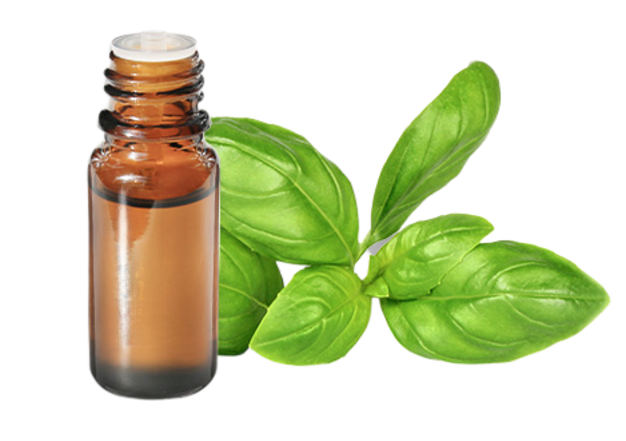
Essential oil of Organic tropical basil

A powerful calming agent, Tropical Basil essential oil is traditionally used to relieve stress, tension and nervous spasms. Tropical Basil essential oil also relieves intestinal discomfort. Tonic and invigorating, Tropical Basil essential oil combats fatigue.

How to use

  • Skin application and massage

    Skin application and massage

    Suitable

  • Cosmetic active ingredient

    Cosmetic active ingredient

    Possible but not recommended

  • Aromatherapy bath

    Aromatherapy bath

    Appropriate

  • Food grade

    Food grade

    Appropriate

  • Diffusion

    Diffusion

Features

Properties and uses

Precautions

Find out more

Features

Production process

Complete steam distillation

Part of the plant used

Leaves and flowers

Botanical name

Ocimum basilicum var. basilicum

Warning

The properties, information and methods of use below are quotes from reference books or websites on aromatherapy, hydrolatherapy and phytotherapy. This general information is provided for informative purposes only and in no way constitutes medical guidance. Under no circumstances can this information be used as a substitute for a medical diagnosis, consultation or follow-up, nor can it incur our liability. We recommend that you consult the guide to essential oils before using them, so that you are aware of any precautions that need to be taken. If in doubt, consult a doctor before using essential oils.

Properties and uses

Health

Wellness

Kitchen

Find out more

Known for its powerful antispasmodic properties, Tropical Basil essential oil is one of the best-known oils for treating spasms and spasmodic pain, and is traditionally used for stomach aches, painful periods, bloating and indigestion.

Properties

Tropical basil essential oil is renowned for the following health benefits:

  • Powerful antispasmodic

  • Digestive tonic, carminative, helps eliminate gas

  • Analgesic and anti-inflammatory

  • Antiviral, antibacterial

Uses

Tropical Basil essential oil is traditionally used in the following cases:

  • Digestive problems : flatulence, indigestion, bloating, gastroenteritis, nausea, motion sickness, etc.

  • Spasmodic pain : intestinal cramps, menstrual pain, stomach aches, spasmodic colitis, muscle cramps, hiccups, etc.

  • Inflammatory pain : rheumatoid arthritis, rheumatism, muscle strain

In practice

Digestive comfort (spasms) : Mix into your oil blend. Massage the mixture into the stomach.

Comfort for the female cycle: Mix into your oil blend. Massage the mixture into the lower abdomen.

Precautions

  • Do not use during pregnancy or while breast-feeding, or on children under the age of 6.

  • May be irritating when used undiluted, always dilute well before skin application.

  • Do not use for prolonged or regular periods without the advice of a therapist, especially if used internally. Recommended for percutaneous use.

  • Not recommended for people taking anticoagulants or with coagulation disorders, oral use prohibited.

  • As a general rule, always test-apply your mixture in the crease of the elbow at least 48 hours before use.

  • Certain natural compounds contained in this essential oil may present a risk of allergy for certain sensitive individuals when the essential oil is incorporated into a cosmetic composition (in accordance with the 7th Amendment to the European Directive on cosmetic products (2003/15/EC)): linalool, citral (geranial and neral).

Find out more

The term basil comes from the ancient Greek basilikón meaning "royal plant" and was considered as such in ancient times. In Indian tradition, it is a sacred plant that Indians offer to Krishna, a god who saves the world. It is planted around temples and placed in the hands of the deceased to protect them on their passage to the afterlife. In some parts of Africa, Basil is used to ward off bad luck.

Equivalents

Essential Oils

1 ml = approximately 35 drops (with our Aroma-Zone dropper caps)

Carrier oils

1 pump (Aroma-Zone aluminium pump) = approx. 0.15 ml

Mass / Volume conversion (for a liquid)

Mass (g) = Density x Volume (ml) at 20°C

Further information

1 full teaspoon = between 3 and 4.5 ml

1 full tablespoon = between 7.5 and 10 ml


However, these spoon ratios depend on a number of factors (e.g. viscosity of the liquid, temperature, depth and size of the spoon, rheological behaviour of the liquid), and we strongly advise you to use precise measuring equipment, such as graduated test tubes, graduated pipettes, and precision scales.

Aromatherapy recipes from the bibliography

EO = Essential Oil VO = Carrier Oil or Macerated Oil

Scallops with leeks and herbs (A. Pataud)

Kitchen

Serves 4:

  • 16 scallops

  • 750 g leek whites

  • 7 tablespoons olive oil

  • 1 drop tarragon essential oil (artemisia dracunculus)

  • 1 drop of basil essential oil (ocimum basilicum)

  • 1 drop of whole dill essential oil (anethum graveolens)

Preparation: Split the leeks lengthways, rinse to remove all the sand and cut into thin slices. Throw them into boiling water for 5 minutes to soften them, then drain. Then fry them in a pan with 4 tablespoons of olive oil for 2 minutes over a high heat, then leave to steam for around 15 minutes. Stir in the essential oils mixed with 1 tablespoon of olive oil. Season with salt and pepper. Over a high heat, in a frying pan with the remaining olive oil, brown the scallops for 1 minute on each side. Divide the leeks and scallops between the plates and serve hot.

Caramelised red mullet fillet, green asparagus and strawberries marinated in essential basil oil (L. Abidi)

Kitchen

  • 12 boneless red mullet fillets

  • 14 green asparagus spears

  • 100 g strawberries

  • 5 g pine nuts

  • 10 g balsamic vinegar

  • 50 g olive oil

  • Flower of salt

  • 2 drops basil essential oil

Preparation: 1. Peel the asparagus using a vegetable peeler, and cook in a large volume of boiling salted water. Dip them in the ice after cooking, then drain and chill. For the strawberry marinade: Cut the strawberries into small quarters, drizzle with balsamic vinegar and basil oil diluted in olive oil, add a few pine nuts, a twist of the pepper mill and a pinch of salt, then set aside.

2. Cook the red mullet in olive oil in a very hot non-stick frying pan, carefully caramelising them. Presentation: 1. Arrange the reheated asparagus on a plate, seasoned with fleur de sel and olive oil. Sprinkle with the strawberry marinade. 2. Fan out the red mullet fillets, seasoned with a drizzle of olive oil and serve immediately.

Pan-fried vegetables with sun-dried tomatoes, basil and fennel (A. Pataud)

Kitchen

Serves 6 - Preparation: 20 minutes - Cooking time: 10 minutes

  • 3 tbsp olive oil

  • 4 shallots, finely julienned

  • 1 yellow pepper, finely julienned

  • 1 red pepper, finely julienned

  • 1 courgette, julienned

  • 1 stalk celery, julienned

  • 2 cloves garlic, peeled and minced

  • 2 tbsp sundried tomatoes, finely chopped

  • Salt and freshly ground pepper

  • Olive oil

  • 1 drop of aniseed essential oil

  • 1 to 2 drops of Basil essential oil

  • 1 drop of fennel essential oil

Directions: Heat the olive oil in a frying pan over a high heat. Cook the vegetables, except the tomatoes, until al dente (about 10 minutes). Add the essential oils, mixed with a little olive oil, and the dried tomatoes; mix well. Season with salt and pepper.

Bibliography

1

'Huiles essentielles - 2000 ans de découvertes aromathérapeutiques pour une médecine d'avenir'

Didier Baudoux

2

Aromatherapy

Dr Jean Valnet - Éditions Maloine

3

"L'Aromathérapie exactement"

P. Franchomme and Dr D. Pénoël

4

'La Bible de l'aromathérapie'

Nerys Purchon

5

"ABC des huiles essentielles"

Dr Telphon

6

Aromatherapy

Nelly Grosjean

7

'Les huiles essentielles pour votre santé'

G. Roulier

8

'Les cahiers pratiques de l'aromathérapie française - Pédiatrie'

Didier Baudoux - Editions Amyris

9

Aroma-News newsletters

The NARD association

10

'Aromatherapy - Healing with essential oils'

Didier Baudoux - Editions Amyris

11

Energetic aromatherapy - Healing with the soul of plants

L. Bosson and G. Dietz

12

13

Le Foll N. et Da Costa B. (2005) Saveurs et bien-être. La cuisine aux huiles essentielles.

Editions Filipacchi.

14

Davy O. et Fayolle M. (2007) Cuisinons avec les huiles essentielles. Des trésors de saveurs et de vitalité.

Editions Anagramme.

15

Pataud A. (2004) La cuisine aux huiles essentielles. Des recettes saines et créatives.

Editions Ambre.

16

17

18