
Guide to essential oils

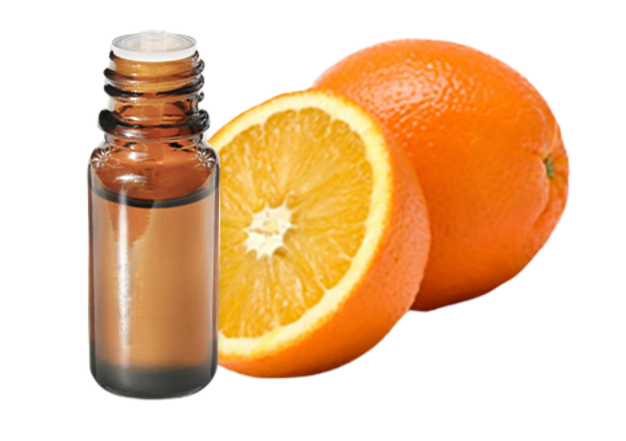
Essential oil of Organic Sweet Orange

Calming Sweet Orange essential oil provides real well-being and soothes tension. Thanks to its rebalancing qualities, Sweet Orange essential oil promotes a good mood and optimism. When diffused, Sweet Orange essential oil helps to combat sleep disorders. With its sweet, fruity scent, Sweet Orange essential oil blends subtly with many oils, particularly woody and spicy ones.

How to use

  • Skin application and massage

    Skin application and massage

    Appropriate

  • Diffusion

    Diffusion

    Suitable

  • Cosmetic active ingredient

    Cosmetic active ingredient

    Appropriate

  • Aromatherapy bath

    Aromatherapy bath

    Suitable

  • Food grade

    Food grade

    Suitable

Features

Properties and uses

Precautions

Find out more

Features

Production process

Cold pressed

Part of the plant used

Fruit pericarp (zest)

Botanical name

Citrus sinensis

Warning

The properties, information and methods of use below are quotes from reference books or websites on aromatherapy, hydrolatherapy and phytotherapy. This general information is provided for informative purposes only and in no way constitutes medical guidance. Under no circumstances can this information be used as a substitute for a medical diagnosis, consultation or follow-up, nor can it incur our liability. We recommend that you consult the guide to essential oils before using them, so that you are aware of any precautions that need to be taken. If in doubt, consult a doctor before using essential oils.

Properties and uses

Aroma-Zone Organic Orange Essential Oil is traditionally used to treat: depression, low mood, fever and stress

Health

Beauty

Wellness

Kitchen

Find out more

Properties

Organic sweet orange essential oil is recognised for its health benefits:

  • Air-purifying

  • Supports digestion , Relieves gas

  • Improves digestive health

Uses

In addition to treatments, it is traditionally used in the following cases:

  • Atmospheric purification

  • Digestive disorders

Synergies

  • Diffusion for air purification: Pine, Cedar, Narrow-Leaved Eucalyptus essential oils

  • Digestive health: Tropical Basil, Tarragon, Cumin, Ginger essential oils

In practice

Air purification: diffuse into the air, possibly mixed with other essential oils.

Precautions

  • This oil is photosensitising. Do not expose yourself to the sun for at least 6 hours after a cutaneous application of this oil.

  • Do not use during the first 3 months of pregnancy.

  • May be irritating to the skin (dermocaustic): always dilute well in a carrier oil for cutaneous use.

  • Keep out of reach of children.

  • Avoid contact with eyes.

  • Certain natural compounds contained in this essential oil may present a risk of allergy in certain sensitive individuals when the essential oil is incorporated into a cosmetic composition (according to the 7th Amendment of the European Directive on cosmetic products (2003/15/EC)): limonene, linalool, citral (geranial and neral).

  • As a general rule, always test-apply your mixture in the crease of the elbow at least 48 hours before use.

  • For use as a cosmetic ingredient, please refer to the specific precautions.

Find out more

The fruit of Citrus sinensis is called Sweet Orange to distinguish it from Bitter Orange, which comes from Citrus aurantium (Bitter Orange). Originally from China, the Sweet Orange tree was brought to Europe by Portuguese explorers in the 16th century.

Orange essence is found in the small reservoirs of the orange peel and is extracted by simple expression (cold pressing). Citrus fruits are therefore referred to as<1>"essences", to differentate them from "essential oils", which are extracted by steam distillation. For the sake of simplicity, we often use the term "essential oil" to refer to citrus essences.

Equivalents

Essential Oils

1 ml = approximately 35 drops (with our Aroma-Zone dropper caps)

Carrier oils

1 pump (Aroma-Zone aluminium pump) = approx. 0.15 ml

Mass / Volume conversion (for a liquid)

Mass (g) = Density x Volume (ml) at 20°C

Further information

1 full teaspoon = between 3 and 4.5 ml

1 full tablespoon = between 7.5 and 10 ml


However, these spoon ratios depend on a number of factors (e.g. viscosity of the liquid, temperature, depth and size of the spoon, rheological behaviour of the liquid), and we strongly advise you to use precise measuring equipment, such as graduated test tubes, graduated pipettes, and precision scales.

Bibliography

1

'Aromatherapy - Healing with essential oils'

Dominique Baudoux

2

"ABC des huiles essentielles"

Dr Telphon

3

'La Bible de l'aromathérapie'

Nerys Purchon

4

"L'Aromathérapie exactement"

P. Franchomme and Dr D. Pénoël

5

'La cuisine aux huiles essentielles - Des recettes saines et créatives'

Aymeric Pataud

6

"Plantes Huiles et Parfums de beauté Secrets et recettes"

7

Aromatherapy

Nelly Grosjean

8

'Cuisinons avec les huiles essentielles. Des trésors de saveurs et de vitalité.'

Davy O. and Fayolle Editions Anagramme.

9

10

11

12

13