
Guide to essential oils

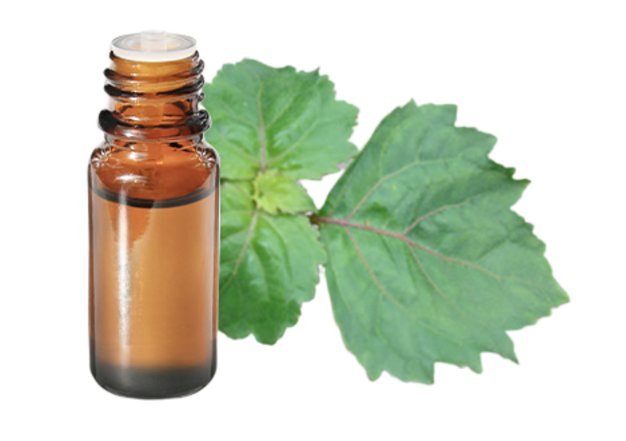
Essential oil of ORGANIC Sri Lankan Patchouli

Powerful and seductive, ORGANIC Patchouli essential oil is particularly popular for its unique, bewitching scent. Reputed to be an aphrodisiac, it is also coveted for its purifying and regenerating properties. It is also used to improve circulatory comfort and keep legs feeling light. Patchouli essential oil is a regenerating ingredient in skincare products for blemished skin, and is particularly recommended in psycho-energetic olfactotherapy to strengthen the will to remain true to one's convictions and counter low self-esteem.

How to use

  • Skin application and massage

    Skin application and massage

    Suitable

  • Aromatherapy bath

    Aromatherapy bath

    Suitable

  • Diffusion

    Diffusion

    Suitable

  • Cosmetic active ingredient

    Cosmetic active ingredient

    Suitable

  • Food grade

    Food grade

    Possible but not recommended

Features

Properties and uses

Precautions

Find out more

Features

Production process

Complete steam distillation

Part of the plant used

Leaves

Botanical name

Pogostemon cablin

Chemotype

patchoulol, bulnesene

Odour

suave, earthy, oriental, warm, woody

Warning

The properties, information and methods of use below are quotes from reference books or websites on aromatherapy, hydrolatherapy and phytotherapy. This general information is provided for informative purposes only and in no way constitutes medical guidance. Under no circumstances can this information be used as a substitute for a medical diagnosis, consultation or follow-up, nor can it incur our liability. We recommend that you consult the guide to essential oils before using them, so that you are aware of any precautions that need to be taken. If in doubt, consult a doctor before using essential oils.

Properties and uses

Patchouli essential oil is traditionally used for: Dandruff, bedsores, haemorrhoids, heavy legs, varicose veins, etc.

Health

Beauty

Wellness

Find out more

Properties

For health, Patchouli essential oil is recognised for the following properties:

  • Decongestant, promotes venous circulation

  • Digestive stimulant

  • Anti-inflammatory

  • Anti-infectious, skin regenerating, healing

  • Insect repellent

Uses

It is traditionally used to improve the following:

  • Circulatory problems, haemorrhoids, varicose veins, cellulite, water retention, etc.

  • Intestinal infections

  • Skin problems: acne, seborrhoeic dermatitis, inflammatory and allergic skin conditions, parasites, fungal infections, impetigo, etc.

  • Pressure sores

In practice

Tonic, circulatory comfort: Mix in your oil blend. Apply your mixture locally by massaging or rubbing into the area concerned.

Precautions

  • Not recommended during pregnancy or for children under 6.

  • May have an oestrogen-like effect, and should be avoided in cases of fibrocystic breast changes or hormone-sensitive cancer.

  • Warning: this oil is tonic when used in low doses, but sedative when used in high doses.

  • Keep out of reach of children.

  • Avoid contact with the eyes.

  • As a general rule, always carry out a test application of your mixture in the crease of the elbow at least 48 hours before using it.

  • For use as a cosmetic ingredient, please refer to the specific precautions.

  • Dangerous. Follow the precautions for use.

  • Danger. May be fatal if swallowed and enters the respiratory tract (if accidentally swallowed, do not induce vomiting).

Find out more

A plant native to Indonesia and Malaysia, Patchouli is widely used in perfumery and is now considered an expensive and luxurious raw material.

The fresh plant has no scent, and it is only after a fermentation phase that the precursors of the different molecules (patchoulol, etc.) give the leaves their scent, which is then used to obtain an essential oil or absolute.

Patchouli has a powerful, woody, earthy and dry scent, with smoky, camphorous, liquorice and even musty accents.

Aromatherapy recipes from the bibliography

EO = Essential Oil VO = Carrier Oil or Macerated Oil

Pressure sore lotion (under medical supervision) (C. Lacroix)

Health & wellbeingSkin problems

  • 20 drops Essential Oil - Immortelle (Helichrysum italicum)
  • 30 drops Essential Oil - Bay Laurel
  • 30 drops Essential Oil - True lavender
  • 30 drops Essential oil - Peru Balsam
  • 20 drops Essential Oil - Atlas Cedar
  • 30 drops Essential oil - Patchouli
  • 20 drops Essential Oil - Gum Rockrose
  • 5 ml Sesame oil
  • 10 ml Rosehip oil
  • 5 ml carrot macerate
  • 50ml Jojoba oil

Directions: Mix all the ingredients in a bottle, then add jojoba oil.

Directions for use: Apply to the edge of the wound, about 1 cm outside the necrotic tissue, and cover with a non-adhesive dressing. Repeat 3 times a day.

"Calm innards" lotion (haemorrhoids and anal fissures) (C. Lacroix)

Health & wellbeingCirculatory disorders

  • 20 drops Essential Oil - Gum Rockrose
  • 20 drops Essential oil - Patchouli
  • 20 drops Essential Oil - Mastic Tree
  • 10 drops Essential Oil - Mediterranean Cypress
  • 20 drops of True lavender essential oil
  • 2 ml St John's wort macerated oil
  • 5 ml tamanu oil
  • 15 ml Wheatgerm Oil

Directions: Mix the essential oils and carrier oils, then add the Wheatgerm oil.

Directions for use: Put a few drops on your index finger, and apply to the affected area 3 times a day and after each bowel movement, until you feel a sensation of well-being.

Varicose veins (on medical advice) (D. Festy)

Health & wellbeingCirculatory disorders

  • 2 drops Essential oil - Cypress
  • 2 drops Essential oil - Niaouli
  • 1 drop of Peppermint essential oil
  • 2 drops of Juniper essential oil
  • 1 drop of Mastic Tree essential oil
  • 1 drop of Patchouli essential oil
  • 1 teaspoon tamanu oil

Directions for use: Massage into the legs morning and evening, working upwards from the ankles.

Equivalents

Essential Oils

1 ml = approximately 35 drops (with our Aroma-Zone dropper caps)

Carrier oils

1 pump (Aroma-Zone aluminium pump) = approx. 0.15 ml

Mass / Volume conversion (for a liquid)

Mass (g) = Density x Volume (ml) at 20°C

Further information

1 full teaspoon = between 3 and 4.5 ml

1 full tablespoon = between 7.5 and 10 ml


However, these spoon ratios depend on a number of factors (e.g. viscosity of the liquid, temperature, depth and size of the spoon, rheological behaviour of the liquid), and we strongly advise you to use precise measuring equipment, such as graduated test tubes, graduated pipettes, and precision scales.

Bibliography

1

"Huiles essentielles - 2000 ans de découvertes aromathérapeutiques pour une médecine d'avenir"

Dominique Baudoux

2

"Aromatherapy"

Dr Jean Valnet - Éditions Maloine

3

'L'aromathérapie exactement'

P. Franchomme and Dr D. Pénoël

4

'La bible de l'aromathérapie'

Nerys Purchon

5

'L'ABC des huiles essentielles'

Dr Telphon

6

"Aromatherapy"

Nelly Grosjean

7

'Les huiles essentielles pour votre santé'

G. Roulier

8

"Les cahiers pratiques de l'aromathérapie française" - Paediatrics

Dominique Baudoux - Editions Amyris

9

Aroma-News newsletters from the NARD association

10

'Aromatherapy - Healing with essential oils'

Dominique Baudoux - Editions Amyris