Guide to essential oils

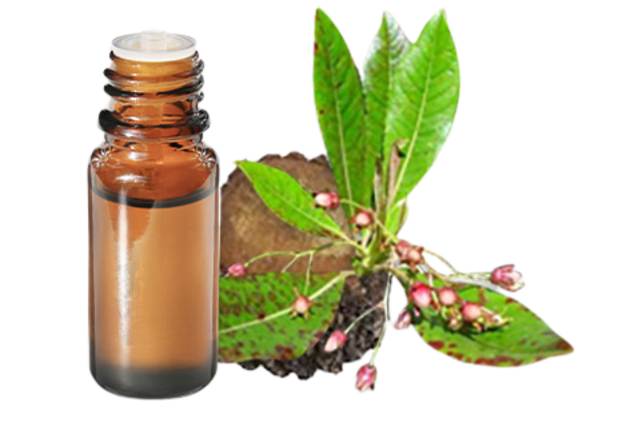
Essential oil of Rosewood

Rich in linalool, this oil is renowned for its powerful regenerating, purifying and anti-infectious effects. Appreciated for its gentle fragrance, it calms nerves and anxiety and combats nervous fatigue.

How to use

  • Skin application and massage

    Skin application and massage

    Suitable

  • Cosmetic active ingredient

    Cosmetic active ingredient

    Suitable

  • Diffusion

    Diffusion

    Appropriate

  • Aromatherapy bath

    Aromatherapy bath

    Appropriate

  • Food grade

    Food grade

    Appropriate

Features

Properties and uses

Precautions

Find out more

Features

Production process

Complete steam distillation

Part of the plant used

Leaves

Botanical name

Aniba rosaedora var. amazonica

Warning

The properties, information and methods of use below are quotes from reference books or websites on aromatherapy, hydrolatherapy and phytotherapy. This general information is provided for informative purposes only and in no way constitutes medical guidance. Under no circumstances can this information be used as a substitute for a medical diagnosis, consultation or follow-up, nor can it incur our liability. We recommend that you consult the guide to essential oils before using them, so that you are aware of any precautions that need to be taken. If in doubt, consult a doctor before using essential oils.

Properties and uses

Rosewood Essential Oil is traditionally used for: Abscesses, boils, paronychia, acne, pimples, eczema, distress, anxiety, panic attacks, wrinkles, fine lines, fatigue, exhaustion, immunity (stimulates the immune system), urinary tract infections, fungal infections.

Health

Wellness

Beauty

Find out more

Thanks to its high linalool content, Rosewood essential oil has powerful antibacterial and antiparasitic properties. In aromatherapy, it is appreciated for its gentleness when used topically (always diluted) and is traditionally recommended for relieving skin problems, fungal infections, eczema and dermatitis.

Properties

Rosewood essential oil is recognised for its health properties:

  • Antiseptic, antibacterial, antiviral, antifungal, antiparasitic

  • Stimulates the body against aggression

  • Mild painkiller when applied locally, thanks to its linalool content

Uses

Rosewood essential oil is traditionally used to improve the following conditions:

  • ENT and bronchopulmonary infections: bronchitis, influenza, laryngitis, pharyngitis, middle ear infections, colds, sinusitis, etc.

  • Urinary tract and gynaecological infections: cystitis, vaginitis, vulvitis, leucorrhoea, urethritis, etc.

  • Skin, nail and gynaecological fungal infections

  • Skin problems, dermatitis, eczema, bedsores, difficult healing, boils, etc.

Synergies

Purifying action: essential oils of Geranium, Palmarosa, Tea tree

Precautions

  • Keep out of reach of children.

  • Certain natural compounds in this essential oil may present an allergy risk for sensitive individuals when the oil is incorporated into a cosmetic formulation (according to the 7th Amendment to the European Cosmetics Directive (2003/15/EC)): limonene, linalool, geraniol, benzyl benzoate.

  • As a general rule, always perform a patch test on the inside of the elbow at least 48 hours before use.

Find out more

Rosewood, botanical name Aniba rosaeodora var. amazonica, is a medium-sized tree found in the Amazon rainforest, particularly in Brazil and French Guiana. Its name is said to derive from the pink to reddish-pink colour of its wood. It is one of the woods widely used in marquetry to decorate furniture and paintings, among other applications. In addition to cabinet-making, it can also be used in medicine and perfumery, particularly for extracting linalool.

Equivalents

Essential Oils

1 ml = approximately 35 drops (with our Aroma-Zone dropper caps)

Carrier oils

1 pump (Aroma-Zone aluminium pump) = approx. 0.15 ml

Mass / Volume conversion (for a liquid)

Mass (g) = Density x Volume (ml) at 20°C

Further information

1 full teaspoon = between 3 and 4.5 ml

1 full tablespoon = between 7.5 and 10 ml


However, these spoon ratios depend on a number of factors (e.g. viscosity of the liquid, temperature, depth and size of the spoon, rheological behaviour of the liquid), and we strongly advise you to use precise measuring equipment, such as graduated test tubes, graduated pipettes, and precision scales.

Aromatherapy recipes from the bibliography

EO = Essential Oil VO = Carrier Oil or Macerated Oil

Skin ageing (D. Baudoux)

BeautyFacial skincare

  • Damask Rose essential oil 1 ml

  • Rosewood essential oil 3 ml

  • Immortelle essential oil 1 ml

  • Cistus ladanifera essential oil 1 ml

  • Niaouli essential oil 5 ml

  • Chilean Rose oil 10 ml

Use : 2 to 3 drops of the mixture applied to the skin morning and evening every day.

Softening beauty oil - All skin types (C. Clergeaud)

BeautyBody care

  • Argan, wheatgerm or evening primrose carrier oils: 50 ml

  • Rose hip carrier oil: 100 ml

  • Borage or jojoba carrier oils: 50 ml

  • Rosewood essential oil: 10 drops

  • Wild carrot essential oil: 20 drops

  • True lavender essential oil: 10 drops

  • Rose geranium essential oil: 10 drops

Use: Skincare oil to use as a day or night cream.

Hair loss (alopecia) (D. Baudoux)

BeautyHair & nail care

  • Rosmarinus officinalis CT verbenone essential oil (rosemary verbenone): 1 ml

  • Aniba rosaeodora essential oil (rosewood): 1 ml

  • Cedrus atlantica essential (Atlas cedar wood): 1 ml

  • Citrus limomum essential oil (lemon): 2 ml

  • Pistacia lentiscus essential oil (mastic tree): 0.5 ml

  • Cananga odorata totum essential oil (ylang-ylang complete): 0.5 ml

  • Argania spinosa oil (Argan): 4 ml

Directions for use: 3 to 5 drops of the mixture in a small amount of shampoo every other day.

Bibliography

1

'Huiles essentielles - 2000 ans de découvertes aromathérapeutiques pour une médecine d'avenir'

D. Baudoux

2

"L'Aromathérapie exactement"

P. Franchomme and Dr D. Pénoël

3

'La Bible de l'aromathérapie'

Nerys Purchon

4

"ABC des huiles essentielles"

Dr Telphon

5

"L'aromathérapie - Santé et bien-être par les huiles essentielles"

Nelly Grosjean

6

Les huiles essentielles pour votre santé. Traité pratique d'aromathérapie : propriétés et indications thérapeutiques des essences des plantes.

G. Roulier

7

'Les cahiers pratiques de l'aromathérapie française - Pédiatrie'

D. Baudoux - Editions Amyris

8

Aroma-News newsletters

L'association NARD - Aroma News N°28

9

'Aromatherapy - Healing with essential oils'

D. Baudoux - Editions Amyris

10

'Les cahiers pratiques de l'aromathérapie française - Dermatologie'

D. Baudoux - Editions Amyris

11

Le formulaire d'aromathérapie pratique pour le prescripteur et le conseil pharmaceutique

D. Baudoux

12

"Les Huiles essentielles et les soins de la peau" by MC. Laparé

13

Aroma Stress - 50 everyday stressors treated with essential oils

JP. Willem

14

Les huiles essentielles – Médecine d’avenir

J.-P. Willem

15

"Aromathérapie corps et âme : comment ajuster complexité aromatique et complexité humaine"

A. Bitsas

16

"Les cahiers pratiques d'aromathérapie selon l'école française Pédiatrie"

D. Baudoux

17

Le Formulaire D'Aromathérapie Pratique pour le Prescripteur et le Conseil Pharmaceutique

D. Baudoux

18

Les huiles végétales : huiles de santé et de beauté

Clergeaud C. et L. - New Edition - Editions Amyris

19

Aroma Minceur

J.-P. Willem