
Guide to essential oils

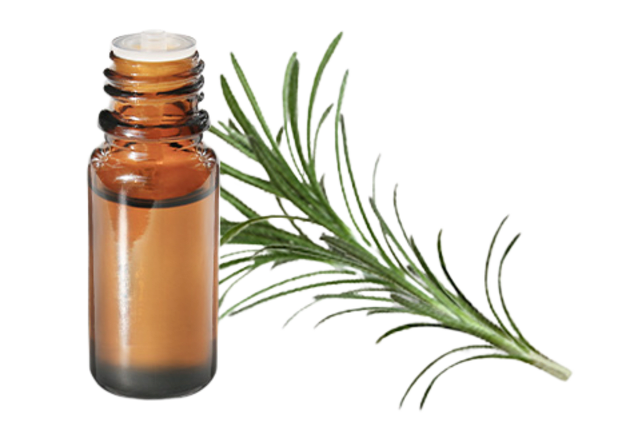
Essential oil of Rosemary Cineole

Tonic, Rosemary cineole essential oil is used in cases of fatigue, overwork and lack of concentration. With a powerful aromatic scent, Rosemary cineole essential oil is also reputed to support winter episodes. Revitalising, Rosemary cineole essential oil can be used for haircare. Its toning action makes Rosemary cineole essential oil a helpful ingredient in the care of oily skin.

How to use

  • Skin application and massage

    Skin application and massage

    Suitable

  • Diffusion

    Diffusion

    Possible but not recommended

  • Cosmetic active ingredient

    Cosmetic active ingredient

    Suitable

  • Aromatherapy bath

    Aromatherapy bath

    Appropriate

  • Food grade

    Food grade

    Appropriate

Features

Properties and uses

Precautions

Find out more

Features

Production process

Complete steam distillation

Part of the plant used

Branches

Botanical name

Rosmarinus officinalis

Warning

The properties, information and methods of use below are quotes from reference books or websites on aromatherapy, hydrolatherapy and phytotherapy. This general information is provided for informative purposes only and in no way constitutes medical guidance. Under no circumstances can this information be used as a substitute for a medical diagnosis, consultation or follow-up, nor can it incur our liability. We recommend that you consult the guide to essential oils before using them, so that you are aware of any precautions that need to be taken. If in doubt, consult a doctor before using essential oils.

Properties and uses

Rosemary cineole essential oil is traditionally used for: Fungal infection

Health

Wellness

Hair care

Skin care

Kitchen

Find out more

Rich in 1,8-cineole, known for thinning mucus and making it easier to clear, Rosemary cineole essential oil is traditionally recommended in aromatherapy to clear the bronchial tubes, unblock the nose and make breathing easier during epidemics of colds, bronchitis, sinusitisetc.

Properties

Rosemary cineole essential oil is recognised for its health properties:

  • Mucolytic, anti-catarrhal , expectorant

  • Powerfulantibacterial (staphylococcus aureus, white staphylococcus, streptococcus, etc.).

  • Antifungal Stimulant, muscle tonic

Uses

Rosemary cineole essential oil is traditionally used to improve the following conditions:

  • colds, bronchitis, ear infections, sinusitis

  • Cystitis and candidiasis

  • Chronic fatigue, physical and mental overwork

  • Digestive disorders

Synergies

  • Respiratory health: essential oils of Ravintsara, Sweet Inula, Menthol Eucalyptus, Niaouli

  • Nervous and physical fatigue: Black Spruce, Ravintsara, Peppermint essential oils

In practice

Respiratory health: Mix with your oil blend. Apply your mixture locally by rubbing on the chest and upper back.

Air purification, respiratory comfort: for air diffusion, mixed with other essential oils (Lemon, grapefruit, Silver Fir, Gully Gum Eucalyptus, etc.).

Precautions

  • Not to be used during pregnancy or while breastfeeding, or by children under the age of 6.

  • Not recommended for people at risk of epilepsy.

  • Not recommended for asthmatics (especially for inhalation or diffusion).

  • Preferably for use on the skin or by diffusion/inhalation, oral use is less appropriate for this essential oil.

  • It can be irritating in large doses, so always dilute well before applying to the skin.

  • Avoid exceeding doses and prolonged use.

  • Keep out of reach of children.

  • Avoid contact with eyes.

  • Certain natural compounds contained in this essential oil may present a risk of allergy in certain sensitive individuals when the essential oil is incorporated into a cosmetic composition (according to the 7th Amendment of the European Directive on cosmetic products (2003/15/EC)): limonene and, to a lesser extent, linalool.

  • As a general rule, always test-apply your mixture in the crease of the elbow at least 48 hours before use.

Find out more

A shrub typical of the garrigue region and the Mediterranean region, rosemary is highly prized as a flavouring in cooking, for stews, grilled food, sauces and even desserts. This aromatic plant is also widely renowned in phytotherapy for its multiple properties, notably as a choleretic, a relaxant and an expectorant, and is highly prized in perfumery, especially in men's fragrances. Rosemary has a legendary reputation as a cure for all ills and a skincare treatment.

Equivalents

Essential Oils

1 ml = approximately 35 drops (with our Aroma-Zone dropper caps)

Carrier oils

1 pump (Aroma-Zone aluminium pump) = approx. 0.15 ml

Mass / Volume conversion (for a liquid)

Mass (g) = Density x Volume (ml) at 20°C

Further information

1 full teaspoon = between 3 and 4.5 ml

1 full tablespoon = between 7.5 and 10 ml


However, these spoon ratios depend on a number of factors (e.g. viscosity of the liquid, temperature, depth and size of the spoon, rheological behaviour of the liquid), and we strongly advise you to use precise measuring equipment, such as graduated test tubes, graduated pipettes, and precision scales.

Aromatherapy recipes from the bibliography

EO = Essential Oil VO = Carrier Oil or Macerated Oil

Apple and pear compote with rosemary and litsea cubeba (A. Pataud)

Kitchen

Serves 4 - Preparation: 15 minutes - Cooking time: 15 minutes

  • 1 kg apples

  • 1 kg pears

  • 50 g sugar

  • 3 tbsp water

  • 1 drop rosemary essential oil

  • 1 drop litsea cubeba essential oil

  • 2 drops lemon essential oil

  • Juice of 1 lemon

  • Acacia honey

Directions: Peel the apples and pears. Remove the seeds and cut the fruit into quarters. Put them in a saucepan with the water, the juice of one lemon and the sugar. Cover the pan. Leave to cook over a low heat for around 30 minutes. Add the essential oils mixed with a tablespoon of acacia honey once cooked, and stir well. Serve warm.

Pork mignon with citrus flavours and vegetable confit with rosemary (N. Le Foll and B. Da Costa)

Kitchen

Serves 4 - Preparation: 30 min - Cooking time: 45 min

  • 600 g pork tenderloin

  • 2 cloves of garlic

  • 1 tablespoon mustard

  • 10 cl orange juice

  • 1 tbsp olive oil

  • salt and freshly ground pepper

  • Grapefruit essential oil: 2 drops

  • Orange essential oil: 2 drops

  • Rosemary essential oil: 1 drop

  • Vegetable confit: 2 medium courgettes, 1 fennel bulb, 1 red pepper, 1 aubergine, 2 onions, 15 black olives, 2 tablespoons olive oil

Instructions: Start by preparing the vegetable confit. In a frying pan, sauté the peeled and roughly chopped onions with the deseeded and chopped pepper in olive oil for 5 minutes. Add the washed and cubed aubergine and the fennel cut into chunks. Season with salt and pepper, cover and cook over a low heat for 30 minutes. Add the diced courgettes, rosemary essential oil and olives. Mix well and cook for a further 10 minutes. In a separate pan, brown the fillet mignon on all sides in olive oil. Add the peeled and chopped garlic, mustard and orange juice. Season with salt and pepper, cover and cook over a low heat for 15 minutes. Add the grapefruit and sweet orange essential oils, stir and leave to cook uncovered for 5 minutes. Remove the fillet mignon from the pan, keep it warm and reduce the sauce until smooth. Serve with the vegetables on the side.

Ratatouille with grapes and coriander (A. Pataud)

Kitchen

Serves 6 - Preparation: 20 minutes - Cooking time: 1 hour

  • 4 tomatoes

  • 2 potatoes

  • 3 courgettes

  • 1 onion

  • 1/2 red pepper

  • 1/2 green pepper

  • 1 celery stalk

  • 1 apple

  • 20 white grapes

  • 1 bouquet garni

  • 4 tbsp oil

  • 2 drops of Coriander essential oil (Coriandrum sativum)

  • 1 drop of Rosemary (Rosmarinus officinalis) essential oil

Procedure: Heat half the oil in a saucepan. Sauté the chopped onion, pepper and celery for 5 minutes. Add the peeled, seeded and chopped tomatoes. Season with salt and pepper. Lower the heat and cook, covered, for 20 minutes. Pour the remaining oil into a frying pan and sauté the sliced potatoes and courgettes for 7 minutes, stirring constantly. Add the peeled apple, cut into large pieces, and the bouquet garni, cover and cook for 20 minutes over a low heat. Pour the tomato sauce into the pan. Mix well and add the grapes. Add the essential oil and mix well. Taste and adjust the seasoning if necessary. Leave to cook gently for a further 5 minutes.

Bibliography

1

'Huiles essentielles - 2000 ans de découvertes aromathérapeutiques pour une médecine d'avenir'

Dominique Baudoux

2

'The Practice Of Aromatherapy'

Dr Jean Valnet - Éditions Maloine

3

'L'Aromathérapie exactement'

P. Franchomme and Dr D. Pénoël

4

'La bible de l'aromathérapie'

Nerys Purchon

5

'L'ABC des huiles essentielles'

Dr Telphon

6

'Aromatherapy'

Nelly Grosjean

7

'Les huiles essentielles pour votre santé'

G. Roulier

8

'Les cahiers pratiques de l'aromathérapie française - Pédiatrie'

Dominique Baudoux

9

Aroma-News newsletters

NARD Association

10

'Aromatherapy - Healing with essential oils'

Dominique Baudoux

11

'Aroma Slimming'

Dr Willem

12

'Essential oils, medicine of the future'

Dr Willem

13

14

Saveurs et bien-être. La cuisine aux huiles essentielles. Editions Filipacchi.

Le Foll N. and Da Costa B. (2005)

15

La cuisine aux huiles essentielles. Des recettes saines et créatives. Editions Ambre.

Pataud A. (2004)