
Guide to essential oils

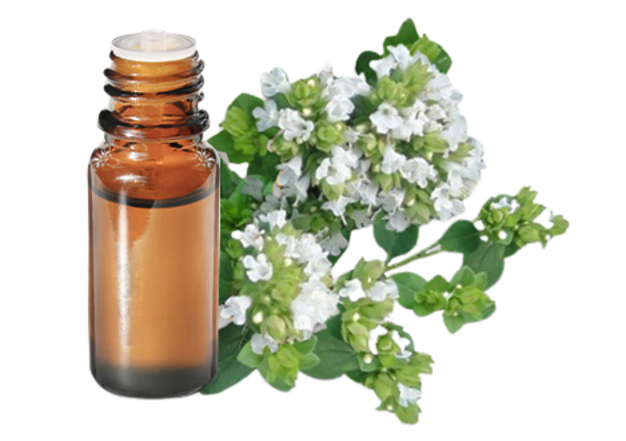
Essential oil of Provençal oregano

Provençal oregano essential oil has an intense, aromatic scent that gives it its tonic properties. Green Oregano of Provence essential oil has a positive effect, boosting self-confidence. Renowned for its powerful anti-infectious action, Green Oregano of Provence essential oil is essential for fighting winter ailments.

How to use

  • Skin application and massage

    Skin application and massage

    Appropriate

  • Diffusion

    Diffusion

    Possible but not recommended

  • Cosmetic active ingredient

    Cosmetic active ingredient

  • Aromatherapy bath

    Aromatherapy bath

  • Food grade

    Food grade

    Suitable

Features

Properties and uses

Precautions

Find out more

Features

Production process

Complete steam distillation

Part of the plant used

Aerial parts

Botanical name

Origanum heracleoticum L.

Warning

The properties, information and methods of use below are quotes from reference books or websites on aromatherapy, hydrolatherapy and phytotherapy. This general information is provided for informative purposes only and in no way constitutes medical guidance. Under no circumstances can this information be used as a substitute for a medical diagnosis, consultation or follow-up, nor can it incur our liability. We recommend that you consult the guide to essential oils before using them, so that you are aware of any precautions that need to be taken. If in doubt, consult a doctor before using essential oils.

Properties and uses

Health

Wellness

Find out more

Properties

In the field of health, Provencal essential oil is recognised for its properties:

  • A powerful, broad-spectrum anti-infective : antibacterial, antifungal, antiviral and antiparasitic.

  • Active in most areas: respiratory, oro-intestinal, urogenital

  • Tonic, stimulating the immune system and fighting fatigue

  • Antioxidant

Uses

It is traditionally used to improve the following situations:

  • Acute ENT infections, both bacterial and viral: bronchitis, solre throat, sinusitis, laryngitis, tracheitis, ear infections, flu, etc.

  • Skin infections : fungal infections, abscesses

  • Intestinal, bacterial, viral and parasitic infections:

    dysentery, amoebiasis, enterocolitis

  • Gynaecological and urinary tract infections: cystitis, mycosis, nephritis

Synergies

  • Respiratory health: narrow-leaved eucalyptus (expectorant), sweet inula (mucolytic), Ravintsara (antiviral), Cypress (cough suppressant), tea tree (antibacterial) essential oils.

  • Purifying and soothing the intestines : Cinnamon bark (antibacterial), Tropical basil or Tarragon (antispasmodic), Coriander (digestive tonic), Peppermint (digestive tonic), Lemon (liver protector), Rosemary verbenone (liver regenerator) essential oils.

  • Purifying and soothing the skin : spike lavender (healing), Palmarosa (antifungal), tea tree (antibacterial) essential oils

  • Urinary comfort : St John's wort essential oil (anti-inflammatory)

  • Helps the body's defences : Ravintsara essential oil (immunostimulant), Black spruce (tonic), Frankincense (immunomodulating)

In practice

Purifying, cleansing: Mix into your oil blend. Apply your mixture locally, massaging lightly into the affected organ.

Air purification and prevention: Atmospheric diffusion at 5% maximum in synergy with other gentler essential oils (Lemon, narrow-leaved eucalyptus, Scots Pine, Frankincense, Ravintsara, Sweet Orange, etc.).

Respiratory comfort: blend into your oil blend. Massage or rub your blend into the chest and upper back.

Precautions

  • Do not use on pregnant or breast-feeding women or children.

  • Dermocaustic: never use undiluted on the skin. Always use well diluted on the skin.

  • Very powerful, use in low doses and for a limited time only.

  • Contraindicated in cases of hepatic insufficiency.

  • For use as a vapour, this powerful essential oil should be diluted to a high level (max. 5%) with other milder essential oils.

  • Keep out of reach of children.

  • Avoid contact with the eyes.

  • Certain natural compounds contained in this essential oil may present a risk of allergy for certain sensitive individuals when the essential oil is incorporated into a cosmetic composition (in accordance with the 7th Amendment to the European Directive on cosmetic products (2003/15/EC)): linalool and, to a lesser extent, limonene.

Find out more

Provençal oregano, also commonly known as Greek oregano, is a botanical plant in the Lamiaceae family. Legend has it that it was created by Venus, goddess of Beauty, Love and Seduction, to heal an injury inflicted by one of the arrows of her child Cupid, god of Love.

In ancient times, the Greeks and Romans used it mainly for perfume, to disinfect wounds and as a preservative in their food, and it is thanks to them that oregano is known to us all today.

Equivalents

Essential Oils

1 ml = approximately 35 drops (with our Aroma-Zone dropper caps)

Carrier oils

1 pump (Aroma-Zone aluminium pump) = approx. 0.15 ml

Mass / Volume conversion (for a liquid)

Mass (g) = Density x Volume (ml) at 20°C

Further information

1 full teaspoon = between 3 and 4.5 ml

1 full tablespoon = between 7.5 and 10 ml


However, these spoon ratios depend on a number of factors (e.g. viscosity of the liquid, temperature, depth and size of the spoon, rheological behaviour of the liquid), and we strongly advise you to use precise measuring equipment, such as graduated test tubes, graduated pipettes, and precision scales.

Bibliography

1

A. Dzamic, M. Sokovic, M. S. Ristic, S. Grujic-Jovanovic, J. Vukojevic, P. D. Marin. Chemical composition and antifungal activity of Origanum heracleoticum essential oil.

Chemistry of natural compounds, Volume 44, Number 5, 659-660

2

Mith H, Clinquart A, Zhiri A, Daube G, Delcenserie V.The impact of oregano (Origanum heracleoticum) essential oil and carvacrol on virulence gene transcription by Escherichia coli O157:H7.

FEMS Microbiol Lett. 2015 Jan;362(1):1-7. doi: 10.1093/femsle/fnu021. Epub 2014 Dec 4.

3

Jesus FP, Ferreiro L, Bizzi KS, Loreto ÉS, Pilotto MB, Ludwig A, Alves SH, Zanette RA, Santurio JM. In vitro activity of carvacrol and thymol combined with antifungals or antibacterials against Pythium insidiosum.

J Mycol Med. 2015 Jun;25(2):e89-93. doi: 10.1016/j.mycmed.2014.10.023. Epub 2014 Nov 13.

4

Mounia Oussalah, Stéphane Caillet, Linda Saucier, Monique Lacroix. Inhibitory effects of selected plant essential oils on the growth of four pathogenic bacteria: E. coli O157:H7, Salmonella Typhimurium, Staphylococcus aureus, and Listeria monocytogenes.

Food Control, Volume 18, Issue 5, May 2007, Pages 414-420

5

Dimitrios Tsimogiannis, Maria Stavrakaki, Vassiliki Oreopoulou. Isolation and characterisation of antioxidant components from oregano (Origanum heracleoticum).

International Journal of Food Science & Technology, Volume 41, Issue Supplement s1, pages 39-48, August 2006.

6

Jean-Charles Sommerard, Ronald Mary. Eaux Florales, un nouvel art de vivre.

Presse du Châtelet, 2012.

7

Traité d'aromathérapie scientifique et médicale, by Michel Faucon.