
Guide to essential oils

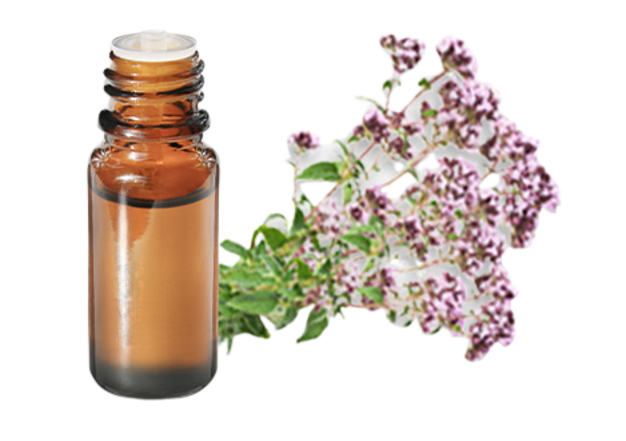
Essential oil of Geraniol thyme

Geraniol thyme essential oil, with its sweet, lemony scent, comes from a mild thyme that is best known for its skin care benefits. Purifying geraniol thyme essential oil is recommended for problem skin. An active hair care ingredient, sweet marjoram essential oil with geraniol works wonders to combat dandruff.

How to use

  • Skin application and massage

    Skin application and massage

    Suitable

  • Aromatherapy bath

    Aromatherapy bath

    Appropriate

  • Diffusion

    Diffusion

    Suitable

  • Food grade

    Food grade

    Possible but not recommended

  • Cosmetic active ingredient

    Cosmetic active ingredient

    Appropriate

Features

Properties and uses

Precautions

Find out more

Features

Production process

Complete steam distillation

Part of the plant used

Flowering tops

Botanical name

Thymus vulgaris L. geranioliferum

Warning

The properties, information and methods of use below are quotes from reference books or websites on aromatherapy, hydrolatherapy and phytotherapy. This general information is provided for informative purposes only and in no way constitutes medical guidance. Under no circumstances can this information be used as a substitute for a medical diagnosis, consultation or follow-up, nor can it incur our liability. We recommend that you consult the guide to essential oils before using them, so that you are aware of any precautions that need to be taken. If in doubt, consult a doctor before using essential oils.

Properties and uses

Geraniol thyme essential oil is traditionally used for: Fungal infection

Health

Beauty

Wellness

Find out more

Properties

Geraniol thyme essential oil is renowned for the following health benefits:

  • Rich in broad-spectrumantibacterial active ingredients

  • Antifungal

  • Antiviral

  • Uterine tonic, facilitates childbirth

  • Cardiotonic, neurotonic, stimulant

Uses

It is traditionally used to improve the following conditions:

  • Fungal infections

  • Gynaecological infections: vaginitis, cervicitis

  • ENT infections: sinusitis, ear infections, nasopharyngitis

  • Urinary tract infections: cystitis, urethritis

  • Skin disorders: eczema, abscess, boil, superficial burn, insect bites

  • Fatigue


.

In practice

Respiratory comfort: Mix into your oil blend in synergy with other oils. Apply your blend locally by massaging or rubbing it into the chest and upper back.

Precautions

  • Do not use during pregnancy (except when giving birth).

  • Always use diluted on the skin.

  • Keep out of reach of children.

  • Avoid contact with the eyes.

  • Certain natural compounds contained in this essential oil may present a risk of allergy for certain sensitive individuals when the essential oil is incorporated into a cosmetic composition (in accordance with the 7th Amendment of the European Cosmetics Directive (2003/15/EC)): geraniol, linalool, limonene, citral (geranial and neral).

  • As a general rule, always test your product in the crease of the elbow at least 48 hours before use.

Find out more

The name Thymus comes from the Greek thumon , meaning "perfume", due to thepleasant smell given off by the plant naturally or when burnt.

The ancient Egyptians used thyme to embalm the dead. The Greeks burnt it as an offering to the gods in temples or public squares. At the time, the plant was thought to be a source of courage. They used it to flavour their food and in their baths for its stimulating properties. The Romans used it in cosmetics, to purify their homes and to flavour cheeses and liqueurs.

Aromatherapy recipes from the bibliography

EO = Essential Oil VO = Carrier Oil or Macerated Oil

Nummular eczema (D. Baudoux)

Health & wellbeingSkin problems

  • 0.5 ml Thymus vulgaris ct geraniol essential oil (Geraniol thyme)
  • 0.5 ml Laurus nobilis essential oil (bay laurel)
  • 0.3 ml essential oil Trachyspermum ammi (ajowan)
  • 0.2 ml Achillea millefolium essential oil (yarrow)
  • 0.5 ml Mentha piperita essential oil (peppermint)
  • 5 ml Rosa rubiginosa carrier oil
  • 10 ml Calophyllum inophyllum (tamanu) carrier oil

Use: 3 topical applications a day until noticeable improvement.

Varicose eczema (D. Baudoux)

Health & wellbeingSkin problems

  • 0.5 ml Mentha piperita essential oil (peppermint)
  • 1 ml Pistacia lentiscus (mastic tree) essential oil
  • 4 ml Eucalyptus citriodora (lemon eucalyptus) essential oil
  • 2 ml Cupressus sempervirens (Mediterranean cypress) essential oil
  • 2 ml Laurus nobilis (bay laurel) essential oil
  • 2 ml Thymus vulgaris CT thujanol essential oil (can be replaced by thujanol marjoram essential oil)
  • 4 ml Melaleuca alternifolia (tea tree) essential oil
  • 10 ml Calophyllum Inophylum (tamanu) carrier oil
  • add up to 100 ml extra Triticum vulgare (wheat germ) carrier oil as required for product optimisation

Use: If accompanied by itching, add 0.5 ml of Tanacetum annuum (blue tansy). Apply 2 to 3 times a day, locally to the eczema. As a supplement to oral administration of tamanu oil

.

Lichen simplex (D. Baudoux)

Health & wellbeingSkin problems

  • 1 ml Litsea citrata (Litsea cubeba) essential oil
  • 3 ml Cymbopogon martinii (palmarosa) essential oil
  • 3 ml Aniba rosaeodora (rosewood) essential oil
  • 2 ml Thymus vulgaris CT geraniol (common thyme with geraniol) essential oil
  • 2 ml Satureja montana (savory) essential oil
  • 5 ml Rosa rubiginosa carrier oil (rose hip)
  • add up to 30 ml extra Transcutol as required for product optimisation

Use: 2 to 3 topical applications a day.

Aroma-Zone comment: Transcutol is a rarely-used pharmaceutical product that allows fats such as essential oils to penetrate the skin easily. It can easily be replaced by a dry carrier oil such as hazelnut, kukui or macadamia oil.

Fungal infection of the nails (D. Baudoux)

Health & wellbeingSkin problems

  • 2 drops bay laurel essential oil
  • 2 drops palmarosa essential oil
  • 1 drop true lavender essential oil
  • 2 drops mandravasarotra (Saro) essential oil
  • 2 drops Chinese cinnamon essential oil

Use : 2 to 3 drops of the mixture on the nail condition 3 times a day for 3 weeks or until clearly improved.

Aroma-Zone note: Chinese cinnamon essential oil has the same properties as Sri Lankan cinnamon bark essential oil and can therefore be substituted for it.

Equivalents

Essential Oils

1 ml = approximately 35 drops (with our Aroma-Zone dropper caps)

Carrier oils

1 pump (Aroma-Zone aluminium pump) = approx. 0.15 ml

Mass / Volume conversion (for a liquid)

Mass (g) = Density x Volume (ml) at 20°C

Further information

1 full teaspoon = between 3 and 4.5 ml

1 full tablespoon = between 7.5 and 10 ml


However, these spoon ratios depend on a number of factors (e.g. viscosity of the liquid, temperature, depth and size of the spoon, rheological behaviour of the liquid), and we strongly advise you to use precise measuring equipment, such as graduated test tubes, graduated pipettes, and precision scales.

Bibliography

1

"Les cahiers pratiques de l'aromathérapie française - Dermatology'

D. Baudoux - Editions Amyris

2

'La bible de l'aromathérapie'

Nerys Purchon