
Guide to essential oils

Essential oil of Palmarosa

A powerful purifier, Palmarosa essential oil is reputed to purify skin that is prone to discomfort or blemishes. With its pleasant scent, Palmarosa essential oil is traditionally used for foot care. Fresh and flowery, Palmarosa essential oil can be used to create deodorants with feminine notes.

How to use

  • Skin application and massage

    Skin application and massage

    Suitable

  • Aromatherapy bath

    Aromatherapy bath

    Suitable

  • Diffusion

    Diffusion

    Suitable

  • Cosmetic active ingredient

    Cosmetic active ingredient

    Suitable

  • Food grade

    Food grade

    Possible but not recommended

Features

Properties and uses

Precautions

Find out more

Features

Production process

Steam distillation

Part of the plant used

Aerial parts

Botanical name

Cymbopogon Martinii var. Motia

Warning

The properties, information and methods of use below are quotes from reference books or websites on aromatherapy, hydrolatherapy and phytotherapy. This general information is provided for informative purposes only and in no way constitutes medical guidance. Under no circumstances can this information be used as a substitute for a medical diagnosis, consultation or follow-up, nor can it incur our liability. We recommend that you consult the guide to essential oils before using them, so that you are aware of any precautions that need to be taken. If in doubt, consult a doctor before using essential oils.

Properties and uses

Palmarosa essential oil is traditionally used for: Acne, spots, eczema, bedsores, fungal infections

Health

Wellness

Beauty

Find out more

A powerfulantibacterial and antifungal agent thanks to its geraniol content, Palmarosa essential oil is traditionally used to help get rid of all types of fungal and skin infections.

Properties

In terms of health, Palmarosa essential oil is recognised for the following benefits:

  • Broad-spectrum antibacterial agent

  • Powerful anti-fungal agent

  • Antiviral, supports immunity

  • Promotes lymphatic drainage

  • Supports the uterus; traditionally used to promote contractions and ease childbirth

Uses

Palmarosa essential oil is traditionally used to improve the following issues:

  • Skin, digestive and gynaecological fungal infections

  • Urogenital conditions: cystitis

  • Rhinopharyngitis, sinusitis, ear infections

  • Skin conditions: wounds, eczema, bedsores

In practice

Skin problems: mixed into your oil blend for topical application.

Precautions

  • Do not use when pregnant or breastfeeding (except for very occasional topical use to aid labour) or on children under 6 years of age.

  • Keep out of reach of children

  • Some natural compounds found in this essential oil may pose an allergy risk for sensitive individuals when used in a cosmetic formula (in accordance with the 7th Amendment to the EU Cosmetics Directive (2003/15/EC)): limonene, linalool, geraniol, citral (geranial and neral), farnesol.

  • As a general rule, always carry out a test application of your mixture, in the crease of the elbow, at least 48 hours before use.

  • For use as a cosmetic ingredient, please refer to the specific precautions.

  • Dangerous. Observe safety precautions.

  • May cause an allergic skin reaction. Causes serious eye damage. Causes skin irritation (risk associated with the product in its pure form). Harmful to aquatic life, causing long-term adverse effects (in the event of massive spillage of the product into a watercourse).

Find out more

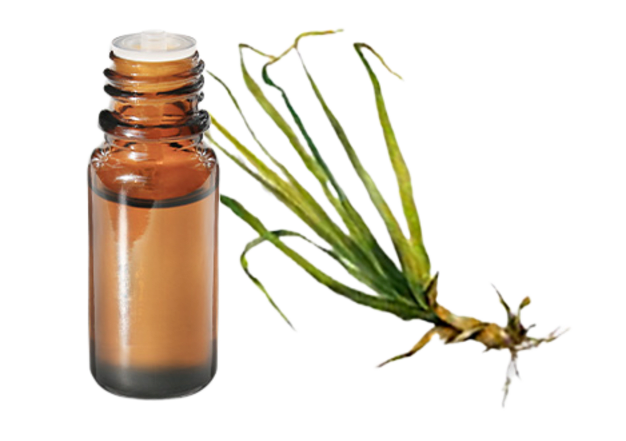
This botanical plant with long, narrow leaves belongs to the Poaceae botanical family and is a related to citronella. Native to India and Vietnam, Palmarosa is also known as Indian Geranium, due to the sweet, light and floral fragrance of its flowers, which is reminiscent of Geranium or Rose. It is also found in tropical regions, as well as on islands in the Tropic of Capricorn, such as Madagascar.

Equivalents

Essential Oils

1 ml = approximately 35 drops (with our Aroma-Zone dropper caps)

Carrier oils

1 pump (Aroma-Zone aluminium pump) = approx. 0.15 ml

Mass / Volume conversion (for a liquid)

Mass (g) = Density x Volume (ml) at 20°C

Further information

1 full teaspoon = between 3 and 4.5 ml

1 full tablespoon = between 7.5 and 10 ml


However, these spoon ratios depend on a number of factors (e.g. viscosity of the liquid, temperature, depth and size of the spoon, rheological behaviour of the liquid), and we strongly advise you to use precise measuring equipment, such as graduated test tubes, graduated pipettes, and precision scales.

Aromatherapy recipes from the bibliography

EO = Essential Oil VO = Carrier Oil or Macerated Oil

Carrot Soup (J-P. Ortega)

Kitchen

  • 175 g of Potatoes

  • 1 kg of carrots

  • 1 bunch of Tarragon

  • 1 drop of Palmarosa essential oil

Directions: Peel the potatoes and cut into chunks. Wash and scrub the carrots and cut into large slices. Place the carrots and potatoes in a saucepan. Cover with cold water and cook over a low heat for 45 minutes. Put through a food mill. Chop the tarragon, add to the soup and heat through. Add the Palmarosa essential oil. Season to taste with salt and pepper. Eat hot or cold (by adding ice cubes).

Bibliography

1

'Huiles essentielles - 2000 ans de découvertes aromathérapeutiques pour une médecine d'avenir'

Dominique Baudoux

2

'The Practice Of Aromatherapy'

Dr Jean Valnet - Éditions Maloine

3

'L'Aromathérapie exactement'

P. Franchomme and Dr D. Pénoël

4

'La bible de l'aromathérapie'

Nerys Purchon

5

'L'ABC des huiles essentielles'

Dr Telphon

6

'Aromatherapy'

Nelly Grosjean

7

'Les huiles essentielles pour votre santé'

G. Roulier

8

'Les cahiers pratiques de l'aromathérapie française - Pédiatrie'

Dominique Baudoux Editions Amyris

9

Aroma-News newsletters

NARD Association

10

'Aromatherapy - Healing with essential oils'

Dominique Baudoux - Editions Amyris