
Guide to essential oils

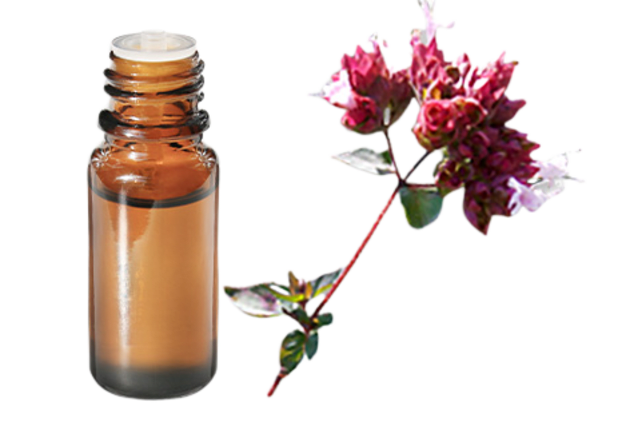
Essential oil of Oregano compactum

A powerful purifying agent with a broad spectrum of action, Oregano compactum essential oil is traditionally recommended to support infectious episodes. Fortifying, Oregano compactum essential oil is also used in cases of nervous, physical or sexual fatigue.

How to use

  • Skin application and massage

    Skin application and massage

    Appropriate

  • Diffusion

    Diffusion

    Possible but not recommended

  • Cosmetic active ingredient

    Cosmetic active ingredient

  • Aromatherapy bath

    Aromatherapy bath

  • Food grade

    Food grade

    Suitable

Features

Properties and uses

Precautions

Find out more

Features

Production process

Complete steam distillation

Part of the plant used

Aerial parts

Botanical name

Origanum compactum

Warning

The properties, information and methods of use below are quotes from reference books or websites on aromatherapy, hydrolatherapy and phytotherapy. This general information is provided for informative purposes only and in no way constitutes medical guidance. Under no circumstances can this information be used as a substitute for a medical diagnosis, consultation or follow-up, nor can it incur our liability. We recommend that you consult the guide to essential oils before using them, so that you are aware of any precautions that need to be taken. If in doubt, consult a doctor before using essential oils.

Properties and uses

Oregano Compactum Essential Oil is traditionally used for: Abscesses, boils, paronychia, bronchitis, diarrhoea, dental pain (cavities, abscesses), gastro and intestinal infections, Immunity (stimulates the immune system), urinary tract infection, wart.

Health

Wellness

Find out more

Properties

The essential oil of oregano is renowned for its health properties:

  • Studies show its powerful broad-spectrum antibacterial action

  • Traditionally used for its renowned fungicidal, mycobactericidal, parasiticidal and antiviral properties

  • Immunostimulant

Uses

It is traditionally used to improve the following situations:

  • Acute and chronic bacterial or viral infections of the respiratory tract: bronchitis, tonsillitis, influenza, sinusitis, laryngitis, tracheitis, etc.

  • Intestinal infections, bacterial, viral and parasitic: dysentery, amoebiasis, enterocolitis, Crohn's disease, etc.

  • Urinary tract infections: nephritis, cystitis

  • Infectious and parasitic skin diseases: scabies, mycoses, ringworm, abscesses, etc.

Synergies

  • Respiratory tract: Narrow-leaved eucalyptus (expectorant), Sweet inula (mucolytic), Ravintsara (antiviral), Cypress (cough suppressant) essential oils.

  • Digestive comfort: essential oils of cinnamon bark (antibacterial), tarragon and petitgrain (antispasmodic), etc.

  • Purifying action: Palmarosa essential oil (antifungal), etc.

In practice

Purifying action: mix into your oil blend. Apply your mixture locally, massaging lightly into the affected area.

Precautions

  • Not suitable for pregnant or breastfeeding women or children.

  • Dermocaustic: never use undiluted on the skin. Always use well diluted on the skin (max. 20% for localised use over a small area).

  • Very powerful, use only in small doses and for a limited period of time.

  • Not recommended for patients with impaired liver function.

  • Keep out of reach of children.

  • Avoid contact with eyes.

  • Certain natural compounds contained in this essential oil may present a risk of allergy for certain sensitive individuals when the essential oil is incorporated into a cosmetic composition (in accordance with the 7th Amendment to the European Directive on cosmetic products (2003/15/EC)): linalool and, to a lesser extent, limonene.

  • As a general rule, always test-apply your mixture in the crease of the elbow at least 48 hours before use.

  • For any use as a vapour, this powerful essential oil should be strongly diluted (max. 5%) with other milder essential oils.

Find out more

Oregano compactumis a plant that grows to 30 to 80 centimetres, belonging to the Lamiaceae family. It is called 'compactum' because its flowers are grouped together in compact purple-pink inflorescences. Native toNorth Africa, it is widespread in North Africa, particularly Morocco, which is why it is sometimes known asMoroccan Oregano. Its highly aromatic dark green leaves are used in cooking as a condiment.

Equivalents

Essential Oils

1 ml = approximately 35 drops (with our Aroma-Zone dropper caps)

Carrier oils

1 pump (Aroma-Zone aluminium pump) = approx. 0.15 ml

Mass / Volume conversion (for a liquid)

Mass (g) = Density x Volume (ml) at 20°C

Further information

1 full teaspoon = between 3 and 4.5 ml

1 full tablespoon = between 7.5 and 10 ml


However, these spoon ratios depend on a number of factors (e.g. viscosity of the liquid, temperature, depth and size of the spoon, rheological behaviour of the liquid), and we strongly advise you to use precise measuring equipment, such as graduated test tubes, graduated pipettes, and precision scales.

Aromatherapy recipes from the bibliography

EO = Essential Oil VO = Carrier Oil or Macerated Oil

Warts (D. Festy)

Health & wellbeingSkin problems

  • Oregano compactum essential oil: 1 ml

  • Juniper essential oil: 1 ml

  • Chinese Cinnamon: 1 ml

  • Mountain savory essential oil: 1 ml

  • Savory: 1 ml

Use: Apply one drop of this mixture on a cotton bud to the verruca and cover with a small bandage. Leave on all day. Repeat twice a day after washing, for 2 to 3 weeks, until the verruca disappears Aroma-Zone Note: Chinese Cinnamon essential oil has the same properties as Ceylon Cinnamon Bark essential oil and this can therefore be used as a substitute.

Infectious diarrhoea (Aroma News - NARD)

Health & wellbeingDigestive problems

  • Origanum compactum essential oil (Oregano compactum): 1 ml

  • Cinnamomum verum essential oil (Cinnamon bark): 0.5 ml

  • Artemesia draculuncus essential oil (Tarragon): 3 ml

  • Citrus aurantium leaf (Petitgrain): 4 ml

  • Mentha piperita essential oil (Peppermint): 1 ml

  • Carrier oil (hazelnut) : 20 ml

Use: 8 drops of the mixture applied 3 times a day to the lower abdomen and back Aroma-Zone note: Ceylon Cinnamon Bark essential oil has the same properties as Chinese Cinnamon essential oil and this can therefore be used as a substitute.

Bibliography

1

'Huiles essentielles - 2000 ans de découvertes aromathérapeutiques pour une médecine d'avenir'

Dominique Baudoux

2

Aromatherapy

Dr Jean Valnet - Éditions Maloine

3

"L'Aromathérapie exactement"

P. Franchomme and Dr D. Pénoël

4

'La Bible de l'aromathérapie'

Nerys Purchon

5

"ABC des huiles essentielles"

Dr Telphon

6

Aromatherapy

Nelly Grosjean

7

'Les huiles essentielles pour votre santé'

G. Roulier

8

'Les cahiers pratiques de l'aromathérapie française - Pédiatrie'

Dominique Baudoux - Editions Amyris

9

Aroma-News newsletters

The NARD association

10

'Aromatherapy - Healing with essential oils'

Dominique Baudoux - Editions Amyris