
Guide to essential oils

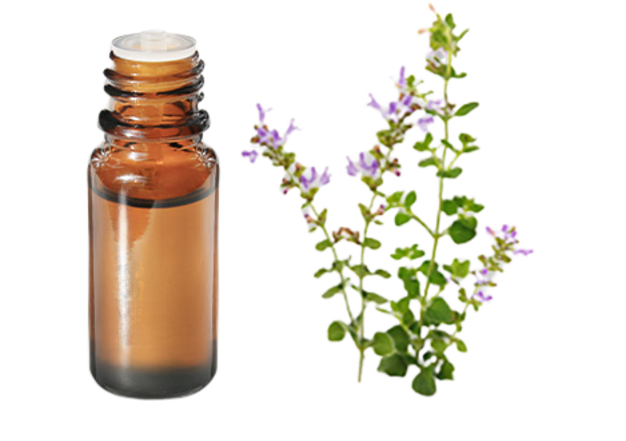
Essential oil of ORGANIC Mountain Savory

An important oil in aromatherapy, Savory essential oil has powerful purifying effects. Savory essential oil is therefore often recommended during infectious episodes. Savory essential oil is also known for its stimulating properties, which are very useful in case of fatigue.

How to use

  • Skin application and massage

    Skin application and massage

    Not recommended

  • Cosmetic active ingredient

    Cosmetic active ingredient

    Not recommended

  • Diffusion

    Diffusion

    Not recommended

  • Aromatherapy bath

    Aromatherapy bath

    Not recommended

  • Food grade

    Food grade

    Suitable

Features

Properties

Precautions

Find out more

Features

Production process

Complete steam distillation

Part of the plant used

Flowering tops

Botanical name

Satureia montana

Warning

The properties, information and methods of use below are quotes from reference books or websites on aromatherapy, hydrolatherapy and phytotherapy. This general information is provided for informative purposes only and in no way constitutes medical guidance. Under no circumstances can this information be used as a substitute for a medical diagnosis, consultation or follow-up, nor can it incur our liability. We recommend that you consult the guide to essential oils before using them, so that you are aware of any precautions that need to be taken. If in doubt, consult a doctor before using essential oils.

Bibliographic references

  • Baudoux D. (2002) Aromatherapy - Healing with essential oils. Amyris Publishing.

  • Baudoux D. (2002) Aromatherapy - Healing with essential oils. Amyris Publishing.

  • Festy.D(2012) My Essential Oils Bible, Leduc Publishing. Franchomme P., Jollois R. and Pénoël D. (2001) Aromatherapy Exactly. Roger Jollois Publishing.

  • Roulier G. (1990) Essential Oils for Your Health. A Practical Guide to Aromatherapy: Properties and Therapeutic Uses of Plant Essences. Editions Dangles.

  • Telphon T. (2003) ABC of Essential Oils. Editions Grancher.

Properties

Mountain Savory essential oil is traditionally used for: abscess, boil, paronychia, bronchitis, diarrhoea, dental pain (cavities, abscesses), gastro and intestinal infections, laryngitis, pharyngitis.

Health

Wellness

Properties

In terms of health, mountain savoury essential oil is recognised for the following properties:

  • Powerful antiseptic: antibacterial, antifungal, pest repellent, antiviral

  • Stimulates the immune system

  • General tonic and stimulant: circulatory, digestive

  • Percutaneous analgesic

Uses

It is traditionally used to improve the following situations:

  • Bacterial or parasitic intestinal infections

  • Viral or bacterial lung infections

  • Parasitic and fungal skin infections

  • Cystitis, urethritis, prostatitis

  • Hypotension

  • Adenitis

  • Arthritis, rheumatism

In practice

Digestive purifier: Mix into your oil blend (strongly diluted). Massage over the organ concerned with this mixture.

Precautions

  • Do not use on pregnant or breastfeeding women, children under 6 years of age, or people with liver disorders.

  • Avoid contact with the eyes and mucous membranes.

  • Keep out of reach of children.

  • Seek advice from a healthcare professional in case of gastroesophageal disorders.

  • Do not use internally for prolonged periods.

  • Certain natural compounds contained in this essential oil may present a risk of allergy in some sensitive individuals when the essential oil is incorporated into a cosmetic composition.

  • Avoid old or oxidised essential oils. Store away from light and air.

Find out more

The Latin name for Mountain Savoury, Satureja, means "satyr herb", referring to the creatures known for their sexual ardour. Dedicated to Dionysus by the Greeks, it has always been considered an aphrodisiac and was used in the preparation of love potions; its cultivation was therefore forbidden in monasteries.

During the Second World War, it was also used as a condiment to replace pepper, which was in short supply.

Effective

I
Isabelle

Smells good

C
Catherine

Perfect

M
Marlène

I use this EO in a mixture with Ravintsara EO, Tea Tree EO and Celandine TM for a mixture against warts.

M
Marie-france

Very effective against traveler's diarrhea, gastroenteritis, etc., in combination with cinnamon and compact oregano essential oils

A
Agnès

Equivalents

Essential Oils

1 ml = approximately 35 drops (with our Aroma-Zone dropper caps)

Carrier Oils

1 pump (Aroma-Zone aluminium pump) = approx. 0.15 ml

Mass / Volume conversion (for a liquid)

Mass (g) = Density x Volume (ml) at 20°C

Further information

1 full teaspoon = between 3 and 4.5 ml

1 full tablespoon = between 7.5 and 10 ml


However, these spoon ratios depend on a number of factors (e.g. viscosity of the liquid, temperature, depth and size of the spoon, rheological behaviour of the liquid), and we strongly advise you to use precise measuring equipment, such as graduated test tubes, graduated pipettes, and precision scales.

Aromatherapy recipes from the bibliography

EO = Essential Oil VO = Vegetable Oil or Oily Macerate

Nail fungal infection (T. Telphon)

Health & wellbeingSkin problems

  • True Lavender essential oil: 1 to 2 drops

  • Rosewood essential oil: 1 to 2 drops

  • Savory essential oil: 1 to 2 drops

Use: Apply 1 to 2 drops of each essential oil to a cotton pad.

Verruca (D. Baudoux)

Health & wellbeingSkin problems

  • 1 drop of Chinese Cinnamon essential oil

  • 1 drop of Mountain Savory essential oil

  • 1 drop of Mandarin essential oil

  • 2 drops of Lemon essential oil

Use: 1 drop of the mixture on the verruca in the morning and evening.

Aroma-Zone Note: Mandarin and Lemon essential oils are photosensitising, so do not expose your skin to the sun after applying this mixture. Chinese Cinnamon essential oil has the same properties as Ceylon Cinnamon Bark essential oil, and they can therefore be used interchangeably.

Warts (D. Festy)

Health & wellbeingSkin problems

  • Oregano Compactum essential oil: 1 ml

  • Juniper essential oil: 1 ml

  • Chinese Cinnamon essential oil: 1 ml

  • Clove essential oil: 1 ml

  • Mountain Savory essential oil: 1 ml

Use: Apply one drop of this mixture to the verruca using a cotton bud and cover with a small plaster. Leave on all day. Repeat 2 times a day after washing, for 2 to 3 weeks, until the verruca disappears.

Aroma-Zone Note: Chinese Cinnamon essential oil has the same properties as Ceylon Cinnamon Bark essential oil, and they can therefore be used interchangeably.