


Guide to essential oils

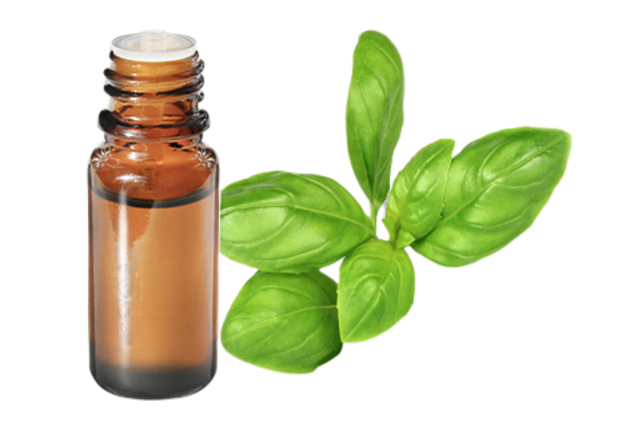
Essential oil of Linalool sweet basil

Sweet Basil essential oil with linalool has a delicious scent of fresh basil. Traditionally used to relieve digestive discomforts, Sweet Basil Linalool essential oil has soothing properties, etc. Rich in linalool, Sweet Basil essential oil with linalool is very mild and can be used in skin care to tone the skin. Purifying, Sweet Basil Linalool essential oil adds an aromatic note to your skincare products for blemished skin.

How to use

  • Skin application and massage

    Skin application and massage

    Possible but not recommended

  • Cosmetic active ingredient

    Cosmetic active ingredient

    Possible but not recommended

  • Diffusion

    Diffusion

    Suitable

  • Aromatherapy bath

    Aromatherapy bath

    Appropriate

  • Food grade

    Food grade

    Suitable

Features

Properties

Precautions

Find out more

Features

Production process

Complete steam distillation

Part of the plant used

Leaves

Botanical name

Ocimum basilicum CT linalool

Warning

The properties, information and methods of use below are quotes from reference books or websites on aromatherapy, hydrolatherapy and phytotherapy. This general information is provided for informative purposes only and in no way constitutes medical guidance. Under no circumstances can this information be used as a substitute for a medical diagnosis, consultation or follow-up, nor can it incur our liability. We recommend that you consult the guide to essential oils before using them, so that you are aware of any precautions that need to be taken. If in doubt, consult a doctor before using essential oils.

Bibliographic references

  • Antioxidant activity and total phenolic content of essential oils and extracts of sweet basil (Ocimum basilicum L.) plants Adel F. Ahmeda,b,∗, Fatma A.K. Attiac,d, Zhenhua Liua,c, Changqin Li a,c, Jinfeng Wei a,c, Wenyi Kanga: 2019.

  • Bosson L. and Dietz G. (2004) Energy aromatherapy. Healing with the soul of plants. Amyris Publishing.

  • Cupillard.E and V. (2015), Cooking with Essential Oils and Floral Waters, La Page Publishing.

  • Davy O. and Fayolle M () Cooking with Essential Oils. Treasures of Flavor and Vitality. Editions Anagramme.

  • Festy.D(2012), My Essential Oils Bible, Leduc Publishing.

  • Le Foll.N & Da Costa.B () Flavor and Well-Being: Cooking with Essential Oils, Filipacchi Publishing.

  • Pataud.A () Cooking with essential oils? Published by Ambre.

  • Purchon.N (2001) The Bible of Aromatherapy, Marabout Publishing. Telphon.T (2003) ABC of Essential Oils, Grancher Publishing.

  • Werner M. and Von Braunschweig R. (2008) Aromatherapy. Vigot Publishing.

Properties

Sweet Basil Linalool essential oil is traditionally used for: Aerophagia, bloating and flatulence, poor digestion, migraine and headaches, stress.

Health

Beauty

Wellness

Kitchen

Find out more, etc.

Properties

Sweet Basil Linalool essential oil is recognised for its health properties:

  • A digestive stimulant, Basil Linalool essential oil is known to promote good digestion.

  • Purifying, it is known to relieve intestinal and gastric disorders.

  • A general tonic for the body, it is known to strengthen the immune system in the long term.

  • Soothing, it is known to contribute to joint and muscle health.

Uses

It is traditionally used in the following situations:

  • Digestive problems, especially psychological: slow digestion, especially after a heavy meal, bloating, nausea, etc.

  • Gastric and intestinal disorders

  • Menstrual problems

  • Muscle or joint discomfort (local external use)

  • Headaches

  • Physical fatigue

  • Air purification

Synergies

  • Poor digestion: Cumin, Tarragon, Fennel, Peppermint essential oils

  • Action on the immune system: Black spruce, Ravintsara, Cistus, Fragonia essential oils

  • Joint pain : American Wintergreen, Lemon Eucalyptus essential oils

In practice

Digestive health (spasms) : Mix with your oil blend. Massage the mixture into the stomach.

Joint health: Mix with your oil blend. Apply your mixture locally, massaging lightly into the affected area.

Precautions

  • Do not use on pregnant and/or breastfeeding women, children under 6 years of age, or people suffering from epilepsy.

  • Not recommended for people with liver disease.

  • Avoid contact with the eyes and mucous membranes.

  • Keep out of reach of children.

  • Internal use in limited doses and for short periods only, on the advice of a therapist.

  • Certain natural compounds contained in this essential oil may present a risk of allergy in some sensitive individuals when the essential oil is incorporated into a cosmetic composition.

  • Avoid old or oxidised essential oils. Store away from light and air.

  • As a general rule, always test your preparation on the inside of your elbow at least 48 hours before use.

  • For use as a cosmetic ingredient, please refer to the specific precautions.

  • Always use diluted

Find out more

An annual plant in the Lamiaceae family, basil is native to India. It is considered a sacred herb, dedicated to Vishnu and Krishna, and can offer physical and spiritual protection to the person who wears it. Its name is said to come from the Greek basilikos, meaning "royal", as the subtlety of its aroma and fragrance was worthy of the greatest kings. In ancient times, basil was reputed to protect against the evil eye. The Egyptians made wreaths from it, perhaps already aware of the amazing virtues of this plant for the entire cephalic region.

It was brought to Europe by Italy and the South of France, which is why it has become an essential condiment in traditional Provençal and Italian cuisine (it is, for example, the basic ingredient in pistou and pesto sauces).

There are over 150 varieties of basil, but only a few are used in medicine and phytotherapy, particularly to treat digestive disorders, and as a general body stimulant and tonic. Basil is an invaluable ally for balancing digestive and intestinal discomforts, and soothing stress and nervousness.

Organic Sweet Basil Linalool essential oil has properties similar to those of its cousin Tropical Basil, but is slightly more purifying due to its high linalool content, and has a slightly weaker action on relieving intestinal spasms or cramps. It is also better tolerated on the skin. It also adds a surprisingly aromatic touch to your cosmetic preparations, and is delicious in culinary recipes.

For my husband during his difficult digestions

S
S

Very good smell

J
J

to relax, to sleep, to concentrate

E
Eliane

Effective for digestion, but very strong

K
Karine

excellent product, I recommend it.

J
J

Equivalents

Essential Oils

1 ml = approximately 35 drops (with our Aroma-Zone dropper caps)

Carrier Oils

1 pump (Aroma-Zone aluminium pump) = approx. 0.15 ml

Mass / Volume conversion (for a liquid)

Mass (g) = Density x Volume (ml) at 20°C

Further information

1 full teaspoon = between 3 and 4.5 ml

1 full tablespoon = between 7.5 and 10 ml


However, these spoon ratios depend on a number of factors (e.g. viscosity of the liquid, temperature, depth and size of the spoon, rheological behaviour of the liquid), and we strongly advise you to use precise measuring equipment, such as graduated test tubes, graduated pipettes, and precision scales.

Aromatherapy recipes from the bibliography

EO = Essential Oil VO = Vegetable Oil or Oily Macerate

Wok duck fillet with lemongrass and basil (N. Le Foll and B. Da Costa)

Kitchen

Serves 4 - Preparation time: 30 min - Cooking time: 15 min

  • 2 duck fillets

  • 1 Victoria pineapple or ½ pineapple

  • 300 g snow peas

  • 2 purple onions

  • 1 clove garlic

  • 1 knob fresh ginger

  • 2 tablespoons olive oil

  • salt and freshly ground pepper

  • Lemongrass essential oil: 1 drop

  • Basil essential oil: 1 drop

Directions: Cut the duck fillets into 1cm-thick strips. Peel the pineapple and cut into pieces. Peel the snow peas, cook in boiling salted water for 2 minutes and drain. Peel and chop the garlic and onions. Peel and grate the ginger. Heat a wok or frying pan, pour in the olive oil and, when hot, fry the onions, garlic and ginger for 3-4 minutes, stirring constantly with a wooden spoon. Add the duck strips and brown over a high heat for 2 minutes, then add the pineapple and the snow peas and finally the essential oils. Season with salt and pepper. Leave to cook for a further 3 minutes, stirring constantly. Taste to check the seasoning and serve immediately.

Grapefruit and coconut lotionshake (N. Le Foll and B. Da Costa)

Kitchen

  • ½ cucumber

  • 1 grapefruit

  • 150 ml coconut lotion

  • citronella essential oil: 1 drop

  • Basil essential oil: 1 drop

Directions: Blend the ½ cucumber, the grapefruit juice and the coconut lotion previously mixed with the essential oils, together with 2 or 3 ice cubes.

Amandins surprise (E. and V. Cupillard)

Kitchen

  • Basil linalool essential oil: 4 drops

  • Vegetable margarine: 160g

  • Light cane sugar: 200 g

  • Rice flour: 200 g

  • Baking powder: 1 tablespoon

  • 4 eggs

  • A handful of slivered almonds

Method: for 14 small cakes. Half an hour beforehand, take out the margarine so that you can work with it easily. In a bowl, mix it with the sugar. Add the basil essential oil, the eggs one by one, then the flour and baking powder. Mix well. Fill each paper case with two tablespoons of dough. Sprinkle a pinch of flaked almonds over the surface of the cakes. Place the half-filled paper moulds in the oven at gas mark 6-7 for around 15 minutes. Use: Portion cakes to take along for a snack or to place on summer dessert buffets alongside fresh fruit salads, compotes and marmalades, etc.

Pan-fried vegetables with sun-dried tomatoes, basil and fennel (A. Pataud)

Kitchen

Serves 6 - Preparation: 20 minutes - Cooking time: 10 minutes

  • 3 tbsp olive oil

  • 4 shallots, finely julienned

  • 1 yellow pepper, finely julienned

  • 1 red pepper, finely julienned

  • 1 courgette, julienned

  • 1 stalk celery, julienned

  • 2 cloves garlic, peeled and minced

  • 2 tbsp sundried tomatoes, finely chopped

  • Salt and freshly ground pepper

  • Olive oil

  • 1 drop of aniseed essential oil

  • 1 to 2 drops of Basil essential oil

  • 1 drop of fennel essential oil

Directions: Heat the olive oil in a frying pan over a high heat. Cook the vegetables, except the tomatoes, until al dente (about 10 minutes). Add the essential oils, mixed with a little olive oil, and the dried tomatoes; mix well. Season with salt and pepper.

Dad's lobster (O. Davy)

Kitchen

Serves 2 - Preparation time: 30 minutes - Cooking time: 25 minutes

  • 1 lobster, 800 g

  • 1 leek

  • 1 stalk of celery

  • 1 small piece of Kombu seaweed

  • 30 g dried bonito flakes

  • a few pink peppercorns

  • 1 onion

  • 2 cloves of garlic

  • 1 teaspoon Mirin wine

  • 2 teaspoons Tamari

  • 30 g ginger

  • 1 shallot

  • 1 teaspoon dried seaweed

  • ¼ bunch parsley Sichuan pepper

Vegetables:

  • 3 vitelotte potatoes

  • 1 small romanesco cabbage

  • 1 small pumpkin

  • 3 tablespoons olive oil

  • A few lamb's lettuce leaves

  • 1 bunch chervil

  • Fragrance oil:

  • 2 tablespoons pistachio oil

  • 1 drop Bergamot essential oil

  • 1 drop of Basil essential oil

  • 2 drops Lemon essential oil

Directions: Chop the leek, celery and onion. Chop the garlic. Place the vegetables in a pot along with the bonito flakes, pink berries and kombu seaweed. Sprinkle with the Mirin wine and 1 teaspoon of Tamari. Season with pepper. Boil the mixture in 1 litre of water for 15 minutes.

Prepare the sauce: in a bowl, mix together the chopped ginger, chopped shallot, 1 chopped clove of garlic, dried seaweed, parsley, remaining tamari and a pinch of Sichuan pepper. Dip the live lobster in your 1st preparation for 5 minutes. Take it out, cut it in half and generously drizzle the sauce over its entire length. To prepare the vegetables, start by cooking the unpeeled vitelottes in water for 25 minutes, then peel and slice lengthways. Steam the romanesco for 4 minutes and season with salt. Cut the pumpkin into melon slices and steam for 4 minutes. Drizzle with 3 tablespoons of olive oil.

Basil and garlic oil (A. Pataud)

Kitchen

  • 6 cl Virgin Olive Oil

  • 2 drops Basil essential oil

  • 1 drop Garlic essential oil

Method and use: Mix the ingredients. Ideal for a spicy salad.

Thai-style mussel soup (N. Le Foll and B. Da Costa)

Kitchen

Serves 4 - Preparation: 20 min - Cooking time: 6 min

  • 1.5 kg of bouchot mussels

  • 1 large, just ripened mango (still quite firm)

  • 1 tomato

  • 1 red onion

  • 150 ml coconut lotion

  • 1 tablespoon of oil

  • Lemongrass essential oil: 1 drop

  • Basil essential oil: 1 drop

Directions: Wash, scrape and trim the mussels. Peel and dice the mango. Scald the tomato, cool it under running water, peel and deseed it. Peel and chop the onion. In a large saucepan, lightly brown the onion in the oil, add the mango, tomato pulp and lemongrass essential oil, stir and cook for 2 minutes. Add the drained mussels, cover and cook on high heat for 3 to 4 minutes, shaking the pan regularly until the mussels open. Add the coconut lotion and basil essential oil, stir and wait 2 minutes before serving.