

Guide to essential oils

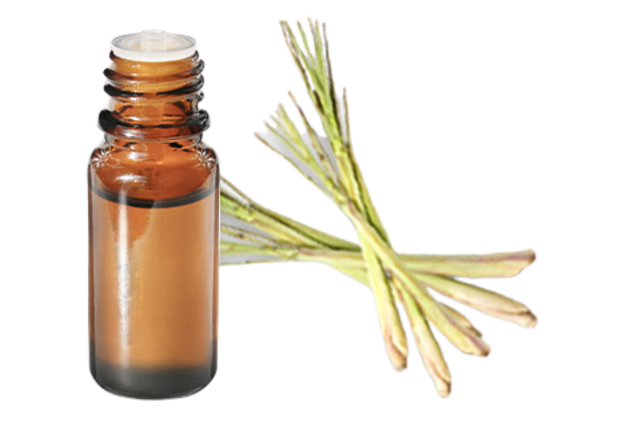
Essential oil of Lemongrass

Fresh and lemony, Lemongrass essential oil is a pleasant, purifying deodorant. Lemongrass essential oil is also renowned for its toning and regenerating properties. As a hair care active ingredient, Lemongrass essential oil makes hair shine while adding a tangy note to your 'home' hair care products.

How to use

  • Skin application and massage

    Skin application and massage

    Suitable

  • Cosmetic active ingredient

    Cosmetic active ingredient

    Appropriate

  • Diffusion

    Diffusion

    Suitable

  • Aromatherapy bath

    Aromatherapy bath

    Appropriate

  • Food grade

    Food grade

    Appropriate

Features

Properties and uses

Precautions

Find out more

Features

Production process

Complete steam distillation

Part of the plant used

Aerial parts

Botanical name

Cymbopogon flexuosus

Warning

The properties, information and methods of use below are quotes from reference books or websites on aromatherapy, hydrolatherapy and phytotherapy. This general information is provided for informative purposes only and in no way constitutes medical guidance. Under no circumstances can this information be used as a substitute for a medical diagnosis, consultation or follow-up, nor can it incur our liability. We recommend that you consult the guide to essential oils before using them, so that you are aware of any precautions that need to be taken. If in doubt, consult a doctor before using essential oils.

Properties and uses

Health

Wellness

Beauty

Find out more, etc.

Properties

Lemongrass essential oil is renowned for the following health benefits:

  • Vasodilating, it increases the calibre of blood vessels and improves blood circulation

  • Tissue tonic

  • Anti-inflammatory

  • Digestive stimulant

Uses

It is traditionally used to improve the following situations:

  • Neurovegetative dystonia (abnormal rigidity of the body's automatic functions), muscular weakness, etc.

  • Digestive disorders: colic, flatulence, dyspepsia

  • Liver failure

  • Cellulite

  • Arterial disease (arteritis)

  • Scabies, infectious diseases (cholera, tropical fevers)

  • Disinfection, head lice

  • Excessive perspiration

Synergies

  • Eliminate unpleasant odours: diffuse with Peppermint essential oil.

  • Respiratory and ENT comfort: Roman chamomile or Lavender essential oils.

In practice

Toning, purifying: Mix into your oil blend. Massage or rub the mixture into the affected areas.

Precautions

  • Do not use during the first 3 months of pregnancy. Do not use internally during pregnancy.

  • Not recommended for children under 6 years of age.

  • Irritating to the skin in its pure state; always use well diluted when applied to the skin. Use with caution, especially on sensitive or allergic skin.

  • Keep out of reach of children.

  • Avoid contact with the eyes.

  • Certain natural compounds contained in this essential oil may present a risk of allergy in certain sensitive individuals when the essential oil is incorporated into a cosmetic composition (according to the 7th Amendment of the European Directive on cosmetic products (2003/15/EC)): citral (geranial and neral), geraniol and, to a lesser extent, linalool, isoeugenol, limonene, citronnellol.

  • As a general rule, always test-apply your mixture in the crease of the elbow at least 48 hours before use.

  • For use as a cosmetic ingredient, please refer to the specific precautions.

Find out more

Commonly grown in tropical regions, Lemongrass forms clumps with a great many leaves. Slightly crumpled, they give off the strong lemony scent to which it owes its name, which is more accurate than its other name of "Indian verbena" , because it has nothing to do with verbena.

Lemongrass is used in a number of cosmetic products, and its aroma is used in Thai and Malaysian cooking.

Equivalents

Essential Oils

1 ml = approximately 35 drops (with our Aroma-Zone dropper caps)

Carrier oils

1 pump (Aroma-Zone aluminium pump) = approx. 0.15 ml

Mass / Volume conversion (for a liquid)

Mass (g) = Density x Volume (ml) at 20°C

Further information

1 full teaspoon = between 3 and 4.5 ml

1 full tablespoon = between 7.5 and 10 ml


However, these spoon ratios depend on a number of factors (e.g. viscosity of the liquid, temperature, depth and size of the spoon, rheological behaviour of the liquid), and we strongly advise you to use precise measuring equipment, such as graduated test tubes, graduated pipettes, and precision scales.

Aromatherapy recipes from the bibliography

EO = Essential Oil VO = Carrier Oil or Macerated Oil

Guinea fowl fricassee with two lemons and lemongrass (A. Pataud)

Kitchen

Serves 4; Preparation: 30 minutes; Cooking time: 45 minutes

  • Guinea fowl: 1.5 kg

  • Basmati rice: 300 g

  • Wild rice : 100 g

  • White wine: 2 dl

  • Butter : 70 g

  • Olive oil: 2 cl

  • Thyme, Laurel

  • Salt, Pepper

  • Lemon essential oil: 2 drops

  • Lime Essential Oil: 2 drops

  • Lemongrass essential oil: 1 drop

Procedure: Cut the guinea fowl into 8 pieces. Lightly brown the guinea fowl in olive oil in a casserole dish, seasoning lightly, then add the thyme, bay leaf and white wine, then cover with water. Bring to the boil, then simmer for about 1/2 hour.

Bibliography

1

Aromatherapy

Dr Jean Valnet - Éditions Maloine

2

"L'Aromathérapie exactement"

P. Franchomme and Dr D. Pénoël

3

'La Bible de l'aromathérapie'

Nerys Purchon

4

"ABC des huiles essentielles"

Dr Telphon

5

Aromatherapy

Nelly Grosjean

6

'Les huiles essentielles pour votre santé'

G. Roulier

7

'Les cahiers pratiques de l'aromathérapie française - Pédiatrie'

Dominique Baudoux - Editions Amyris

8

Aroma-News newsletters

The NARD association

9

'Aromatherapy - Healing with essential oils'

Dominique Baudoux - Editions Amyris