
Guide to essential oils

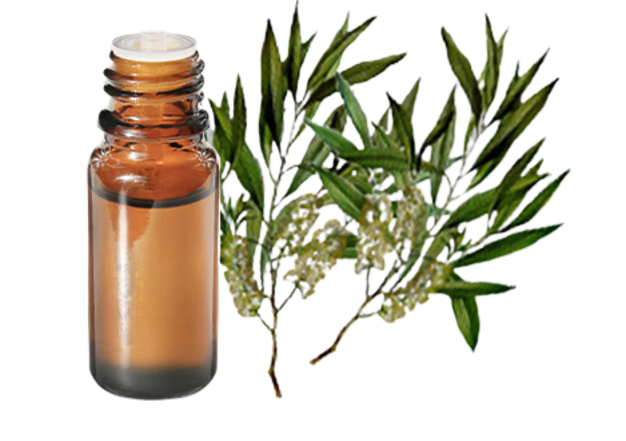
Essential oil of Lemon tea tree

Native to Australia, Lemon Tea Tree essential oil has a subtle, fresh and lemony fragrance. Calming and relaxing, Lemon Tea Tree essential oil is renowned for calming nervousness. Thanks to its mood-boosting qualities, Lemon Tea Tree essential oil helps to combat the blues, and is useful for handling grief. Lemon Tea Tree essential oil is ideal for diffusing!

How to use

  • Skin application and massage

    Skin application and massage

    Suitable

  • Diffusion

    Diffusion

    Suitable

  • Food grade

    Food grade

    Possible but not recommended

  • Aromatherapy bath

    Aromatherapy bath

    Appropriate

  • Cosmetic active ingredient

    Cosmetic active ingredient

    Appropriate

Features

Properties and uses

Precautions

Find out more

Features

Production process

Complete steam distillation

Part of the plant used

Leaves

Botanical name

Leptospermum petersonii

Warning

The properties, information and methods of use below are quotes from reference books or websites on aromatherapy, hydrolatherapy and phytotherapy. This general information is provided for informative purposes only and in no way constitutes medical guidance. Under no circumstances can this information be used as a substitute for a medical diagnosis, consultation or follow-up, nor can it incur our liability. We recommend that you consult the guide to essential oils before using them, so that you are aware of any precautions that need to be taken. If in doubt, consult a doctor before using essential oils.

Properties and uses

Health

Wellness

Find out more

Properties

In terms of health, lemon tea tree essential oil is renowned for the following properties:

  • Rich in anti-inflammatory active ingredients

  • Traditionally used for its repellent effect.

  • Eupeptic, it aids digestion.

Uses

As a complement to treatments, it is traditionally used in the following cases:

  • Digestive disorders, bloating

In practice

To soothe the abdomen: Mix into your oil blend. Massage or rub your mixture into the abdomen and/or solar plexus.

Precautions

  • Do not use during pregnancy.

  • Possible skin irritation; always dilute well before applying to the skin.

  • Certain natural compounds in this essential oil may present an allergy risk for sensitive individuals when the oil is used in cosmetic formulations (according to the 7th Amendment to the European Cosmetics Directive (2003/15/EC)): citral (geranial and neral), citronellol, and to a lesser extent, geraniol.

  • As a general rule, always carry out a patch test on the inside of the elbow at least 48 hours before use.

Find out more

Lemon Tea Tree belongs to the Myrtaceae family, like its cousin, Tea Tree. This pretty shrub can grow up to 5 metres tall and produces small white flowers. Its name is derived from the fact that its leaves give off a distinctive lemon aroma. It growsnaturally in the sclerophyll forests and rainforests ofAustralia's east coast. Cultivated as an ornamental plant in parks and gardens, its leaves are also harvested.

Initially used as a tea substitute, they are now commonly used as an aromatic ingredient combined with black tea to create teas with citrus notes.

Aromatherapy recipes from the bibliography

EO = Essential Oil VO = Carrier Oil or Macerated Oil

Anxiety and racing thoughts (L. Bosson)

Health & wellbeing

  • 10 drops of Tropical Basil or Linalool Basil essential oil
  • 10 drops of Rose Geranium essential oil
  • 5 drops of Rosemary Cineole essential oil
  • 5 drops of Lemon Tea Tree (or leptospermum) essential oil
  • 30 ml of Macadamia or apricot Kernel carrier oil

Use: Massage the solar plexus area regularly, using slow, clockwise circular motions, with a few drops of this massage oil.

Equivalents

Essential Oils

1 ml = approximately 35 drops (with our Aroma-Zone dropper caps)

Carrier oils

1 pump (Aroma-Zone aluminium pump) = approx. 0.15 ml

Mass / Volume conversion (for a liquid)

Mass (g) = Density x Volume (ml) at 20°C

Further information

1 full teaspoon = between 3 and 4.5 ml

1 full tablespoon = between 7.5 and 10 ml


However, these spoon ratios depend on a number of factors (e.g. viscosity of the liquid, temperature, depth and size of the spoon, rheological behaviour of the liquid), and we strongly advise you to use precise measuring equipment, such as graduated test tubes, graduated pipettes, and precision scales.

Bibliography

1

L'aromathérapie exactement

Franchomme, Jollois and Pénoël