
Guide to essential oils

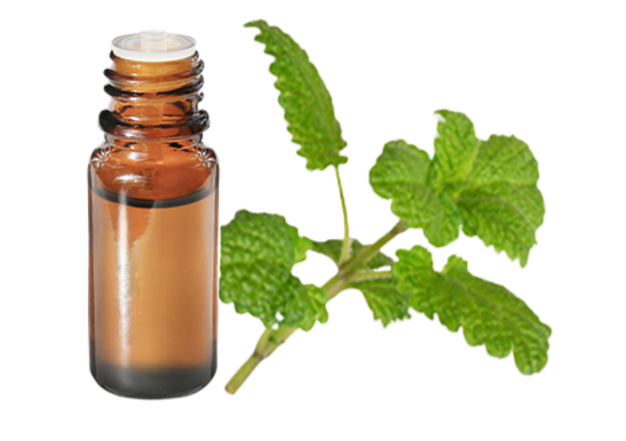
Essential oil of Lemon balm

An exceptional calming agent, Lemon Balm essential oil is widely used to soothe stress, agitation and anxiety. Lemon balm essential oil has a relaxing effect and helps promote sleep. Lemon balm essential oil has long been used to aid digestion. Lemon balm essential oil has a very pleasant, fine lemony fragrance.

How to use

  • Skin application and massage

    Skin application and massage

    Suitable

  • Diffusion

    Diffusion

    Suitable

  • Cosmetic active ingredient

    Cosmetic active ingredient

    Possible but not recommended

  • Aromatherapy bath

    Aromatherapy bath

    Appropriate

  • Food grade

    Food grade

    Suitable

Features

Properties and uses

Precautions

Find out more

Features

Production process

Complete steam distillation

Part of the plant used

Whole plant

Botanical name

Melissa officinalis

Warning

The properties, information and methods of use below are quotes from reference books or websites on aromatherapy, hydrolatherapy and phytotherapy. This general information is provided for informative purposes only and in no way constitutes medical guidance. Under no circumstances can this information be used as a substitute for a medical diagnosis, consultation or follow-up, nor can it incur our liability. We recommend that you consult the guide to essential oils before using them, so that you are aware of any precautions that need to be taken. If in doubt, consult a doctor before using essential oils.

Properties and uses

Lemon balm essential oil is traditionally used for: Insomnia, stress

Health

Wellness

Find out more

Properties

Lemon balm essential oil is renowned for the following health benefits:

  • Hypotensive, soothing

  • Rich in anti-inflammatory active ingredients

  • Intestinal and digestive antiparasitic

  • Antispasmodic

  • Promotes bile secretion and helps fight gallstones

Uses

It is traditionally used to improve the following situations:

  • Spasms, palpitations

  • Indigestion, stomach cramps, nausea, vomiting

  • To promote liver activity

  • Pain (facial, dental…)

  • Headaches

  • Painful periods

  • Insect bites, allergic skin reactions

Synergies

Digestion: essential oils of kaffir lime, Tropical Basil, Peppermint.

In practice

Digestive health: Mix in your oil blend. Massage or rub your mixture into the abdomen.

Soothes feelings of nausea (plexus) : Mix into your oil blend. Massage the solar plexus area with this mixture.

Biliary comfort: Mix in your oil blend. Massage the mixture into the upper abdomen.

Precautions

  • Not recommended during pregnancy. Do not use internally during pregnancy.

  • Irritating to the skin in its pure state; always use well diluted when applied to the skin. Use with caution, especially on sensitive or allergic skin.

  • Keep out of reach of children.

  • Avoid contact with the eyes.

  • Certain natural compounds contained in this essential oil may present a risk of allergy for certain sensitive individuals when the essential oil is incorporated into a cosmetic composition (according to the 7th Amendment of the European Directive on cosmetic products (2003/15/EC)): limonene, linalool, citronnellol, citral (=neral and geranial), geraniol, iso-eugenol, etc.

  • As a general rule, always carry out a test application of your mixture, in the crease of the elbow, at least 48 hours before using it.

Find out more

Sometimes incorrectly called "lemongrass" because of its delicately lemony scent, lemon balm is a perennial plant found in European gardens. The name "lemon balm" comes from the Greek word "melissa", meaning "beeswax" , as bees use its nectar to produce honey.

Traditionally used in herbal medicine to make soothing, sedative or digestive herbal teas, lemon balm is also used in cooking for its very fine, fresh, lemony flavour. The very low distillation yield of this precious oil justifies its high price.

Aromatherapy recipes from the bibliography

EO = Essential Oil VO = Carrier Oil or Macerated Oil

Nervous breakdown (T. Telphon)

Health & wellbeingNerve pain and disorders

Local treatment:

  • 2 ml True Lavender essential oil
  • 2 ml Lemon balm essential oil
  • 2 ml spearmint essential oil
  • 30 ml St John's wort MH
  • 30 ml Olive or avocado Oil

Use: Massage the plexus, back and shoulders. Repeat this treatment 1 to 2 times a day, if necessary.

Aroma-Zone Note: St John's wort macerated oil presents a risk of photosensitisation. Do not expose to the sun after applying this preparation.

Oral treatment :

  • Lavender essential oil
  • Lemon balm essential oil
  • Spearmint essential oil

Use: Take 1 drop of each essential oil with a meal in a tablespoon of olive oil or honey, or in a ball of breadcrumbs. Repeat this treatment 2 to 4 times a day.

Heat stroke (due to excessive exposure to heat, generally resulting in high fever and dehydration) (T. Telphon)

Health & wellbeingVarious

Local treatment:

  • 2 ml Cajeput essential oil
  • 2 ml German chamomile essential oil
  • 2 ml Lemon balm essential oil
  • 20 ml St John's wort OIL
  • 20 ml Olive Oil
  • 20 ml avocado oil

Use: Gently massage into the back, stomach, limbs and temples 2 to 3 times a day

Aroma-Zone Note: St John's wort macerated oil presents a risk of photosensitisation. Do not expose yourself to the sun after applying this preparation.

Equivalents

Essential Oils

1 ml = approximately 35 drops (with our Aroma-Zone dropper caps)

Carrier oils

1 pump (Aroma-Zone aluminium pump) = approx. 0.15 ml

Mass / Volume conversion (for a liquid)

Mass (g) = Density x Volume (ml) at 20°C

Further information

1 full teaspoon = between 3 and 4.5 ml

1 full tablespoon = between 7.5 and 10 ml


However, these spoon ratios depend on a number of factors (e.g. viscosity of the liquid, temperature, depth and size of the spoon, rheological behaviour of the liquid), and we strongly advise you to use precise measuring equipment, such as graduated test tubes, graduated pipettes, and precision scales.

Bibliography

1

'Huiles essentielles - 2000 ans de découvertes aromathérapeutiques pour une médecine d'avenir'

Dominique Baudoux

2

'The Practice Of Aromatherapy' by Dr Jean Valnet Éditions Maloine

Dr Jean Valnet - Éditions Maloine

3

'L'Aromathérapie exactement'

P. Franchomme and Dr D. Pénoël

4

'La Bible de l'aromathérapie' by Nerys Purchon

5

'L'ABC des huiles essentielles'

Dr Telphon

6

"Aromatherapy"

Nelly Grosjean

7

"Les huiles essentielles pour votre santé"

G. Roulier

8

"Les cahiers pratiques de l'aromathérapie française - Pédiatrie"

Dominique Baudoux

9

Aroma-News newsletters

NARD Association

10

'Aromatherapy - Healing with essential oils'

Dominique Baudoux