
Guide to essential oils

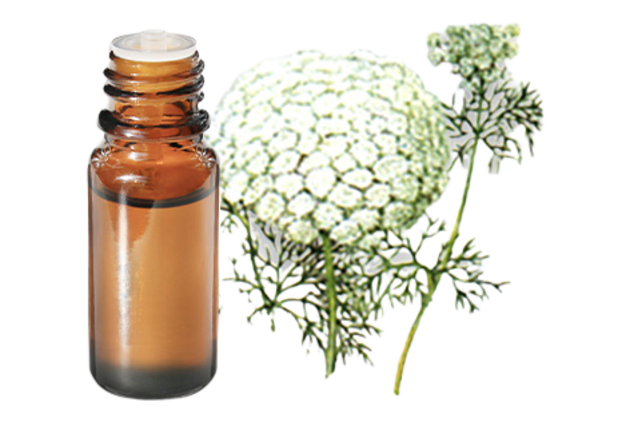
Essential oil of Khella

Renowned since ancient times for its powerful antispasmodic properties, Khella is traditionally recommended as a remedy for asthma attacks. Khella essential oil is also renowned for its circulatory properties.

How to use

  • Skin application and massage

    Skin application and massage

    Appropriate

  • Cosmetic active ingredient

    Cosmetic active ingredient

  • Diffusion

    Diffusion

  • Aromatherapy bath

    Aromatherapy bath

Features

Properties and uses

Precautions

Find out more

Features

Production process

Complete steam distillation

Part of the plant used

Seeds

Botanical name

Ammi visnaga

Warning

The properties, information and methods of use below are quotes from reference books or websites on aromatherapy, hydrolatherapy and phytotherapy. This general information is provided for informative purposes only and in no way constitutes medical guidance. Under no circumstances can this information be used as a substitute for a medical diagnosis, consultation or follow-up, nor can it incur our liability. We recommend that you consult the guide to essential oils before using them, so that you are aware of any precautions that need to be taken. If in doubt, consult a doctor before using essential oils.

Properties and uses

Khella Essential Oil is traditionally used for : Asthma

Health

Find out more, etc.

Properties

In health, khella essential oil is recognised for its properties:

  • Antispasmodic, muscle relaxant

  • Bronchodilator

  • Dilates the ureter

  • Coronary-dilating

Uses

In addition to treatments, it is traditionally used in the following cases:

  • Asthma attacks

  • Hepatic colic, renal colic, spasmodic colitis

In practice

Intestinal health: Mix with your oil blend. Massage the mixture into the organ concerned.

Precautions

  • Highly photosensitising: do not expose to sunlight or UV rays for at least 12 hours after application.

  • Do not use during pregnancy or breastfeeding, or on children under the age of 3.

  • Avoid prolonged use unless prescribed by a doctor.

  • Do not use orally.

  • Use with caution on reactive or allergic skin, as an allergic skin reaction is possible.

  • Keep out of reach of children.

  • Avoid contact with eyes.

  • Certain natural compounds contained in this essential oil may present a risk of allergy for certain sensitive individuals when the essential oil is incorporated into a cosmetic composition (in accordance with the 7th Amendment to the European Directive on cosmetic products (2003/15/EC)): linalool and, to a lesser extent, limonene.

  • As a general rule, always carry out a test application of your mixture, in the crease of the elbow, at least 48 hours before using it.

  • Dangerous. Observe safety precautions.

  • May cause a skin allergy. Causes skin irritation (risk associated with the product in its pure form). Harmful to aquatic organisms, causing long-term adverse effects (in the event of massive spillage of the product into a watercourse).

Find out more

Native to North Africa, Khella or Ammi visnaga, a member of the Apiaceae family, grows wild in Mediterranean countries. It is also found in Australia and South America. It is widely cultivated for both ornamental and medicinal purposes. The seeds are enclosed in tiny fruits which, before they are fully ripe, are transplanted at the end of the summer. The fresh seeds are harvested in late summer and then dried.

Equivalents

Essential Oils

1 ml = approximately 35 drops (with our Aroma-Zone dropper caps)

Carrier oils

1 pump (Aroma-Zone aluminium pump) = approx. 0.15 ml

Mass / Volume conversion (for a liquid)

Mass (g) = Density x Volume (ml) at 20°C

Further information

1 full teaspoon = between 3 and 4.5 ml

1 full tablespoon = between 7.5 and 10 ml


However, these spoon ratios depend on a number of factors (e.g. viscosity of the liquid, temperature, depth and size of the spoon, rheological behaviour of the liquid), and we strongly advise you to use precise measuring equipment, such as graduated test tubes, graduated pipettes, and precision scales.

Aromatherapy recipes from the bibliography

EO = Essential Oil VO = Carrier Oil or Macerated Oil

Allergic asthma (D. Festy)

Health & wellbeingRespiratory problems

Ask your pharmacist to make the following massage oil in a 10 ml bottle:

  • Artemisia dracunculus (Tarragon) essential oil: 1 ml

  • Chamaemelum nobile (Roman chamomile) essential oil: 1 ml

  • Tanacetum annuum (Annual Tansy) essential oil: 1 ml

  • Amni visnaga (Khella) essential oil: 1 ml

  • Calophylla macerated oil: 6 ml

Apply 5 drops to the solar plexus, upper back and along the spine. Repeat every ¼ hour until improvement.

Asthma of nervous origin (Aroma News - NARD)

Health & wellbeingRespiratory problems

  • essential oil Artemisia dracunculus (Tarragon): 2 ml

  • Citrus aurantium ssp aurantium fe. essential oil (Seville orange): 5 ml

  • Cananga odorata essential oil (Ylang-Ylang): 2 ml

  • Lavandula vera essential oil (True Lavender): 2 ml

  • Ammi visnaga (Khella) essential oil: 0.5 ml

Use: 6 to 8 drops 2 to 3 times a day on the upper back.

Nervous asthma in children (over 6 years and on medical advice) (D. Baudoux)

Health & wellbeingChildren's medical care

  • Ammi visnaga essential oil (Khella): 0.5 ml

  • Cananga odorata totum HE (complete Ylang-Ylang): 0.5 ml

  • Citrus aurantium ssp aurantium (fe) (Seville orange): 2 ml

  • Origanum majorana essential oil (marjoram): 0.5 ml

  • Tanacetum annuum essential oil (Annual Tansy): 0.3 ml

  • Hazelnut oil: 3 ml

  • Jojoba oil: additional 15 ml

Use: Apply 3 to 4 drops of the mixture to the arch of the foot and the solar plexus once a day in the evening for prevention or every 1/2 hour in the event of an attack (maximum 4 times).

Heart attack - Waiting for the ambulance (D. Baudoux)

Health & wellbeingCirculatory disorders

  • Ylang-Ylang essential oil: 1 ml

  • Khella essential oil: 2 ml

  • Italian Helichrysum (Immortelle) essential oil: 3 ml

Use : While waiting for the ambulance, apply 10 to 15 drops of the mixture to the heart area every 1/4 hour.

Bibliography

1

'Huiles essentielles - 2000 ans de découvertes aromathérapeutiques pour une médecine d'avenir'

Dominique Baudoux

2

'The Practice Of Aromatherapy'

Dr Jean Valnet - Éditions Maloine

3

'L'Aromathérapie exactement'

P. Franchomme, R. Jollois and D. Pénoël

4

'La bible de l'aromathérapie'

Nerys Purchon

5

'L'ABC des huiles essentielles'

Dr Telphon

6

'Aromatherapy'

Nelly Grosjean

7

'Les huiles essentielles pour votre santé'

G. Roulier

8

"Les cahiers pratiques de l'aromathérapie française - Pédiatrie"

Dominique Baudoux - Editions Amyris

9

Aroma-News newsletters from the NARD association

10

"L'aromathérapie - Se soigner par les huiles essentielles"

Dominique Baudoux