
Guide to essential oils

Essential oil of Garlic

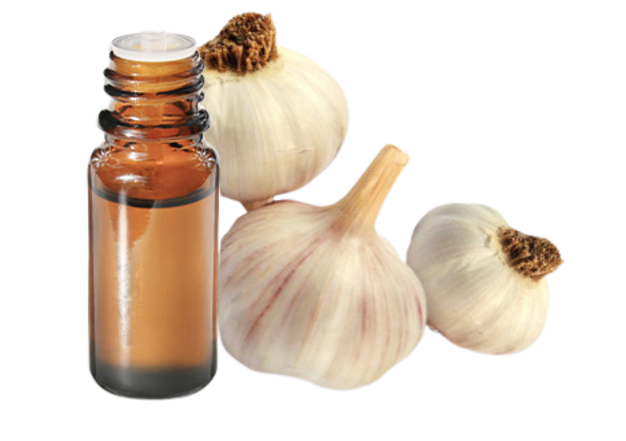
Garlic has long been renowned for its powerful strengthening and protective effects on the body. Its essential oil is a concentrated form of its powerful, characteristic fragrance and is used for its purifying and stimulating effects.

How to use

  • Skin application and massage

    Skin application and massage

    Possible but not recommended

  • Cosmetic active ingredient

    Cosmetic active ingredient

  • Aromatherapy bath

    Aromatherapy bath

  • Diffusion

    Diffusion

  • Food grade

    Food grade

    Suitable

Features

Properties and uses

Precautions

Find out more

Features

Production process

Complete steam distillation

Part of the plant used

Clove

Botanical name

Allium sativum

Chemotype

diallyl disulfide, diallyl trisulfide

Odour

very powerful, characteristic of fresh garlic

Warning

The properties, information and methods of use below are quotes from reference books or websites on aromatherapy, hydrolatherapy and phytotherapy. This general information is provided for informative purposes only and in no way constitutes medical guidance. Under no circumstances can this information be used as a substitute for a medical diagnosis, consultation or follow-up, nor can it incur our liability. We recommend that you consult the guide to essential oils before using them, so that you are aware of any precautions that need to be taken. If in doubt, consult a doctor before using essential oils.

Properties and uses

Garlic Essential Oil is traditionally used for: Verruca

Health

Kitchen

Find out more

Properties

Garlic essential oil is renowned for the following health benefits:

  • Helps protect and maintain the cardiovascular system: studies show that garlic's organosulphur compounds can help lower 'bad cholesterol' levels, reduce platelet aggregation and combat hypertension.

  • Dewormer

  • Powerful anti-infective: antibacterial, antifungal and antiparasitic.

  • Digestive antiseptic, helping to eliminate pathogenic flora.

  • Powerful antioxidant: a comparative study of several essential oils showed that Garlic essential oil had the highest antioxidant activity, ahead of Clove and Cinnamon leaf essential oils. This suggests that the sulphur derivatives making up garlic essential oil are more antioxidant than the eugenol contained in high concentrations in the other 2 oils.

Uses

It is traditionally used in the following situations:

  • Prevention of cardiovascular disorders (under medical supervision) :

    • Atherosclerosis

    • Hypertension

    • Cholesterol

    • Thrombosis

  • Intestinal worms and parasites: roundworms, pinworms, taenia

  • Prevention of infectious diseases: flu epidemics…

  • Urinary tract infections: cystitis, urethritis…

  • ENT infections :

    • Bronchitis

    • Whooping cough

    • Colds

  • Internal, external and nosocomial fungal infections

  • Warts, corns

Synergies

Sanitising, purifying: Palmarosa and Bay Laurel essential oils.

Precautions

  • Do not use during pregnancy or breastfeeding, or on children.

  • Dermocaustic essential oil: use on the skin is strongly discouraged except in very localized cases (verruca, etc.).

  • For internal use by therapists only.

  • Do not use as a vapour.

  • If you're worried about bad breath, finish your meal with a piece of parsley (fresh or essential oil), a raw bean or a few aniseed or coffee beans.

  • To preserve your essential oil without contaminating the environment with its odour, we recommend storing it in its original glass bottle in an airtight plastic bag or a tightly-sealed jar containing an anti-odour refrigerator ball (with activated charcoal).

  • Certain natural compounds contained in this essential oil may present a risk of allergy for certain sensitive individuals when the essential oil is incorporated into a cosmetic composition (in accordance with the 7th Amendment to the European Cosmetics Directive (2003/15/EC)): limonene and linalool.

Find out more

Garlic has been traditionally used for thousands of years by many cultures to prevent cardiovascular disease and combat numerous infectious disorders (bacteria, viruses, fungi, intestinal worms, etc.). Once known as the'poor man's theriac', garlic is the most wonderful 'food remedy' we know.

Equivalents

Essential Oils

1 ml = approximately 35 drops (with our Aroma-Zone dropper caps)

Carrier oils

1 pump (Aroma-Zone aluminium pump) = approx. 0.15 ml

Mass / Volume conversion (for a liquid)

Mass (g) = Density x Volume (ml) at 20°C

Further information

1 full teaspoon = between 3 and 4.5 ml

1 full tablespoon = between 7.5 and 10 ml


However, these spoon ratios depend on a number of factors (e.g. viscosity of the liquid, temperature, depth and size of the spoon, rheological behaviour of the liquid), and we strongly advise you to use precise measuring equipment, such as graduated test tubes, graduated pipettes, and precision scales.

Aromatherapy recipes from the bibliography

EO = Essential Oil VO = Carrier Oil or Macerated Oil

Basil and garlic oil (A. Pataud)

Kitchen

  • 6 cl Virgin Olive Oil

  • 2 drops Basil essential oil

  • 1 drop Garlic essential oil

Method and use: Mix the ingredients. Ideal for a spicy salad.

Bibliography

1

Enhancing safety and aroma appealing of fresh-cut fruits and vegetables using the antimicrobial and aromatic power of essential oils.

Ayala-Zavala JF, González-Aguilar GA, del-Toro-Sánchez L.

2

Antifungal effects of the volatile oils from Allium plants against Trichophyton species and synergism of the oils with ketoconazole

Pyun MS, Shin S.

3

Antimicrobial activity of essential oil extracts of various onions (Allium cepa) and garlic (Allium sativum).

BENKEBLIA N.

4

Effect of garlic on blood lipids in patients with coronary heart disease American Journal of Clinical Nutrition

Bordia A.

5

Effect of the essential oils of garlic and onion on alimentary hyperlipemia. Atherosclerosis.

Bordia A, Bansal HC, Arora SK, Singh SV.

6

'L'aromathérapie exactement'

P. Franchomme

7

'Aromatherapy'

Jean Valnet

8

'L'ABC des huiles essentielles'

Dr Thierry Telphon

9

"The aromatherapy bible"

Nerys Purchon

10

"Cooking with essential oils - healthy and creative recipes"

Aymeric Pataud

11

Secret of a herbalist

Marie-Antoinette Mulot

12

13

14

A treatise on scientific and medical aromatherapy

Michel Faucon

15

Biological Properties of Garlic and Garlic-Derived Organosulfur Compounds, Environmental and MolecularMutagenesis

Małgorzata Iciek, Inga Kwiecien, and LidiaWłodek,

16

Cholesterol-Lowering Effect of Garlic Extracts and Organosulfur Compounds: Human and Animal Studies

Yu-Yan Yeh and Lijuan Liu