
Guide to essential oils

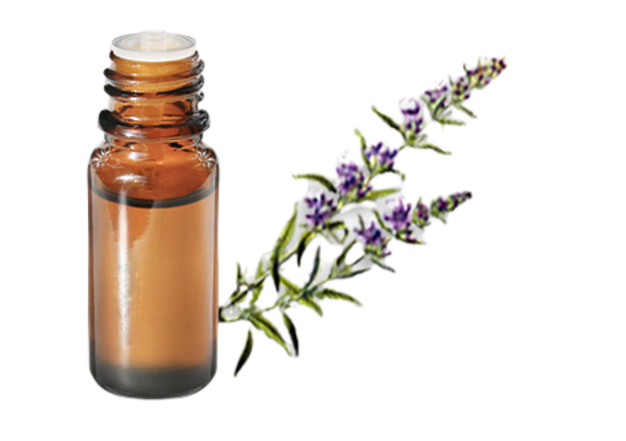
Essential oil of Lying hyssop

Lying Hyssop essential oil is traditionally used to clear the respiratory tract and make breathing easier. Lying Hyssop essential oil is ideal for use with winter infections or hay fever.

How to use

  • Skin application and massage

    Skin application and massage

    Suitable

  • Diffusion

    Diffusion

    Suitable

  • Cosmetic active ingredient

    Cosmetic active ingredient

  • Aromatherapy bath

    Aromatherapy bath

    Possible but not recommended

  • Food grade

    Food grade

    Possible but not recommended

Features

Properties and uses

Precautions

Find out more

Features

Production process

Complete steam distillation

Part of the plant used

Aerial parts

Botanical name

Hyssopus officinalis var. Decumbens

Warning

The properties, information and methods of use below are quotes from reference books or websites on aromatherapy, hydrolatherapy and phytotherapy. This general information is provided for informative purposes only and in no way constitutes medical guidance. Under no circumstances can this information be used as a substitute for a medical diagnosis, consultation or follow-up, nor can it incur our liability. We recommend that you consult the guide to essential oils before using them, so that you are aware of any precautions that need to be taken. If in doubt, consult a doctor before using essential oils.

Properties and uses

Hyssop essential oil is traditionally used for : Asthma

Health

Find out more

Properties

In the field of health, hyssop essential oil is recognised for its properties:

  • Remarkable anti-catarrhal, mucolytic and expectorant properties

  • Powerful antiviral

  • Anti-infectious for the ENT sphere

  • Tonic and stimulating

Uses

It is traditionally used to improve the following conditions:

  • ENT infections: acute, chronic and asthmatic bronchitis, nasopharyngitis, sinusitis, etc.

  • Low spirits, distress, fatigue

Synergies

  • Respiratory health: Khella, Annual Tansy, Ravintsara and Narrow-leaved Eucalyptus essential oils.

  • Helps to combat bronchial congestion: Sweet Flag essential oil.

In practice

Respiratory comfort: Mix in your oil blend. Massage or rub your blend into the chest and upper back.

Low spirits, distress: Mix in your oil blend. Massage the mixture locally along the spine.

Air purification and respiratory comfort: Air diffusion.

Precautions

  • Not for use by pregnant or breast-feeding women or children under 6 years of age.

  • Preferably for use on the skin (massage over the organ concerned, along the spine or on the arches of the feet) or as a vapour / inhalation, as oral use is not suitable for this essential oil.

  • Due to its 1.8-cineole content, it should be used with caution by asthmatics, except on therapeutic advice.

  • Possible interactions with medication (due to its 1.8-cineole content, which has an inducing effect on certain enzymes), do not use at the same time as medication without medical advice.

  • Avoid contact with eyes.

  • Keep out of reach of children.

  • Certain natural compounds contained in this essential oil may present a risk of allergy for certain sensitive individuals when the essential oil is incorporated into a cosmetic composition (in accordance with the 7th Amendment of the European Directive on cosmetic products (2003/15/EC)): limonene and, to a lesser extent, linalool.

  • As a general rule, always carry out a test application of your mixture, in the crease of the elbow, at least 48 hours before using it.

Find out more

Hyssop essential oil is banned from over-the-counter sale because of its neurotoxic and abortifacient properties. That's why we're offering you a special variety of Hyssop with a very low ketone content, making it easier to use: Hyssopus officinalis var. Decumbens. Belonging to the Lamiaceae family, this plant is found in Mediterranean regions and scrubland.

Used as anornamental plant in gardens or as a honey plant, its blue or violet flowers are very fragrant.

Aromatherapy recipes from the bibliography

EO = Essential Oil VO = Carrier Oil or Macerated Oil

Nervous asthma (D. Festy)

Health & wellbeingRespiratory problems

  • 1 ml Lavender essential oil
  • 1 ml Hyssop essential oil
  • 1 ml Red Myrtle essential oil
  • 1 ml Mandarin essential oil
  • Qsp 30 ml Calophylla oil

Use : Massage this oil into the back, thorax and spine 2 to 3 times a day if you have asthma (prevention), and every 1/2 hour in the event of an attack, until the condition is completely improved.

Aroma-Zone Note : Mandarin essential oil is photosensitising. Do not expose yourself to the sun after applying this preparation.

Spasmodic or atopic cough (L. Bosson)

Health & wellbeingRespiratory problems

Internal use:

  • 50 ml red myrtle hydrosol
  • 50 ml linalool sweet basil hydrosol
  • 50 ml German chamomile hydrosol
  • 50 ml Hyssop hydrosol

Procedure: Heat the mixture with 200 g of brown sugar until it simmers. When the mixture is lukewarm, add the following essential oils:

  • 2 drops of German chamomile essential oil
  • 3 drops of Lemon zest essential oil
  • 3 drops of Sweet Fennel essential oil
  • 5 drops of Hyssop decumbens essential oil
  • 5 drops of Marjoram essential oil

Directions for use: 1 ml of the mixture 3 to 4 times a day, depending on progress. Store this syrup in the fridge.

Ringing in the ears (L. Bosson)

Health & wellbeingVarious

  • 1 drop of Elémi essential oil
  • 1 drop Hyssop decumbens essential oil

Use: Gently apply a cotton bud to the auricle.

Note: DO NOT INSERT THE COTTON TIP INTO THE EAR CANAL.

Runny nose (pets) (D. Baudoux)

Health & wellbeingVeterinary

  • 25% Ravintsara essential oil
  • 30% Niaouli essential oil
  • 20% Saro essential oilsaro
  • 15% Hyssop essential oil
  • 10% bay laurel essential oil

Use : Apply a few drops (2 to 5) very locally (as a spot-on) to the cat's spine or between the ears, twice a day for 5 days. Wait a full week before repeating this basic treatment.

Equivalents

Essential Oils

1 ml = approximately 35 drops (with our Aroma-Zone dropper caps)

Carrier oils

1 pump (Aroma-Zone aluminium pump) = approx. 0.15 ml

Mass / Volume conversion (for a liquid)

Mass (g) = Density x Volume (ml) at 20°C

Further information

1 full teaspoon = between 3 and 4.5 ml

1 full tablespoon = between 7.5 and 10 ml


However, these spoon ratios depend on a number of factors (e.g. viscosity of the liquid, temperature, depth and size of the spoon, rheological behaviour of the liquid), and we strongly advise you to use precise measuring equipment, such as graduated test tubes, graduated pipettes, and precision scales.

Bibliography

1

'Huiles essentielles - 2000 ans de découvertes aromathérapeutiques pour une médecine d'avenir'

Dominique Baudoux

2

'The Practice Of Aromatherapy'

Dr Jean Valnet - Éditions Maloine

3

"L'Aromathérapie exactement"

P. Franchomme and Dr D. Pénoël

4

'La bible de l'aromathérapie'

Nerys Purchon

5

'L'ABC des huiles essentielles'

Dr Telphon

6

'Aromatherapy'

Nelly Grosjean

7

" Les huiles essentielles pour votre santé"

G. Roulier

8

"Les cahiers pratiques de l'aromathérapie française" - Paediatrics

Dominique Baudoux

9

Aroma-News newsletters

NARD Association

10

" L'aromathérapie - Se soigner par les huiles essentielles"

Dominique Baudoux