
Guide to essential oils

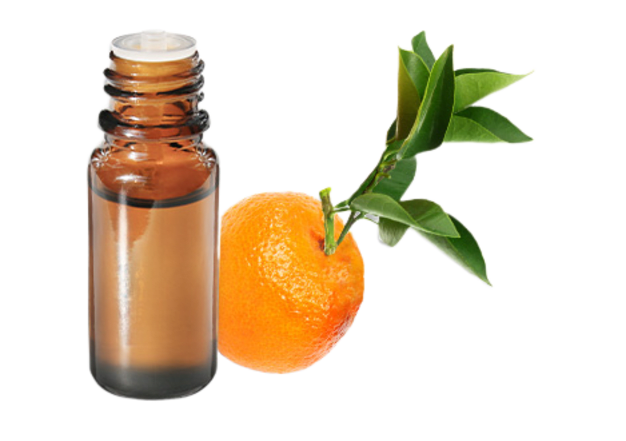
Essential oil of Organic Corsican clementine tree

This calming oil is excellent for relieving stress, insomnia and emotional strain. In cosmetics, it is used for oily skin and greasy scalps, or as a green, fruity note in perfumes.

How to use

  • Skin application and massage

    Skin application and massage

    Suitable

  • Cosmetic active ingredient

    Cosmetic active ingredient

    Suitable

  • Diffusion

    Diffusion

    Suitable

  • Food grade

    Food grade

    Possible but not recommended

  • Aromatherapy bath

    Aromatherapy bath

Features

Properties and uses

Precautions

Find out more

Features

Production process

Complete distillation by low-pressure steam distillation

Part of the plant used

Fresh leaves and small twigs

Botanical name

Citrus Reticulata Blanco var. clementine

Warning

The properties, information and methods of use below are quotes from reference books or websites on aromatherapy, hydrolatherapy and phytotherapy. This general information is provided for informative purposes only and in no way constitutes medical guidance. Under no circumstances can this information be used as a substitute for a medical diagnosis, consultation or follow-up, nor can it incur our liability. We recommend that you consult the guide to essential oils before using them, so that you are aware of any precautions that need to be taken. If in doubt, consult a doctor before using essential oils.

Properties and uses

Clementine Petitgrain essential oil is traditionally used for: Distress, anxiety, panic attacks, insomnia, stress

Health

Wellness

Beauty

Find out more

Properties

Clementine Petitgrain essential oil is renowned for the following health benefits:

  • Antispasmodic, it helps relax muscles.

  • Anti-inflammatory, it reduces inflammation.

  • Sanitising, it purifies the air.

Uses

It is traditionally used in the following situations:

  • Muscle spasms and cramps of nervous origin (stress), stomach aches

  • Menstrual pain

Synergies

  • Helps soothe muscle contractions : essential oils of Tropical Basil, Tarragon, Seville orange

  • Cleanses the air : Lemon, Silver Fir, Lemon Myrtle, Scots Pine, Ravintsara essential oils

In practice

Soothing: Mix into your oil blend. Lightly massage the mixture on the affected area.

Air purification : for air diffusers.

Precautions

  • Not recommended if pregnant or breast-feeding.

  • Do not use on children under the age of 3.

  • Do not apply undiluted to the skin. Always use diluted to a maximum of 20%. In its pure state, this essential oil may have a photosensitising effect due to the presence of traces of methyl N, methylanthranilate.

  • Keep out of reach of children.

  • Avoid contact with the eyes.

  • Certain natural compounds contained in this essential oil may present a risk of allergy for certain sensitive individuals when the essential oil is incorporated into a cosmetic composition (in accordance with the 7th Amendment to the European Cosmetics Directive (2003/15/EC)): limonene, linalool.

  • As a general rule, always carry out a test application of your mixture in the crease of the elbow at least 48 hours before using it.

Find out more

The clementine tree has only been known about since the beginning of the 20th century and its origins remain a mystery: some authors believe that the Reverend Father Clément was responsible for discovering it in a mandarin seedbed at the Misserghim orphanage in Algeria. Others say that the same Reverend Father deliberately cross-bred the common mandarin tree (Citrus Deliciosa Tenore) with a variety of sour orange tree (Citrus Aurantium L.) to create the fruit. However, recent studies have shown that it was actually a hybrid between mandarin and sweet orange (Citrus Sinensis).

Equivalents

Essential Oils

1 ml = approximately 35 drops (with our Aroma-Zone dropper caps)

Carrier oils

1 pump (Aroma-Zone aluminium pump) = approx. 0.15 ml

Mass / Volume conversion (for a liquid)

Mass (g) = Density x Volume (ml) at 20°C

Further information

1 full teaspoon = between 3 and 4.5 ml

1 full tablespoon = between 7.5 and 10 ml


However, these spoon ratios depend on a number of factors (e.g. viscosity of the liquid, temperature, depth and size of the spoon, rheological behaviour of the liquid), and we strongly advise you to use precise measuring equipment, such as graduated test tubes, graduated pipettes, and precision scales.

Bibliography

1

Comparative study of different essential oils of Bupleurum gibraltaricum Lamarck. Pharmazie. 1989 Apr; 44(4):284-7.

Gil ML1, Jimenez J, Ocete MA, Zarzuelo A, Cabo MM

2

Eugenol and Carvacrol on Airborne Microbes Using an Airwasher. Biol Pharm Bull. 2006 Nov; 29(11):2292-4.

Sato K1, Krist S, Buchbauer G. Antimicrobial Effect of trans-Cinnamaldehyde, (-)-Perillaldehyde, (-)-Citronellal, Citral

3

Characteristic odor components of Citrus reticulata Blanco (ponkan) cold-pressed oil. Biosci Biotechnol Biochem. 2004 Aug;68(8):1690-7.

Sawamura M1, Thi Minh Tu N, Onishi Y, Ogawa E, Choi HS

4

Anti-inflammatory and redox-protective activities of citronellal. BIOLOGICAL RESEARCH, 2011, Volume 44, Number 4.

Melo, MS; Guimaraes, AG; Santana, MF