
Guide to essential oils

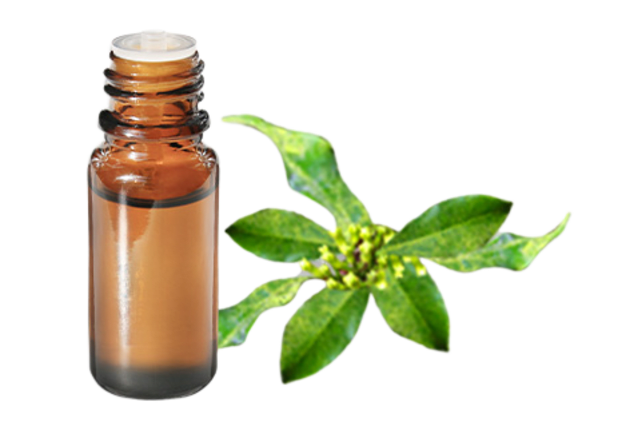
Essential oil of Clove leaves

Clove leaf essential oil has a purifying effect and is particularly suitable for diffusing, mixed with gentle oils, to purify the air. As a tonic, Clove leaf essential oil helps to combat tiredness and gloom. Clove leaf essential oil is also very effective for eliminating cooking smells.

How to use

  • Skin application and massage

    Skin application and massage

    Appropriate

  • Cosmetic active ingredient

    Cosmetic active ingredient

  • Diffusion

    Diffusion

    Appropriate

  • Food grade

    Food grade

    Possible but not recommended

  • Aromatherapy bath

    Aromatherapy bath

Features

Properties

Precautions

Find out more

Features

Production process

Steam distillation

Part of the plant used

Leaves

Botanical name

Syzygium aromaticum

Warning

The properties, information and methods of use below are quotes from reference books or websites on aromatherapy, hydrolatherapy and phytotherapy. This general information is provided for informative purposes only and in no way constitutes medical guidance. Under no circumstances can this information be used as a substitute for a medical diagnosis, consultation or follow-up, nor can it incur our liability. We recommend that you consult the guide to essential oils before using them, so that you are aware of any precautions that need to be taken. If in doubt, consult a doctor before using essential oils.

Properties

Clove Leaf essential oil is traditionally used for : Mouth ulcers, fatigue, exhaustion, insect and other animal bites.

Health

Wellness

Find out more

Properties

Clove leaf essential oil is recognised for its health properties:

  • Powerful broad-spectrum anti-infective: antibacterial, antiviral, antifungal and antiparasitic.

  • Digestive stimulant and antifermentary

  • Cauterising for the skin and pulp

  • Dental anaesthetic

  • Uterine and general tonic

  • Supports proper functioning of the immune system

  • Hypertensive

Uses

It is traditionally used to improve the following conditions:

  • Dental and oral infections, toothache, mouth ulcers, tonsillitis, etc.

  • Intestinal infections and parasites: diarrhoea, bacterial colitis, spasmodic enterocolitis, etc.

  • Bacterial and viral ENT infections: bronchitis, sinusitis, etc.

  • Urinary tract infections, cystitis

  • Shingles, herpes

  • Skin infections and parasites: infected acne, mycosis…

  • Asthenia, hypotension

Synergies

  • Purifying and sanitizing action: Roman chamomile, Palmarosa, tea tree and Niaouli essential oils

  • Respiratory health: Niaouli and Sweet Flag essential oils

  • Calming: Roman chamomile essential oil

In practice

Fatigue: Mix with your oil blend. Massage the mixture locally along the spine.

Belly comfort: Mix with your oil blend. Massage the mixture into the abdomen.

Precautions

  • Do not use on pregnant women (unless they are in labour), nursing mothers or children under 6 years of age.

  • Dermocaustic oil, always use strongly diluted (max 20% for very localised use) on the skin.

  • Use in limited quantities over a short period (maximum 7 days).

  • Contraindicated in cases of hepatic insufficiency.

  • For diffusion, use only diluted with milder essential oils, at a maximum of 5-10%.

  • Keep out of reach of children.

  • Avoid contact with the eyes.

  • Certain natural compounds contained in this essential oil may present a risk of allergy for certain sensitive individuals when the essential oil is incorporated into a cosmetic composition (in accordance with the 7th Amendment to the European Directive on cosmetic products (2003/15/EC)): eugenol.

  • As a general rule, always carry out a test application of your mixture, in the crease of the elbow, at least 48 hours before using it.

Find out more

Cloves are a popular****spice, well known to cooks and dentists alike. An ancient Indian text dating back more than two thousand years has been found which advises people to keep nutmeg and cloves in their mouths to keep their breath "clean, fresh and fragrant". The clove tree, which originated in the Moluccas archipelago, was later cultivated on the other Indonesian islands, as well as in East Africa and Madagascar.

In addition to its recognised action in purifying breath, cloves are traditionally used to help relieve toothache thanks to their anaesthetic, healing and disinfectant properties.

Aromatherapy recipes from the bibliography

EO = Essential Oil VO = Carrier Oil or Macerated Oil

Immune weakness in adults (Aroma news - Nard)

Health & wellbeingLow energy, fatigue

  • 3 ml Eucalyptus radiata essential oil (Eucalyptus radiata)
  • 3 ml Cinnamomum Camphora cineole essential oils (Ravintsara)
  • 3 ml Cymbopogon martinii (palmarosa) essential oil
  • 1 ml Eugenia caryophyllus essential oil (Clove)

Use: 6 drops to be massaged into the adrenal glands, 3 times a day.

Dental abscess (D. Baudoux)

Health & wellbeingMouth care

  • 1 drop of Clove essential oil
  • 1 drop Bay Laurel essential oil
  • 1 drop of peppermint essential oil
  • 2 drops of MH St John's wort

Use: 2 drops of the mixture 3 times a day, applied locally to the abscess.

Mouth ulcer (D. Festy)

Health & wellbeingMouth care

  • 1 drop of Clove essential oil
  • 1 drop Bay Laurel essential oil
  • 1 drop Cajeput essential oil
  • 3 drops of MH Calendula

Use: Apply this mixture to the lesion(s) 3 to 4 times a day for 3 days.

Mouth ulcers, gingivitis, stomatitis in adults (Aroma news - Nard)

Health & wellbeingMouth care

  • 4 ml Laurus nobilis essential oil (Bay Laurel)
  • 3 ml Thymus CT thujanol essential oil (can be replaced by Thujanol Marjoram essential oil)
  • 2 ml Melaleuca alternifolia essential oil (tea tree)
  • 1 ml Eugenia caryophyllus essential oil (Clove)

Use: 2 to 3 drops locally 5 times a day.

Equivalents

Essential Oils

1 ml = approximately 35 drops (with our Aroma-Zone dropper caps)

Carrier oils

1 pump (Aroma-Zone aluminium pump) = approx. 0.15 ml

Mass / Volume conversion (for a liquid)

Mass (g) = Density x Volume (ml) at 20°C

Further information

1 full teaspoon = between 3 and 4.5 ml

1 full tablespoon = between 7.5 and 10 ml


However, these spoon ratios depend on a number of factors (e.g. viscosity of the liquid, temperature, depth and size of the spoon, rheological behaviour of the liquid), and we strongly advise you to use precise measuring equipment, such as graduated test tubes, graduated pipettes, and precision scales.

Bibliography

1

'L'Aromathérapie exactement'

P. Franchomme and Dr D. Pénoël

2

'Aromatherapy - Healing with essential oils'

Dominique Baudoux - Editions Amyris

3

'Aromatherapy'

Nelly Grosjean

4

 "Huiles essentielles 2000 de découvertes aromathérapiques pour une médecine d'avenir"

Dominique Baudoux

5

"Le formulaire d'aromathérapie pratique pour le prescripteur et le conseil pharmaceutique"

Dominique Baudoux

6

"Les cahiers pratiques d'aromathérapie selon l'école française Dermatologie  "

Dominique Baudoux - Editions Amyris

7

"Les cahiers pratiques d'aromathérapie selon l'école française Pédiatrie "

Dominique Baudoux - Editions Amyris

8

"Aroma news n°5 Eugenia caryophyllus

N.A.R.D

9

"Aroma news n°30 Melaleuca alternifolia

N.A.R.D

10

"Aroma news n°4 Citrus aurantium ssp aurantium

N.A.R.D

11

"Aroma news n°9 Thymus vulgaris ct thuyanol

N.A.R.D

12

"Aroma news n°27 Zingiber officinale"

N.A.R.D

13

 "Aroma news n°1 Eucalyptud radiata"

N.A.R.D

14

 "L'ABC des huiles essentielles"

Telphon

15

'La bible de l'aromathérapie'

Nerys Purchon

16

'La cuisine aux huiles essentielles - Des recettes saines et créatives'

Aymeric Pataud