
Guide to essential oils

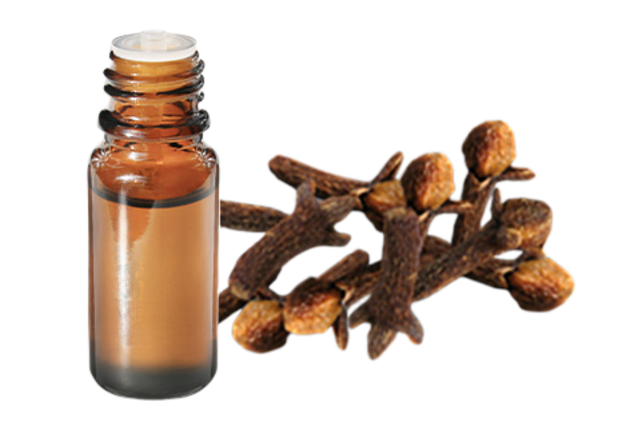
Essential oil of Clove

A general stimulant, Clove essential oil is reputed to help with physical fatigue. Invigorating, Clove essential oil gives a boost to mental fatigue. Clove is traditionally used to treat tooth decay and dental pain.

How to use

  • Skin application and massage

    Skin application and massage

    Appropriate

  • Cosmetic active ingredient

    Cosmetic active ingredient

  • Diffusion

    Diffusion

    Appropriate

  • Food grade

    Food grade

    Suitable

  • Aromatherapy bath

    Aromatherapy bath

Features

Properties and uses

Precautions

Find out more

Features

Production process

Steam distillation

Part of the plant used

Nails

Botanical name

Syzygium aromaticum

Warning

The properties, information and methods of use below are quotes from reference books or websites on aromatherapy, hydrolatherapy and phytotherapy. This general information is provided for informative purposes only and in no way constitutes medical guidance. Under no circumstances can this information be used as a substitute for a medical diagnosis, consultation or follow-up, nor can it incur our liability. We recommend that you consult the guide to essential oils before using them, so that you are aware of any precautions that need to be taken. If in doubt, consult a doctor before using essential oils.

Properties and uses

Clove Essential Oil is traditionally used for: Fungal infections

Health

Wellness

Find out more

Properties

For health, Clove essential oil is recognised for the following properties:

  • Powerful broad-spectrum anti-infective: antibacterial, antiviral, antifungal and antiparasitic.

  • Digestive stimulant and antifermenting

  • Cauterising for the skin and pulp

  • Promotes the appetite, carminative

  • Immune stimulant

  • Widely used as a dental anaesthetic

Uses

It is traditionally used to improve the following conditions:

  • Dental and mouth infections, toothache, mouth ulcers, tonsillitis, etc.

  • Intestinal infections and parasites: diarrhoea, colitis

  • Bacterial and viral ENT infections: bronchitis, sinusitis

  • Disorders of the urogenital tract

  • Shingles, herpes

  • Skin infections, acne, fungal infections

Synergies

  • Purifying and cleansing action: Peppermint, Roman chamomile, Palmarosa, Tea Tree and Niaouli essential oils

  • Respiratory comfort: Niaouli and Sweet Inula essential oils

  • Calming : Roman chamomile and peppermint essential oils

In practice

Fatigue: Mix into your oil blend. Massage the mixture locally along the spine.

Oral hygiene: Mix into your mouthwash.

Precautions

  • Do not use when pregnant (unless in labour), or when breastfeeding or on children under 6 years of age.

  • Dermocaustic oil, always use strongly diluted (max 20% for very localised use) on the skin.

  • Use in limited quantities over a short period (maximum 7 days).

  • Not recommended in cases of liver failure.

  • For diffusion, use only diluted with milder essential oils, at a maximum of 5-10%.

  • Keep out of reach of children.

  • Avoid contact with the eyes.

  • Certain natural compounds contained in this essential oil may present a risk of allergy for some sensitive individuals when the essential oil is incorporated into a cosmetic composition (in accordance with the 7th Amendment to the European Cosmetics Directive (2003/15/EC)): eugenol.

  • As a general rule, always carry out a test application of your mixture in the crease of the elbow at least 48 hours before using it.

Find out more

Cloves are one of the spices – perhaps the most popular, but also the most mysterious – that can be traced back furthest in history. An Indian text dating back more than two thousand years advises those who wish to have "clean, fresh and fragrant breath" to keep nutmeg and cloves in their mouths. In the seventh century, Su Gong advised those who were to meet the emperor to keep cloves in their mouths (no toothpaste in those days!).

Equivalents

Essential Oils

1 ml = approximately 35 drops (with our Aroma-Zone dropper caps)

Carrier oils

1 pump (Aroma-Zone aluminium pump) = approx. 0.15 ml

Mass / Volume conversion (for a liquid)

Mass (g) = Density x Volume (ml) at 20°C

Further information

1 full teaspoon = between 3 and 4.5 ml

1 full tablespoon = between 7.5 and 10 ml


However, these spoon ratios depend on a number of factors (e.g. viscosity of the liquid, temperature, depth and size of the spoon, rheological behaviour of the liquid), and we strongly advise you to use precise measuring equipment, such as graduated test tubes, graduated pipettes, and precision scales.

Aromatherapy recipes from the bibliography

EO = Essential Oil VO = Carrier Oil or Macerated Oil

Monkfish curry with cloves and Ylang-Ylang (N. Le Foll and B. Da Costa)

Kitchen

Serves 4 - Preparation: 15 minutes - Cooking: 15 minutes

  • 1.3 kg monkfish tail, cut into 4 sections

  • 12 large peeled prawns

  • 250 g basmati rice

  • 2 smooth yoghurts

  • 2 onions

  • 1 clove of garlic

  • juice of 1 lime

  • 1 tbsp neutral oil

  • 1 knob fresh ginger

  • 1 teaspoon Madras curry powder

  • salt and freshly ground pepper

  • 1 drop of Ylang-Ylang essential oil

  • 2 drops clove essential oil

Directions: Wash the monkfish and pat dry on kitchen paper. Peel the garlic, onions and ginger, chop finely and sauté in oil in a casserole dish for 5 minutes. Add the pieces of monkfish to the pan and brown them until golden on both sides. Sprinkle with the curry powder, season with salt and pepper, cover and cook over a very low heat for 10 minutes. Uncover the pan, turn the monkfish over, add the yoghurt, prawns, lime juice and Ylang-Ylang essential oil. Stir gently, cover and simmer for a further 5 minutes. Be careful not to overcook the monkfish, as the flesh will become tough and rubbery. Meanwhile, rinse the basmati rice under cold running water, place in a saucepan, pour in as much water as you can and add the clove oil. Cook over a low heat for 10 minutes, adding salt and tasting to check cooking progress. Drain. Serve the curry with the rice on the side.

Pears spiced with rosé wine (A. Pataud)

Kitchen

Serves 4 - Preparation: 10 minutes - Cooking time: 30 minutes.

  • 8 Williams pears

  • 1 bottle rosé wine

  • 200g sugar

  • 1 tablespoon acacia honey

  • 1 drop of ginger essential oil (Zingiber officinalis)

  • 1 drop of cinnamon bark essential oil (Cinnamomum zeylanicum)

  • 1 drop of Clove essential oil (Syzygium aromaticum)

Directions: Peel the pears. In a deep saucepan, bring the wine and sugar to the boil, stirring constantly. Simmer for 5 minutes until the sugar has completely dissolved. Place the pears in the simmering stock and poach over a low heat until just tender. Just before the end of the cooking time, add the essential oils mixed with a tablespoon of honey. Leave to cool. Remove the pears from the pan and set aside, covered. Reduce the syrup by a third, then leave to cool to room temperature. Return the pears to the syrup, cover and chill. Serve the pears with their syrup.

Oil flavoured with spices (A. Pataud)

Kitchen

  • Ginger essential oil: 1 drop

  • Clove essential oil: 1 drop

  • Cumin essential oil: 2 drops

Directions for use: Add to 5 cl of pure virgin olive oil and 8 cl of rapeseed oil, to spice up your hot or cold dishes.

Citrus gingerbread (A. Pataud)

Kitchen

Serves 8 - Preparation: 20 minutes - Cooking time: 50 minutes.

  • 300 g of acacia honey

  • 250 g of wholemeal flour

  • 50 g of almond powder

  • 100 ml lotion

  • 1 egg

  • 20 g of butter for the tin

  • 1 sachet of baking powder

  • 1 drop of ginger (Zingiber officinalis) essential oil

  • 1 drop of Cinnamon bark (Cinnamomum zeylanicum) essential oil

  • 1 drop of Clove (Syzygium aromaticum) essential oil

  • 1 drop of Anise (Pimpinella anisum) essential oil

  • 1 drop of Lemon (Citrus limomum) essential oil

  • 2 drops of Sweet Orange (Citrus sinensis) essential oil

  • 1 drop of grapefruit (Citrus paradisi) essential oil

Directions: Preheat the oven to 170 °C (gas mark 5–6). Gently heat the lotion and acacia honey, then remove from the heat as soon as it comes to a boil. Mix the flour and baking powder in a bowl. Then add the almond powder. Mix well and make a well. Gradually pour in the lotion and acacia honey mixed with the essential oils, stirring constantly with a spoon. Finish by adding the egg. Grease the tin, pour in the batter and bake for around 50 minutes.

Bibliography

1

"Huiles essentielles - 2000 ans de découvertes aromathérapeutiques pour une médecine d'avenir"

Dominique Baudoux

2

"Aromatherapy"

Dr Jean Valnet

3

'L'Aromathérapie exactement'

P. Franchomme and Dr D. Pénoël

4

'La bible de l'aromathérapie'

Nerys Purchon

5

'L'ABC des huiles essentielles'

Dr Telphon

6

"Aromatherapy"

Nelly Grosjean

7

"Les huiles essentielles pour votre santé"

G. Roulier

8

"Les cahiers pratiques de l'aromathérapie française - Pédiatrie"

Dominique Baudoux

9

Aroma-News newsletters

NARD Association

10

"L'aromathérapie - Se soigner par les huiles essentielles"

Dominique Baudoux

11

'La cuisine aux huiles essentielles - Des recettes saines et créatives'

Aymeric Pataud