
Guide to essential oils

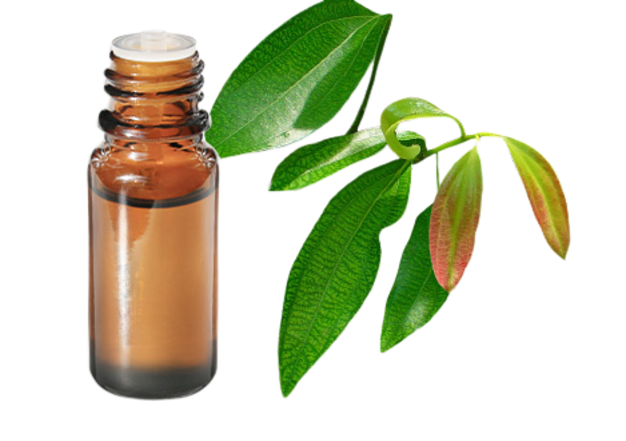
Essential oil of Chinese cinnamon

Known for its powerful purifying and stimulating properties, this oil is a firm favourite, especially when travelling far afield. As an aphrodisiac and positivity booster, it is also known to stimulate the mind and body.

How to use

  • Skin application and massage

    Skin application and massage

    Possible but not recommended

  • Cosmetic active ingredient

    Cosmetic active ingredient

  • Aromatherapy bath

    Aromatherapy bath

  • Diffusion

    Diffusion

    Possible but not recommended

  • Food grade

    Food grade

    Suitable

Features

Properties and uses

Precautions

Find out more

Features

Production process

Complete steam distillation

Part of the plant used

Leaves, twigs and branches

Botanical name

Cinnamomum cassia

Warning

The properties, information and methods of use below are quotes from reference books or websites on aromatherapy, hydrolatherapy and phytotherapy. This general information is provided for informative purposes only and in no way constitutes medical guidance. Under no circumstances can this information be used as a substitute for a medical diagnosis, consultation or follow-up, nor can it incur our liability. We recommend that you consult the guide to essential oils before using them, so that you are aware of any precautions that need to be taken. If in doubt, consult a doctor before using essential oils.

Properties and uses

Chinese Cinnamon Essential Oil is traditionally used for: Intestinal worms

Health

Wellness

Fragrance

Kitchen

Find out more, etc.

Very rich in cinnamaldehyde with broad-spectrum antimicrobial properties, Chinese Cinnamon essential oil is used in aromatherapy to combat all kinds of infections. It is very powerful and is traditionally recommended for use in cases of infectious diarrhoea, turista, parasitosis or to combat urinary tract infections.

Properties

Chinese cinnamon essential oil is recognised for its health benefits:

  • Combats intestinal fermentation

  • Tonic, immunity booster

  • An anti-coagulant, Chinese cinnamon essential oil inhibits platelet aggregation (in-vitro study).

... as well as a

  • Uterine tonic, stimulating the onset of menstruation

Uses

Cinnamon Bark essential oil is traditionally used to improve the following conditions:

  • Gastrointestinal infections: diarrhoea, gastroenteritis, travellers' diarrhoea, parasitosis, etc.

  • Urinary tract and gynaecological infections: cystitis, urethritis, vaginitis

  • Oral and skin infections: fungal infections, ringworm, scabies, etc.

  • Tropical fevers (as prevention)

  • Absent or irregular periods

  • Verrucas

Synergies

  • General purifying action: Oregano, Clove and Savory essential oils.

  • Skin parasites: Tea tree, Niaouli, Clove essential oils

  • Mite repellent: Japanese Cedar, Bay Laurel essential oils

  • Verrucas: Garlic, Savory essential oils

Precautions

  • As it is dermocaustic, do not apply undiluted to the skin. Use strongly diluted in your blends for cutaneous use. Use with caution on sensitive or allergic skin. Do not use on people allergic to cinnamon.

  • Do not use during pregnancy or while breastfeeding, or on children.

  • Internal use limited to short treatments in limited doses. Do not use for prolonged periods without medical advice.

  • Atmospheric diffusion of cinnamon essential oil alone is not recommended as it contains a high concentration of cinnamaldehyde and may cause irritation of the respiratory tract. For diffusion, we recommend using a maximum of 5-10% , blended with milder essential oils (Orange, Lemon, grapefruit, etc.).

  • Not recommended for people taking anticoagulant medication or with coagulation disorders.

  • Keep out of reach of children.

  • Certain natural compounds contained in this essential oil may present a risk of allergy in some sensitive individuals when the essential oil is incorporated into a cosmetic composition (according to the 7th Amendment to the European Cosmetics Directive (2003/15/EC)): cinnamaldehyde and, to a lesser extent, (E)-cinnamyl alcohol, benzyl benzoate.

  • As a general rule, always carry out a test application of your preparation in the crease of the elbow at least 48 hours before using it.

Find out more

Cinnamon has been exported from the Orient for 4,000 years. Renowned for its fortifying and purifying properties, its presence is mentioned in traditional Chinese pharmacopoeia written 2,700 years ago. Cinnamon is also found in the Bible as part of the "sacred balm" . Since then, it has become a "must-have" and, according to the Taoists, is the key to immortality.

Equivalents

Essential Oils

1 ml = approximately 35 drops (with our Aroma-Zone dropper caps)

Carrier oils

1 pump (Aroma-Zone aluminium pump) = approx. 0.15 ml

Mass / Volume conversion (for a liquid)

Mass (g) = Density x Volume (ml) at 20°C

Further information

1 full teaspoon = between 3 and 4.5 ml

1 full tablespoon = between 7.5 and 10 ml


However, these spoon ratios depend on a number of factors (e.g. viscosity of the liquid, temperature, depth and size of the spoon, rheological behaviour of the liquid), and we strongly advise you to use precise measuring equipment, such as graduated test tubes, graduated pipettes, and precision scales.

Aromatherapy recipes from the bibliography

EO = Essential Oil VO = Carrier Oil or Macerated Oil

Cystitis (T. Telphon)

Health & wellbeingUrinary issues

  • Birch: 2 ml

  • Cinnamon bark: 2 ml

  • Copaiba essential oil: 2 ml

  • Evening primrose oil: 20 ml

  • Macadamia oil: 20 ml

Directions for use: Gently massage the mixture into the lower abdomen. Repeat 1 or 2 times a day if necessary until healed, in addition to a curative treatment

Aroma-Zone Note: Sri Lankan Cinnamon Bark essential oil has the same properties as Chinese Cinnamon essential oil and can therefore be used in place of it.

Fungal infection of the nails (D. Baudoux)

Health & wellbeingSkin problems

  • 2 drops Bay Laurel essential oil

  • 2 drops Palmarosa essential oil

  • 1 drop True lavender essential oil

  • 2 drops Saro (Mandravasarotra) essential oil

  • 2 drops Chinese cinnamon essential oil

Directions for use: 2 to 3 drops of the mixture on the nail condition 3 times a day for 3 weeks or until clear improvement

Aroma-Zone Note: Chinese Cinnamon essential oil has the same properties as Sri Lankan Cinnamon Bark essential oil and can therefore be substituted for it.

Verruca (D. Baudoux)

Health & wellbeingSkin problems

  • 1 drop Chinese cinnamon essential oil

  • 1 drop of Mountain Savory essential oil

  • 1 drop Mandarin essential oil

  • 2 drops Lemon essential oil

Directions for use: 1 drop of the mixture on the verruca morning and evening

Aroma-Zone Note: Mandarin and Lemon essential oils are photosensitising, so do not expose yourself to the sun after applying this mixture. Chinese Cinnamon essential oil has the same properties as Sri Lankan Cinnamon Bark essential oil and can therefore be used instead.

Warts (D. Festy)

Health & wellbeingSkin problems

  • Oregano Compactum essential oil: 1 ml

  • Juniper essential oil: 1 ml

  • Chinese Cinnamon essential oil: 1 ml

  • Clove essential oil: 1 ml

  • Mountain Savory essential oil: 1 ml

Directions for use: Apply one drop of this mixture on a cotton bud to the verruca and cover with a small bandage. Leave on all day. Repeat 2 times a day after washing, for 2 to 3 weeks, until the wart disappears

Aroma-Zone Note: Chinese Cinnamon essential oil has the same properties as Sri Lankan Cinnamon Bark essential oil and can therefore be substituted for it.

Infectious diarrhoea (Aroma News - NARD)

Health & wellbeingDigestive problems

  • Origanum Compactum essential oil: 1 ml

  • Cinnamomum verum essential oil (Cinnamon bark): 0.5 ml

  • Artemesia draculuncus essential oil (Tarragon): 3 ml

  • Citrus aurantium leaf (Petitgrain): 4 ml

  • Mentha piperita essential oil (Peppermint): 1 ml

  • Plant oil (hazelnut): 20 ml

Directions for use: 8 drops of the mixture applied 3 times a day to the lower abdomen and back.

Aroma-Zone Note: Sri Lankan Cinnamon Bark essential oil has the same properties as Chinese Cinnamon essential oil and can therefore be substituted for it.

Low saliva production (hyposialia) - dry mouth (D. Baudoux)

Health & wellbeingMouth care

  • 0.2% Cinnamomum cassia essential oil

  • 0.3% Ocimum basilicum essential oil

  • 0.3% Pinus sylvestris essential oil

  • 99.2% hazelnut oil

Directions for use: Apply three drops of this saliva-stimulating and vasodilating blend topically by the mouth, twice a day. "Les cahiers pratiques d'aromathérapie selon l'école française volume 4 - Soins palliatifs" by Dominique Baudoux p.128

Aroma-Zone Note: Chinese Cinnamon essential oil has the same properties as Sri Lankan Cinnamon Bark essential oil and can therefore be substituted for it.

Erectile dysfunction (Aroma News - NARD)

Health & wellbeingLow energy, fatigue

  • Zingiber officinale essential oil (Ginger): 1 ml

  • Cinnamomum verum essential oil (Cinnamon bark): 0.3 ml

  • Mentha citrata essential oil (Bergamot mint): 1 ml

  • Fokienia hodginsii essential oil (Siam wood): 1 ml

  • Hazelnut oil: 30 ml or more

Directions for use: Apply 6 to 8 drops of the mixture on the lower spine morning and evening for 3 weeks.

Bibliography

1

Hoi-Seon Lee and Young-Joon Ahn Growth-Inhibiting Effects of Cinnamomum cassia Bark-Derived Materials on Human Intestinal Bacteria J. Agric. Food Chem, 1998, 46 (1), 8-12

2

Ooi LS, Li Y, Kam SL, Wang H, Wong EY, Ooi VE. Antimicrobial activities of cinnamon oil and cinnamaldehyde from the Chinese medicinal herb Cinnamomum cassia Blume. Am J Chin Med. 2006, 34(3), 511-22.

3

DE BILLERBECK V.-G. Essential oils and antibiotic-resistant bacteria Phytotherapy. 2007, 5(5), 249-253

4

R. Giordani, P. Regli, J. Kaloustian, H. Portugal Potentiation of antifungal activity of amphotericin B by essential oil from Cinnamomum cassia Phytotherapy Research, 2006, 20(1), 58 - 61

5

Pawar VC, Thaker VS. In vitro efficacy of 75 essential oils against Aspergillus niger. Mycoses. 2006, 49(4), 316-23.

6

Lee, H.S Anticoagulant Properties of the Active Compound Derived from Cinnamomum cassia Bark Food Science and Biotechnology, 2007, 16(2), 218-222

7

Jingqun Huang, Siwang Wang, Xiaoxing Luo, Yanhua Xie, and Xinyou Shi Cinnamaldehyde reduction of platelet aggregation and thrombosis in rodents Thrombosis Research, 2007, 119(3), 337-342CHAO

8

Louis Kuoping ; HUA Kuo-Feng ; HSU Hsien-Yeh ; CHENG Sen-Sung ; LIN I-Fan ; CHEN Chia-Jung ; CHEN Shui-Tein ; CHANG Shang-Tzen Cinnamaldehyde inhibits pro-inflammatory cytokines secretion from monocytes/macrophages through suppression of intracellular signaling Food and chemical toxicology, 2008, 46(1), 220-231

9

Chang KS, Tak JH, Kim SI, Lee WJ, Ahn YJ. Repellency of Cinnamomum cassia bark compounds and cream containing cassia oil to Aedes aegypti (Diptera: Culicidae) under laboratory and indoor conditions. Pest Manag Sci. 2006, 62(11), 1032-8.

10

"L'aromathérapie - Se soigner par les huiles essentielles"

Dominique Baudoux - Editions Amyris

11

Aroma-News newsletters from the NARD association

12

"L’aromathérapie" by Nelly Grosjean

13

'Cuisiner avec les huiles essentielles et les eaux florales'

Emmanuel and Valérie Cupillard

14

"La bible de l'Aromathérapie" by N. Purchon

15

"L'aromathérapie énergétique" by L. Bosson

16

'La cuisine aux huiles essentielles - Des recettes saines et créatives'

Aymeric Pataud

17

"Les huiles essentielles culinaires" by Ariane Erligmann

18

"Les merveilles du bicarbonate de soude" by Lise Soto

19

'Saveurs et bien-être - la cuisine aux huiles essentielles' by Nathalie Le Foll and Beatriz Da Costa

20

21

22