
Guide to essential oils

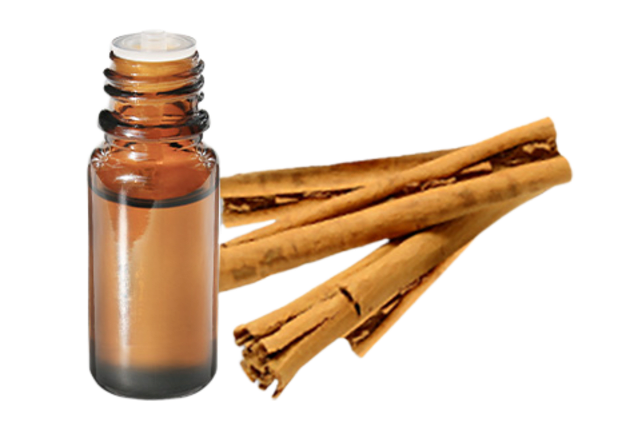
Essential oil of Sri Lankan cinnamon bark

Known for its purifying qualities, the very powerful essential oil of Cinnamon Bark is traditionally recommended to combat verrucas. Refreshing and stimulating, with a fine, warm, sweet scent, Cinnamon Bark essential oil can also be used to create perfumes.

How to use

  • Skin application and massage

    Skin application and massage

    Possible but not recommended

  • Cosmetic active ingredient

    Cosmetic active ingredient

  • Aromatherapy bath

    Aromatherapy bath

  • Diffusion

    Diffusion

    Possible but not recommended

  • Food grade

    Food grade

    Suitable

Features

Properties and uses

Precautions

Find out more

Features

Production process

Complete steam distillation

Part of the plant used

Bark

Botanical name

Cinnamomum zeylanicum

Warning

The properties, information and methods of use below are quotes from reference books or websites on aromatherapy, hydrolatherapy and phytotherapy. This general information is provided for informative purposes only and in no way constitutes medical guidance. Under no circumstances can this information be used as a substitute for a medical diagnosis, consultation or follow-up, nor can it incur our liability. We recommend that you consult the guide to essential oils before using them, so that you are aware of any precautions that need to be taken. If in doubt, consult a doctor before using essential oils.

Properties and uses

Ceylon Cinnamon Bark essential oil is traditionally used for: Intestinal worms

Health

Wellness

Fragrance

Kitchen

Find out more

A broad-spectrumanti-infective, Ceylon cinnamon bark essential oil isone of the essentials in any aromatherapy kit, especially when travelling to combat turista. It is one of the major essential oils for cleansing the digestive and intestinal tracts, and is traditionally recommended in cases of infectious diarrhoea and gastro-enteritis, as well as for combating urinary tract infections and getting rid of warts.

Properties

Ceylon cinnamon bark essential oil is recognised for its health properties:

  • Powerful broad-spectrumanti-infectives: antibacterial, antiviral, antifungal

    and anti-parasitic

  • Combats intestinal fermentation

  • Tonic, immune support

… but also

  • Uterine tonic, stimulating the onset of menstruation

  • Anticoagulant, Chinese cinnamon essential oil inhibits platelet aggregation (in-vitro study)

Uses

Cinnamon Bark essential oil is traditionally used in the following situations:

  • Gastrointestinal infections: diarrhoea, gastroenteritis, turista, parasitosis, etc.

  • Urinary tract and gynaecological infections: cystitis, urethritis, vaginitis

  • Oral and skin infections: mycoses, ringworm, scabies, etc.

  • Tropical fevers

  • Absent or inadequate menstruation

  • Warts

Synergies

  • General purifying action: Oregano, Clove and Savory essential oils.

  • Skin parasites: tea tree, Niaouli, Clove essential oils

  • Mite repellent: Cryptomeria, Laurier noble essential oils

  • Warts: Garlic, Savory essential oils

Precautions

  • Dermocaustic, do not apply undiluted to the skin. Use strongly diluted in your blends for cutaneous use. Use with caution on sensitive or allergic skin. Do not use on people allergic to cinnamon.

  • Do not use during pregnancy or while breastfeeding, or on children.

  • Internal use limited to short treatments in limited doses. Do not use for prolonged periods without medical advice.

  • Atmospheric diffusion of cinnamon essential oil alone is not recommended as it contains a high concentration of cinnamaldehyde and may cause irritation of the respiratory tract. For diffusion, we recommend using a maximum of 5-10%, blended with milder essential oils (Orange, Lemon, grapefruit, etc.).

  • Not recommended for people taking anticoagulant medication or with coagulation disorders.

  • Keep out of reach of children.

  • Certain natural compounds contained in this essential oil may present a risk of allergy for certain sensitive individuals when the essential oil is incorporated into a cosmetic composition (in accordance with the 7th Amendment to the European Cosmetics Directive (2003/15/EC)): cinnamaldehyde, linalool, eugenol, benzyl benzoate, limonene, cinnamyl alcohol (E).

  • As a general rule, always test-apply your preparation in the crease of the elbow at least 48 hours before use.

Find out more

Cinnamon has been exported from the Orient for 4,000 years. Renowned for its fortifying and purifying properties, its presence is mentioned in traditional Chinese pharmacopoeia written 2,700 years ago. Cinnamon is also found in the Bible as part of the "sacred balm" . Since then, it has been a 'must have' and, according to the Taoists, is the key to immortality. Its many anti-infectious properties (bacteria, viruses, parasites, fungi) make this essential oil an indispensable part of any traveller's first-aid kit.

Equivalents

Essential Oils

1 ml = approximately 35 drops (with our Aroma-Zone dropper caps)

Carrier oils

1 pump (Aroma-Zone aluminium pump) = approx. 0.15 ml

Mass / Volume conversion (for a liquid)

Mass (g) = Density x Volume (ml) at 20°C

Further information

1 full teaspoon = between 3 and 4.5 ml

1 full tablespoon = between 7.5 and 10 ml


However, these spoon ratios depend on a number of factors (e.g. viscosity of the liquid, temperature, depth and size of the spoon, rheological behaviour of the liquid), and we strongly advise you to use precise measuring equipment, such as graduated test tubes, graduated pipettes, and precision scales.

Aromatherapy recipes from the bibliography

EO = Essential Oil VO = Carrier Oil or Macerated Oil

Cream of carrot soup with orange and cinnamon (N. Le Foll and B. Da Costa)

Kitchen

Serves 4

  • 500 g carrots

  • 2 yoghurts

  • salt and freshly ground pepper

  • 2 drops of sweet orange essential oil

  • 1 drop cinnamon essential oil

Preparation: Peel and chop the carrots and cook for 30 minutes in 75 cl of water.

Blend with the yoghurt and essential oils, season with salt and pepper.

Taste to check the seasoning, then add as much water as you like, depending on the desired consistency

Reheat over a low heat without cooking.

Spice syrup (A. Pataud)

Kitchen

Mix 1 drop of ginger essential oil (Zingiber officinalis), 1 drop of cinnamon bark essential oil (cinnamonum verum), 1 drop of cardamom essential oil (elettaria cardamomum) and 20 cl of sugar syrup To prepare the sugar syrup:

  • 7 cl water

  • 140 g caster sugar

Boil the water and sugar until the sugar has completely melted (about 5 minutes). Leave to cool.

Add the essential oils to the syrup, mixing well.

This syrup will delicately flavour your punches or other cocktails.

Citrus gingerbread (A. Pataud)

Kitchen

Serves 8 - Preparation: 20 minutes - Cooking time: 50 minutes.

  • 300 g of acacia honey

  • 250 g of wholemeal flour

  • 50 g of almond powder

  • 100 ml lotion

  • 1 egg

  • 20 g of butter for the tin

  • 1 sachet of baking powder

  • 1 drop of ginger (Zingiber officinalis) essential oil

  • 1 drop of Cinnamon bark (Cinnamomum zeylanicum) essential oil

  • 1 drop of Clove (Syzygium aromaticum) essential oil

  • 1 drop of Anise (Pimpinella anisum) essential oil

  • 1 drop of Lemon (Citrus limomum) essential oil

  • 2 drops of Sweet Orange (Citrus sinensis) essential oil

  • 1 drop of grapefruit (Citrus paradisi) essential oil

Directions: Preheat the oven to 170 °C (gas mark 5–6). Gently heat the lotion and acacia honey, then remove from the heat as soon as it comes to a boil. Mix the flour and baking powder in a bowl. Then add the almond powder. Mix well and make a well. Gradually pour in the lotion and acacia honey mixed with the essential oils, stirring constantly with a spoon. Finish by adding the egg. Grease the tin, pour in the batter and bake for around 50 minutes.

Spicy fresh fruit salad (A. Pataud)

Kitchen

Serves 4 - Preparation time: 25 minutes - Cooking time: 15 minutes - Steeping time: 2 hours

  • 3 oranges

  • 2 pink grapefruits

  • 1 mango

  • 1 Victoria pineapple

  • 1 lemon

  • 1 lime

  • 1 papaya

  • 40 g caster sugar

  • 13 cl orange juice

  • 3 cl lemon juice

  • 1 tbsp acacia honey

  • 1 vanilla pod

  • 1 drop star anise essential oil

  • 1 drop of nutmeg essential oil

  • 1 drop cinnamon bark essential oil

  • (you can also replace the spice essential oils with citrus essential oils)

Procedure: Peel the oranges, grapefruits and lemons. Cut into quarters. Peel the mango and papaya, and peel the pineapple. Cut into strips. Place the orange juice, caster sugar, split vanilla pod, orange juice and lemon juice in a saucepan. Bring to the boil. Remove from the heat and leave to infuse for two hours. Strain. Add the essential oils mixed with a tablespoon of acacia honey, stirring well. Mix the juice with the fruit.

Lobster with cinnamon and fruit compote with Litsea Cubeba (A. Pataud)

Kitchen

Use: Serves 4 - Preparation time: 15 minutes - Cooking time: 15 minutes

  • 4 lobster halves

  • 2 tablespoons olive oil

  • 3 mangoes

  • 1 golden apple

  • 1 dl amber rum

  • 1 drop of cinnamon bark essential oil

  • 2 drops of Litsea cubeba essential oil

  • 1 drop of Lemon essential oil

  • Sesame seeds

  • Acacia honey

Instructions: Pre-cook the lobsters in boiling water for 3 minutes. Peel and chop the apple and mangoes. Cover and cook over a low heat with 2 tablespoons of olive oil until puréed. Add the Litsea cubeba essential oil mixed with 1 tbsp acacia honey and stir well. Barbecue the lobsters over red-hot coals for 2 minutes on each side, starting with the shell side. Remove the lobster from the heat and flambé with the rum. Mix the remaining olive oil with the cinnamon bark essential oil. Place the shell side down on the grill for 1 minute and spread the flavoured olive oil over the lobster. Serve with the compote and a green salad.

Cinnamon Rum (A. Erligmann)

Kitchen

For 1 litre of drink

  • 1 litre 40° white rum

  • 3 tablespoons (50 ml) brown cane syrup

  • 5 drops cinnamon essential oil

Directions: First prepare the rum and cane syrup in a carafe. Measure out the essential oil in a tablespoon before adding it to the sweet rum. Mix well. Leave to macerate for at least 15 days. Serve chilled.

Bibliography

1

'Huiles essentielles - 2000 ans de découvertes aromathérapeutiques pour une médecine d'avenir' by Dominique Baudoux

2

'The Practice Of Aromatherapy' by Dr Jean Valnet Éditions Maloine

3

'L'Aromathérapie exactement' by P. Franchomme and Dr D. Pénoël

4

'La Bible de l'aromathérapie' by Nerys Purchon

5

'ABC des huiles essentielles' by Dr Telphon

6

"Aromatherapy" by Nelly Grosjean

7

'Les huiles essentielles pour votre santé' by G. Roulier

8

'Les cahiers pratiques de l'aromathérapie française - Pédiatrie' by Dominique Baudoux - Editions Amyris

9

Aroma-News newsletters from the NARD association

10

'Aromatherapy: Healing with Essential Oils' by Dominique Baudoux - Editions Amyris

11

DE BILLERBECK V.-G. Essential oils and antibiotic-resistant bacteria Phytotherapy. 2007, 5(5), 249-253

12

Pawar VC, Thaker VS. In vitro efficacy of 75 essential oils against Aspergillus niger. Mycoses. 2006, 49(4), 316-23.

13

Jingqun Huang, Siwang Wang, Xiaoxing Luo, Yanhua Xie, and Xinyou Shi Cinnamaldehyde reduction of platelet aggregation and thrombosis in rodents Thrombosis Research, 2007, 119(3), 337-342CHAO

14

Louis Kuoping ; HUA Kuo-Feng ; HSU Hsien-Yeh ; CHENG Sen-Sung ; LIN I-Fan ; CHEN Chia-Jung ; CHEN Shui-Tein ; CHANG Shang-Tzen Cinnamaldehyde inhibits pro-inflammatory cytokines secretion from monocytes/macrophages through suppression of intracellular signaling Food and chemical toxicology, 2008, 46(1), 220-231

15

'Saveurs et bien-être - la cuisine aux huiles essentielles' by Nathalie Le Foll and Beatriz Da Costa

16

"L'aromathérapie énergétique" by L. Bosson - Editions Amyris

17

'La cuisine aux huiles essentielles - Des recettes saines et créatives' by Aymeric Pataud

18

'Cuisiner avec les huiles essentielles et les eaux florales' by Emmanuel and Valérie Cupillard

19

"Les huiles essentielles culinaires" by Ariane Erligmann

20

"Les merveilles du bicarbonate de soude" by Lise Soto

21

22

23

24