
Guide to essential oils

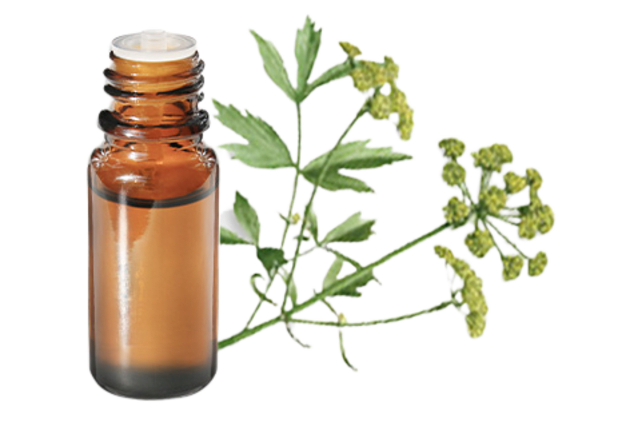
Essential oil of Celery

Celery essential oil is renowned for its stimulating qualities for the body. Known for its skin-lightening properties, Celery essential oil is used as a cosmetic active ingredient to clarify and even out the complexion.

How to use

  • Skin application and massage

    Skin application and massage

    Suitable

  • Cosmetic active ingredient

    Cosmetic active ingredient

    Suitable

  • Aromatherapy bath

    Aromatherapy bath

    Possible but not recommended

  • Diffusion

    Diffusion

    Possible but not recommended

  • Food grade

    Food grade

    Possible but not recommended

Features

Properties and uses

Precautions

Find out more

Features

Production process

Steam distillation

Part of the plant used

Seeds

Botanical name

Apium graveolens

Warning

The properties, information and methods of use below are quotes from reference books or websites on aromatherapy, hydrolatherapy and phytotherapy. This general information is provided for informative purposes only and in no way constitutes medical guidance. Under no circumstances can this information be used as a substitute for a medical diagnosis, consultation or follow-up, nor can it incur our liability. We recommend that you consult the guide to essential oils before using them, so that you are aware of any precautions that need to be taken. If in doubt, consult a doctor before using essential oils.

Properties and uses

Celery Essential Oil is traditionally used for: Brown spots, liver health and poor digestion

Health

Beauty

Wellness

Kitchen

Find out more, etc.

Properties

Celery essential oil is renowned for the following health benefits:

  • Digestive tonic, aperitif, helps eliminate gas.

  • Stimulates, drains and helps decongest the liver and kidneys.

  • Sedative, soothing

  • Venous decongestant

Uses

It is traditionally used to improve the following conditions:

  • Food and drug poisoning

  • Cystitis, gout, kidney detoxification

  • Minor liver failure, liver congestion, flatulence, bad breath

  • Varicose veins, haemorrhoids

In practice

Liver and kidney health: Mix with your oil preparation. Massage or rub your mixture into the abdomen and lower back.

Light legs: Mix into your oil blend. Apply your mixture locally, massaging lightly into the area concerned.

Precautions

  • Not to be used by children under 6 or during the first 3 months of pregnancy.

  • Risk of photosensitisation: avoid exposure to sunlight or UV rays for at least 8 hours after application.

  • Keep out of reach of children.

  • Avoid contact with eyes.

  • Certain natural compounds contained in this essential oil may present a risk of allergy for certain sensitive individuals when the essential oil is incorporated into a cosmetic composition (in accordance with the 7th Amendment to the EU Cosmetics Directive (2003/15/EC)): limonene.

  • As a general rule, always carry out a test application of your mixture, in the crease of the elbow, at least 48 hours before use.

Find out more

Originally from Europe, it first existed in its natural form, wild Ache, which grows in marshy or coastal areas from the north to the south of the continent. It is only in the last 500 years that it has been used in vegetables and in soups and other dishes.

Equivalents

Essential Oils

1 ml = approximately 35 drops (with our Aroma-Zone dropper caps)

Carrier oils

1 pump (Aroma-Zone aluminium pump) = approx. 0.15 ml

Mass / Volume conversion (for a liquid)

Mass (g) = Density x Volume (ml) at 20°C

Further information

1 full teaspoon = between 3 and 4.5 ml

1 full tablespoon = between 7.5 and 10 ml


However, these spoon ratios depend on a number of factors (e.g. viscosity of the liquid, temperature, depth and size of the spoon, rheological behaviour of the liquid), and we strongly advise you to use precise measuring equipment, such as graduated test tubes, graduated pipettes, and precision scales.

Aromatherapy recipes from the bibliography

EO = Essential Oil VO = Carrier Oil or Macerated Oil

Age spots or pigmentation marks (D. Baudoux)

Health & wellbeingSkin problems

  • 1 ml Ocimum basilicum var basilicum essential oil (Tropical Basil)

  • 2 ml Apium graveolens (Celery) essential oil

  • 1 ml Daucus carota (Carrot) essential oil

  • 20 ml Rosa rubiginosa (Rose hip) essential oil

  • 10 ml Oenothera biennis (Evening Primrose) oil

  • Simmondsia chinensis (Jojoba) oil: add up to 50 ml extra as required for product optimisation

Use: 1 topical application morning and evening Aroma-Zone note: Celery essential oil is photosensitising. Do not expose your skin to the sun after applying this mixture.

Pigmentation spots - Concealer lotion (C. Lacroix)

Health & wellbeingSkin problems

  • 5 ml Castor oil

  • 5 ml Argan oil

  • 35 ml Musk rose oil

  • 60 drops Carrot essential oil

  • 90 drops Celery essential oil

Method: Mix all the ingredients together

Use: Apply to spots 3 times a day, 5 days a week, with a break for 2 days. Repeat

Aroma-Zone Note: Celery essential oil is photosensitising. Stay out of the sun after applying this preparation.

Foie, détoxification hépatique (D. Baudoux)

Health & wellbeingDigestive problems

  • Daucus carota essential oil (carrot): 0.5 ml

  • Apium graveolens essential oil (Celery): 1 ml

  • Levisticum officinale essential oil (Lovage): 0.5 ml

  • Ledum groenlandicum (Bog Labrador Tea) essential oil: 0.5 ml

  • Mentha piperita essential oil (Peppermint): 2.5 ml

Use : 2 drops twice a day in a teaspoon of olive oil.

Angiomas (wine stains) (D. Baudoux)

Health & wellbeingSkin problems

  • Celery essential oil: 1 ml

  • Helichrysum italicum essential oil: 1 ml

  • Mastic tree essential oil: 1 ml

  • Virginian juniper essential oil: 1 ml

  • Mediterranean cypress essential oil: 1 ml

  • Rose hip oil: 2 ml

  • St John's wort carrier oil: add up to 3 ml extra as required for product optimisation

Use: 3 topical applications a day until marked improvement, in addition to a circulatory treatment Aroma-Zone note: Celery essential oil and St John's wort macerated oil carry a risk of photosensitivity. Do not expose yourself to the sun after applying this mixture.

Bibliography

1

"Huiles essentielles - 2000 ans de découvertes aromathérapeutiques pour une médecine d'avenir"

Dominique Baudoux

2

"Aromatherapy"

Dr Jean Valnet - Éditions Maloine

3

'L'aromathérapie exactement'

P. Franchomme and Dr D. Pénoël

4

'La bible de l'aromathérapie'

Nerys Purchon

5

'L'ABC des huiles essentielles'

Dr Telphon

6

'Aromatherapy'

Nelly Grosjean

7

'Les huiles essentielles pour votre santé'

G. Roulier

8

"Les cahiers pratiques de l'aromathérapie française - Pédiatrie"

Dominique Baudoux - Editions Amyris

9

Aroma-News newsletters from the NARD association

10

"L'aromathérapie - Se soigner par les huiles essentielles"

Dominique Baudoux - Editons Amyris

11

"Huiles essentielles chémotypées et leurs synergies"

Dr A. Zhiri and D. Baudoux - Editions Amyris