
Guide to essential oils

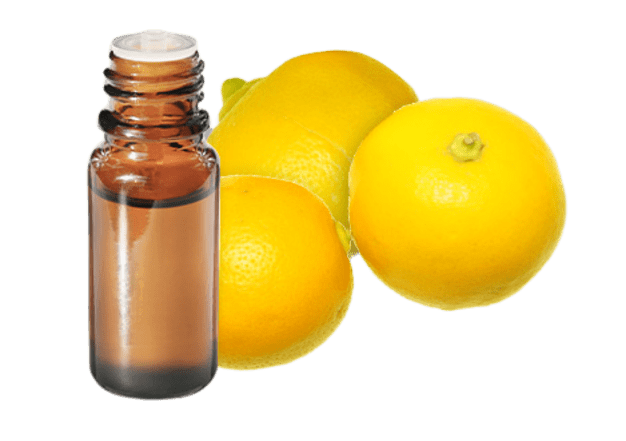
Essential oil of Bergamot

Calming, Bergamot essential oil soothes the mind with its delicate fragrance. Purifying, Bergamot essential oil is wonderful for diffusing. Bergamot essential oil purifies the air while bringing relaxation and a good mood.

How to use

  • Skin application and massage

    Skin application and massage

    Possible but not recommended

  • Cosmetic active ingredient

    Cosmetic active ingredient

    Appropriate

  • Aromatherapy bath

    Aromatherapy bath

    Appropriate

  • Diffusion

    Diffusion

    Suitable

  • Food grade

    Food grade

    Suitable

Features

Properties and uses

Precautions

Find out more

Features

Production process

Cold pressed

Part of the plant used

Zest

Botanical name

Citrus bergamia

Warning

The properties, information and methods of use below are quotes from reference books or websites on aromatherapy, hydrolatherapy and phytotherapy. This general information is provided for informative purposes only and in no way constitutes medical guidance. Under no circumstances can this information be used as a substitute for a medical diagnosis, consultation or follow-up, nor can it incur our liability. We recommend that you consult the guide to essential oils before using them, so that you are aware of any precautions that need to be taken. If in doubt, consult a doctor before using essential oils.

Properties and uses

Bergamot essential oil is traditionally used for : White spots, (nervous) depression, low mood, poor digestion, insomnia, stress

Health

Beauty

Wellness

Kitchen

Find out more, etc.

Properties

Bergamot essential oil is renowned for the following health benefits:

  • Purifying, antiseptic

  • Skin regenerating

  • Antispasmodic

  • Digestive, carminative, laxative

Uses

It is traditionally used to improve the following conditions:

  • Eczema, psoriasis

  • Vitiligo, skin depigmentation

  • Intestinal discomfort, constipation

  • Inappetence, poor digestion, colitis, dyspepsia (digestive problems)

In practice

Digestive comfort: Mix in your oil blend. Massage or rub your mixture into the abdomen.

Precautions

  • For external use only; no known internal use for this essential oil.

  • Not recommended for use during the first three months of pregnancy.

  • Not for prolonged or regular use without the advice of a qualified health practitioner.

  • Keep out of reach of children.

  • Avoid contact with eyes.

  • Certain natural compounds contained in this essential oil may present a risk of allergy for some sensitive individuals when the oil is incorporated into a cosmetic formulation (in accordance with the 7th Amendment to the European Cosmetics Directive (2003/15/EC)): citronnellol, geraniol, linalool, farnesol, citral (geranial and neral) and, to a lesser extent, eugenol, limonene.

  • As a general rule, always apply a patch test of your mixture to the crease of the elbow at least 48 hours before use.

  • Dangerous. Follow safety precautions.

  • Flammable liquid and vapours. May cause skin allergies. Causes skin irritation (risk associated with the product in its pure form). May be fatal if swallowed or if it enters the respiratory tract (if swallowed accidentally, do not induce vomiting). Very toxic to aquatic organisms, causing long-term harmful effects (in the event of mass spillage into a watercourse).

Find out more

Bergamot is the fruit of the bergamot tree, grown mainly in Calabria (Italy). According to Giorgio Gallesio, it is a cross between a bitter orange and a lime.

Some believe that the bergamot originated in the East and was introduced to Europe by the Crusaders, and that its name is a distortion of the Turkish word beg armudi , meaning " lord's pear ".

Others maintain that it was brought back from the Canary Islands by Christopher Columbus and that it takes its name from the town of Berga, north of Barcelona, where it was originally grown.

Equivalents

Essential Oils

1 ml = approximately 35 drops (with our Aroma-Zone dropper caps)

Carrier oils

1 pump (Aroma-Zone aluminium pump) = approx. 0.15 ml

Mass / Volume conversion (for a liquid)

Mass (g) = Density x Volume (ml) at 20°C

Further information

1 full teaspoon = between 3 and 4.5 ml

1 full tablespoon = between 7.5 and 10 ml


However, these spoon ratios depend on a number of factors (e.g. viscosity of the liquid, temperature, depth and size of the spoon, rheological behaviour of the liquid), and we strongly advise you to use precise measuring equipment, such as graduated test tubes, graduated pipettes, and precision scales.

Aromatherapy recipes from the bibliography

EO = Essential Oil VO = Carrier Oil or Macerated Oil

Whiting in banana papillote and exotic bergamot chutney (A. Pataud)

Kitchen

Serves 4 - Preparation: 30 minutes - Cooking: 45 minutes - Marinating: 1 night

  • 4 banana leaves (or alternatively sheets of brick pastry or aluminium foil)

  • 4 whiting fillets, 150 g each

  • 2 mangoes

  • 2 ripe bananas

  • 1 victoria pineapple

  • 1 large onion

  • 10 cl acacia honey

  • 1 papaya

  • 2 granny smith apples

  • 20 cl coconut lotion

  • 1 tsp curry powder

  • 2 cl cider vinegar

  • Fleur de sel and black pepper

  • 1 or 2 drops of Bergamot essential oil (to taste)

Procedure: Mix the coconut lotion with the curry. Place the whiting fillets in this marinade and leave to marinate overnight. Peel the bananas, mangoes, onion, pineapple and papaya. Dice the fruit and chop the onion. Heat the acacia honey in a saucepan. Add the chopped onion, diced pineapple, mango, banana and papaya. Simmer for 20 minutes over a medium heat. Deglaze with the cider vinegar. Add the peeled and cubed apples. Cook over a low heat for around 30 minutes. Add the essential oil and mix again. Season with salt and pepper. Set aside. Preheat the oven to 120°C (gas mark 4). Lightly drain the whiting fillets. Season with salt and pepper. Wrap each fillet in a banana leaf with a spoonful of fruit compote. Bake in the oven for around 10 minutes. Arrange the papillotes in the centre of the plate. Garnish with a few pieces of fruit and a sprinkling of chives.

Melon and mango tartar with bergamot and vanilla (A. Pataud)

Kitchen

Serves 4 - Preparation: 30 minutes - Cooking time: 10 minutes - Chilling time: 2 hours

  • 1 melon

  • 1 large mango

  • 1 pineapple

  • 1 lime juice

  • 25 cl sweet white wine

  • 100 g caster sugar

  • 1 vanilla pod

  • 1 or 2 drops of Bergamot essential oil (to taste)

Directions: Peel the melon and mango. Cut them into small cubes. Divide the cubes between ramekins. Sprinkle with lemon juice and refrigerate for 2 hours. Peel the pineapple and cut into thin slices. Bring the white wine, sugar and split vanilla pod to the boil. Reduce until the liquid becomes syrupy. Add the essential oil, stirring well. Leave to cool. Place a slice of pineapple in the centre of the plate. Unmould the tartar. Drizzle with the syrup. Garnish with a few flaked almonds.

Note: You can replace the melon with other seasonal fruit: pear, peach or nectarine.

Bergamot honey (E. and V. Cupillard)

Kitchen

Procedure: Pour 3 tablespoons of honey into a ramekin and add 2 drops of Bergamot essence. Mix vigorously, incorporating small air bubbles and kneading the honey to diffuse the Bergamot fragrance. When choosing your honey, look for a fluid consistency, a golden, transparent colour and a discreet taste. A light honey (such as acacia) is best suited to Bergamot.

Bibliography

1

'Huiles essentielles - 2000 ans de découvertes aromathérapeutiques pour une médecine d'avenir'

Dominique Baudoux

2

Aromatherapy

Dr Jean Valnet - Éditions Maloine

3

"L'Aromathérapie exactement"

P. Franchomme and Dr D. Pénoël

4

'La Bible de l'aromathérapie'

Nerys Purchon

5

"ABC des huiles essentielles"

Dr Telphon

6

Aromatherapy

Nelly Grosjean

7

'Les huiles essentielles pour votre santé'

G. Roulier

8

'Les cahiers pratiques de l'aromathérapie française - Pédiatrie'

Dominique Baudoux - Editions Amyris

9

Aroma-News newsletters

The NARD association

10

'Aromatherapy - Healing with essential oils'

Dominique Baudoux - Editions Amyris

11

www.ozmoz.fr

12

Natural cosmetics - Tips and delicious recipes to help you stay healthy every day

Tiphaine Chagnoux and Hélène Baron

13

'Aromatherapy - Healing with essential oils'

Dominique Baudoux - Editions Amyris

14

90 DIY organic beauty recipes

Sophie Macheteau and Vanina Guet

15

Les cahiers pratiques de l'aromathérapie française - Grossesse

Dominique Baudoux - Editions Amyris

16

L'aromathérapie énergétique; guérir avec l'âme des plantes

L. Bosson - Editions Amyris

17

'Aromatherapy body and soul'

André Bitsas

18

La cuisine aux huiles essentielles - Des recettes saines et créatives

Aymeric Pataud

19

Les huiles essentielles culinaires

Ariane Erligmann

20

Cuisiner avec les huiles essentielles et les eaux florales

Emmanuel and Valérie Cupillard

21

Huiles essentielles, huiles végétales, plantes aromatiques dans l’art de la cuisine

Jean-Philippe Ortega

22

Cooking with essential oils - treasures of flavour and vitality

Odile Davy and Martine Fayolle

23

How to maintain your home

Angela Martin

24

25

26

27

28