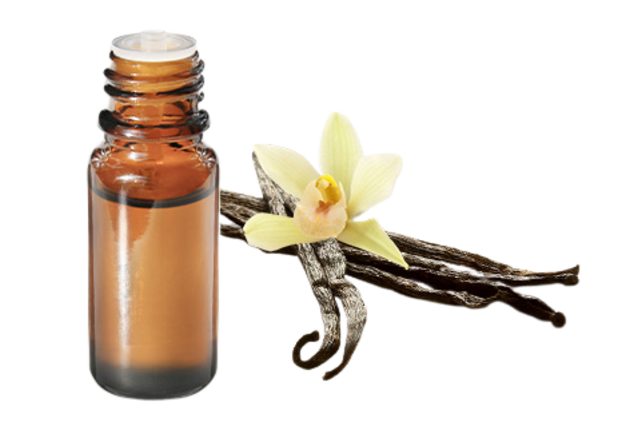
Vanilla is a vine from the Orchid family. Native to Mexico, it was used in South America, notably by the Aztecs and Mayans in cocoa-based drinks. It was the conquistador Hernán Cortès who brought vanilla to Europe, but for over two centuries all attempts to produce vanilla outside Mexico failed. This is because it is a species of bee (Melipona) specific to Mexico that carries out the fertilisation essential for the formation of the fruit. In the orchid flower, the male and female organs are separated by a watertight membrane, and it is only this bee that enables fertilisation to take place.
In 1841, on Reunion Island, the young slave Edmond Albius discovered how to fertilise the vanilla flower by hand, thus replacing the Melipona bee. This is how vanilla cultivation developed on Reunion Island, then on the neighbouring island of Madagascar, now the world's leading producer. Today, vanilla is still produced by hand-pollinating each flower one by one. This requires daily observation by the grower, as the vanilla only flowers on one day over a period of around 2 months.
The flower opens at sunrise and lives for only a few hours, so the work of the "marieuses" begins early in the morning and must be very quick and precise, as there are thousands of flowers to pollinate.
The green pods are harvested 8 months after fertilisation, but to develop its aroma the vanilla has to be treated: the green pods are first scalded, which stops the fruit ripening and triggers the reactions that will form the aromatic compounds. The vanilla is then "steamed" in sweat boxes, wrapped in jute cloths, so that it loses some of its water and encourages the enzymatic activity that develops the aromas. The pods are then dried in the sun in a controlled manner, for 1 to 2 hours a day, as they must not dry too quickly. After the pods have been sorted by size and moisture content, they are dried in the shade for 1 to 2 months, followed by a refining of the aromas, which can last up to 6 months, during which time the pods are stored in padded wooden crates and regularly checked. At the end of this process, the product is stable and has fully developed its intense, intoxicating aroma.