
Guide to essential oils

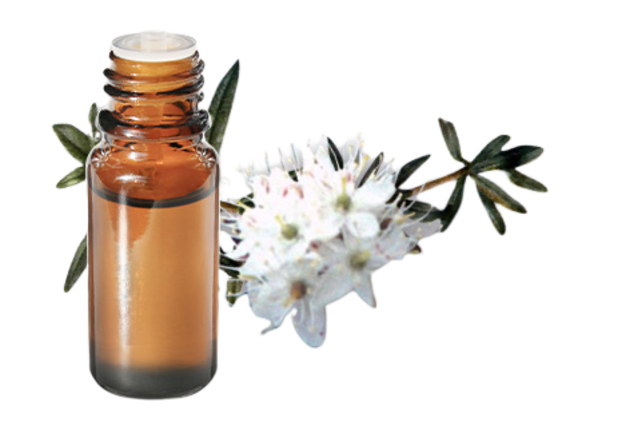
Essential oil of Bog Labrador tea

Bog Labrador Tea essential oil from Canada is reputed to stimulate and detoxify the body. Also known for its exceptional calming properties, Bog Labrador Tea essential oil is used in cases of stress and sleep disorders.

How to use

  • Skin application and massage

    Skin application and massage

    Appropriate

  • Diffusion

    Diffusion

    Appropriate

  • Aromatherapy bath

    Aromatherapy bath

  • Cosmetic active ingredient

    Cosmetic active ingredient

  • Food grade

    Food grade

    Appropriate

Features

Properties and uses

Precautions

Find out more

Features

Production process

Complete steam distillation

Part of the plant used

Leaves, twigs and branches

Botanical name

Ledum groenlandicum

Warning

The properties, information and methods of use below are quotes from reference books or websites on aromatherapy, hydrolatherapy and phytotherapy. This general information is provided for informative purposes only and in no way constitutes medical guidance. Under no circumstances can this information be used as a substitute for a medical diagnosis, consultation or follow-up, nor can it incur our liability. We recommend that you consult the guide to essential oils before using them, so that you are aware of any precautions that need to be taken. If in doubt, consult a doctor before using essential oils.

Properties and uses

Bog Labrador Tea essential oil is traditionally used for: Liver health and insomnia

Health

Wellness

Find out more, etc.

Properties

In the field of health, Bog Labrador Tea essential oil is recognised for its properties:

  • Helps to drain the liver and regenerate liver cells

  • Decongestant

  • Anti-allergic

  • Anti-inflammatory

  • Antispasmodic

  • Air antiseptic

Uses

It is traditionally used in the following situations:

  • Liver poisoning of circulatory origin, minor liver failure, after-effects of viral hepatitis, enteritis, flatulence, etc.

  • Toxemic nephritis, microbial nephritis, kidney stones, infectious prostatitis, prostatic congestion

  • Inflamed lymph nodes, infectious adenitis, toxic adenitis

  • Thyroid imbalance

  • Skin allergies and hypersensitivities

In practice

Soothing : blend into your oil blend. Apply your mixture locally by massaging or rubbing it into the areas of the body concerned (stomach, lower back, neck).

Precautions

  • Does not recommended for children under 6 years of age or for pregnant or breastfeeding women.

    Not recommended for people taking blood-thinning drugs or coumarins.

Not for prolonged use without the advice of an aromatherapist.

  • Keep out of reach of children.

  • Avoid contact with the eyes.

  • Certain natural compounds contained in this essential oil may present a risk of allergy for certain sensitive individuals when the essential oil is incorporated into a cosmetic composition (in accordance with the 7th Amendment to the European Directive on cosmetic products (2003/15/EC)): limonene and linalool.

  • As a general rule, always carry out a test application of your mixture, in the crease of the elbow, at least 48 hours before using it.

  • Dangerous. Observe safety precautions.

  • Flammable liquid and vapours. May cause skin allergy. Causes skin irritation (risk associated with the product in its pure form). May be fatal if swallowed or if it enters the respiratory tract (if accidentally swallowed, do not induce vomiting). Very toxic to aquatic organisms, causing long-term adverse effects (in the event of massive spillage of the product into a watercourse).

Find out more

Its names "Bog Labrador Tea" and "Greenland Ledon" come from the fact that it was first discovered in these regions. It has also been called "Eskimo tea" or "velvet tea". The leaf infusion has often been used as a tea by the inhabitants of Canada, Alaska and the United States.

Equivalents

Essential Oils

1 ml = approximately 35 drops (with our Aroma-Zone dropper caps)

Carrier oils

1 pump (Aroma-Zone aluminium pump) = approx. 0.15 ml

Mass / Volume conversion (for a liquid)

Mass (g) = Density x Volume (ml) at 20°C

Further information

1 full teaspoon = between 3 and 4.5 ml

1 full tablespoon = between 7.5 and 10 ml


However, these spoon ratios depend on a number of factors (e.g. viscosity of the liquid, temperature, depth and size of the spoon, rheological behaviour of the liquid), and we strongly advise you to use precise measuring equipment, such as graduated test tubes, graduated pipettes, and precision scales.

Aromatherapy recipes from the bibliography

EO = Essential Oil VO = Carrier Oil or Macerated Oil

Insomnia (D. Baudoux)

Health & wellbeingNerve pain and disorders

  • Ravintsara essential oil: 3 ml

  • True Lavender essential oil: 2 ml

  • Mandarin essential oil: 2 ml

  • Bog Labrador Tea essential oil: 1 ml

  • Kaffir Lime essential oil: 1 ml

Use: 3 drops of the mixture on the inside of the wrist and on the solar plexus 1/2 hour before bedtime.

Note from Aroma-Zone: Mandarin essential oil is photosensitising, so do not expose yourself to the sun after applying this preparation.

Insomnia in adults (D. Baudoux)

Health & wellbeingNerve pain and disorders

  • Citrus aurantium ssp aurantium (fe) (Petitgrain) essential oil: 2 ml

  • Ledum groenlandicum (Bog Labrador Tea) essential oil: 0.5 ml

  • Cinnamomum camphora cineole (Ravintsara) essential oil: 1.5 ml

  • Lippia citriodora (Sweet Verbena) essential oil: 0.5 ml

  • Rosa rubiginosa (Rosehip) carrier oil or transcutol: 5 ml

Use: 4 to 6 drops of the mixture applied to the solar plexus 1/2 hour before bedtime.

Aroma-Zone notes :

- Transcutol can be replaced by a dry carrier oil such as Hazelnut, Kukui, Macadamia or Jojoba.

- Lemon Verbena essential oil is photosensitising, so do not expose yourself to the sun after applying this preparation.

Liver fatigue (D. Festy)

Health & wellbeingDigestive problems

  • Rosemary Verbenone essential oil: 1 drop

  • Bog Labrador Tea essential oil: 1 drop

  • Tarragon essential oil: 1 drop

Use : Massage the liver area with this formula twice a day.

Foie, détoxification hépatique (D. Baudoux)

Health & wellbeingDigestive problems

  • Daucus carota essential oil (carrot): 0.5 ml

  • Apium graveolens essential oil (Celery): 1 ml

  • Levisticum officinale essential oil (Lovage): 0.5 ml

  • Ledum groenlandicum (Bog Labrador Tea) essential oil: 0.5 ml

  • Mentha piperita essential oil (Peppermint): 2.5 ml

Use : 2 drops twice a day in a teaspoon of olive oil.

Food poisoning (on medical advice) (Aroma News - NARD)

Health & wellbeingDigestive problems

  • Eugenia caryophyllus (Clove) essential oil: 2 ml

  • Cinnamomum verum (cinnamon bark) essential oil: 0.5 ml

  • Artemisia dracunculus (Tarragon) essential oil: 2 ml

  • Ledum groenlandicum (Bog Labrador Tea) essential oil: 0.5 ml

  • Melaleuca quinquenervia cineole (Niaouli) essential oil: 4 ml

  • Mentha piperita (Peppermint) essential oil: 1 ml

Use : Oral use: 3 drops on a neutral tablet or on charcoal 5 times a day.

Intoxication (on medical advice) (D. Baudoux)

Health & wellbeingDigestive problems

Oral use:

  • Levisticum officinale (Lovage) essential oil: 20 mg

  • Apium graveolens (Celery) essential oil: 20 mg

  • Ocimum basilicum ssp basilicum (Tropical basil) essential oil: 20 mg

  • Ledum groenlandicum (Bog Labrador Tea) essential oil: 20 mg

  • Thymus vulgaris CT thujanol EO (Thyme thujanol) essential oil: 20 mg

  • Excipient powder 300 mg to make a capsule n°0 dt 60

  • Have these capsules prepared by your pharmacist.

Use: 2 x 1 capsule a day after meals; repeat as necessary.

AND Cutaneous use:

  • Ledum groenlandicum (Bog Labrador Tea) essential oil: 3 ml

  • Rosmarinus officinalis CT verbenone (Rosemary verbenone) essential oil: 6 ml

  • Thymus vulgaris CT thujanol oil (Thyme thujanol) essential oil: 3 ml

  • Hazelnut oil or transcutol: add 30 ml

Use: 10 drops 3 times a day locally on the liver.

Aroma-Zone comment: Transcutol is a little-used pharmaceutical preparation which allows fats such as essential oils to penetrate the skin easily. It can easily be replaced by a dry carrier oil such as Hazelnut, Kukui or Macadamia oil.

Bibliography

1

'Huiles essentielles - 2000 ans de découvertes aromathérapeutiques pour une médecine d'avenir'

Dominique Baudoux

2

'The Practice Of Aromatherapy'

Dr Jean Valnet - Éditions Maloine

3

"L'Aromathérapie exactement"

P. Franchomme and Dr D. Pénoël

4

'La bible de l'aromathérapie'

Nerys Purchon

5

'L'ABC des huiles essentielles'

Dr Telphon

6

'Aromatherapy'

Nelly Grosjean

7

"Les huiles essentielles pour votre santé"

G. Roulier

8

"Les cahiers pratiques de l'aromathérapie française - Pédiatrie"

Dominique Baudoux" - Editions Amyris

9

Aroma-News newsletters from the NARD association

10

'Aromatherapy - Healing with essential oils'

Dominique Baudoux - Editions Amyris