
Guide to essential oils

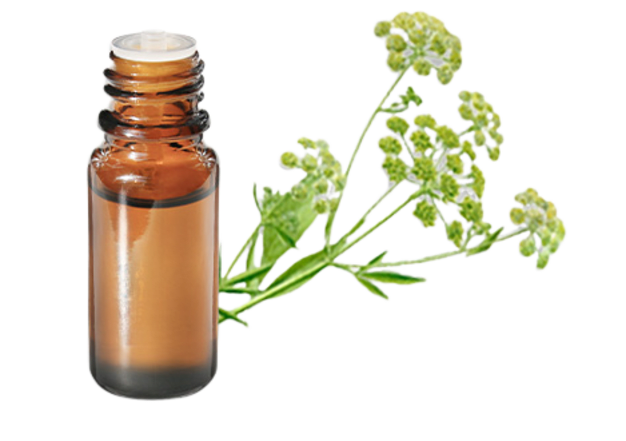
Essential oil of Lovage

Renowned for its remarkable detoxifying properties, Lovage essential oil is a powerful ally. Stimulating the body, this essential oil can be used to combat fatigue.

How to use

  • Skin application and massage

    Skin application and massage

    Possible but not recommended

  • Aromatherapy bath

    Aromatherapy bath

  • Diffusion

    Diffusion

  • Food grade

    Food grade

    Suitable

  • Cosmetic active ingredient

    Cosmetic active ingredient

Features

Properties and uses

Precautions

Find out more

Features

Production process

Complete steam distillation

Part of the plant used

Racine

Botanical name

Levisticum officinale

Warning

The properties, information and methods of use below are quotes from reference books or websites on aromatherapy, hydrolatherapy and phytotherapy. This general information is provided for informative purposes only and in no way constitutes medical guidance. Under no circumstances can this information be used as a substitute for a medical diagnosis, consultation or follow-up, nor can it incur our liability. We recommend that you consult the guide to essential oils before using them, so that you are aware of any precautions that need to be taken. If in doubt, consult a doctor before using essential oils.

Properties and uses

Lovage essential oil is traditionally used for: Psoriasis, liver health

Health

Find out more

Properties

Lovage essential oil is renowned for the following health benefits:

  • Purifying, detoxifying and antitoxic

  • Stimulating to liver and bile functions 

  • Supports muscle and nervous system health 

  • Antipsoriatic

  • Antibacterial, antiparasitic and antifungal 

  • Anti-infectious 

  • Anticatarrhal, mild expectorant 

  • Diuretic (improves kidney function) 

  • Positive effect 

  • Mild anticoagulant

Uses

It is traditionally used to improve the following conditions:

  • Following medical advice, the essential oil can be used for food poisoning (chemical or medicinal)

  • Mild liver insufficiency and congestion, after-effects of hepatitis, fermentative and parasitic enterocolitis.

  • Mild renal insufficiency

  • Psoriasis

  • Rheumatism, arthritis

  • Chronic catarrhal bronchitis

In practice

Soothing insect bites: Mix into your oil blend. Rub the blend into the affected area.

Liver health: Mix into your oil blend. Rub the blend into the upper abdomen.

Skin with atopic tendencies: Mix into your oil blend. Rub the blend into the affected area.

Precautions

  • Do not use on pregnant or breastfeeding women or on children.

  • Highly photosensitising: Avoid any exposure to the sun or UV rays for at least 10 hours after skin application.

  • Dermocaustic in its pure form, always use well diluted on the skin.

  • Do not use on the skin for prolonged periods. Use with caution on sensitive or allergic skin, as allergic reactions may occur.

  • Use internally with caution, in small doses and for a limited duration.

  • Keep out of reach of children.

  • Avoid contact with the eyes.

  • Some natural compounds in this essential oil may pose an allergy risk in sensitive individuals when the essential oil is incorporated into a cosmetic formulation (in accordance with the 7th Amendment of the European Cosmetics Directive (2003/15/EC)): limonene.

Find out more

Lovage is thought to have originated in Asia Minor. The Greeks and Romans chewed its fruit to aid digestion and used it in cooking, particularly in preparing sauces. This herb is the basis for maggikraut, a key ingredient in 'Maggi' broth.

Its essential oil is highly reputed for its antitoxic action and is therefore traditionally used, alongside treatments, to promote theelimination of waste and toxins or to aid digestion after a heavy meal.

Aromatherapy recipes from the bibliography

EO = Essential Oil VO = Carrier Oil or Macerated Oil

Liver, hepatic detoxification (D. Baudoux)

Health & wellbeingDigestive problems

  • 0.5 ml of Daucus carota (carrot) essential oil
  • 1 ml of Apium graveolens (Celery) essential oil
  • 0.5 ml of Levisticum officinale (Lovage) essential oil
  • 0.5 ml of Ledum groenlandicum (Labrador tea) essential oil
  • 2.5 ml of Mentha piperita (Peppermint) essential oil

Use: 2 drops twice a day in a teaspoon of olive oil.

Intoxication (on medical advice) (D. Baudoux)

Health & wellbeingDigestive problems

Oral use

  • 20 mg of Levisticum officinale (Lovage) essential oil
  • 20 mg of Apium graveolens (Celery) essential oil
  • 20 mg of Ocimum basilicum ssp basilicum (Tropical basil) essential oil
  • 20 mg of Ledum groenlandicum (Labrador tea) essential oil
  • 20 mg of Thymus vulgaris, thujanol chemotype (thujanol Thyme) essential oil
  • 300 mg of powder excipient to make a n°0 capsule, quantity 60
  • Have your pharmacist prepare these capsules.

Use: 2 x 1 capsule per day after meals; repeat as necessary.

And skin use:

  • 3 ml of Ledum groenlandicum (Labrador tea) essential oil
  • 6 ml of Rosmarinus officinalis, verbenone chemotype (Rosemary verbenone) essential oil
  • 3 ml of Thymus vulgaris, thujanol chemotype (thujanol Thyme) essential oil
  • Add 30 ml of hazelnut or transcutol carrier oil

Use: 10 drops 3 times a day, applied locally on the liver.

Aroma-Zone comment: Transcutol is a less common pharmaceutical preparation which facilitates the penetration of fats such as essential oils into the skin. It can easily be replaced with a dry carrier oil such as Hazelnut, Kukui or Macadamia oil.

Minor biliary insufficiencies (under medical advice) (D. Baudoux)

Health & wellbeing

  • 1 ml of Levisticum officinale (Lovage) essential oil
  • 3 ml Rosmarinus officinalis, verbenone chemotype (Rosemary verbenone) essential oil
  • 1 ml of Chamaemelum nobile (Roman chamomile) essential oil
  • 5 ml of Citrus aurantium ssp aurantium (Seville orange) essential oil
  • Add 15 ml of hazelnut or transcutol carrier oil

Use: 6 drops of the blend 3 times a day on the liver area or 4 drops sublingually 2 to 3 times a day.

Aroma-Zone comment: Transcutol is a less common pharmaceutical preparation which facilitates the penetration of fats such as essential oils into the skin. It can easily be replaced with a dry carrier oil such as Hazelnut, Kukui or Macadamia oil.

Equivalents

Essential Oils

1 ml = approximately 35 drops (with our Aroma-Zone dropper caps)

Carrier oils

1 pump (Aroma-Zone aluminium pump) = approx. 0.15 ml

Mass / Volume conversion (for a liquid)

Mass (g) = Density x Volume (ml) at 20°C

Further information

1 full teaspoon = between 3 and 4.5 ml

1 full tablespoon = between 7.5 and 10 ml


However, these spoon ratios depend on a number of factors (e.g. viscosity of the liquid, temperature, depth and size of the spoon, rheological behaviour of the liquid), and we strongly advise you to use precise measuring equipment, such as graduated test tubes, graduated pipettes, and precision scales.

Bibliography

1

'Huiles essentielles - 2000 ans de découvertes aromathérapeutiques pour une médecine d'avenir'

Dominique Baudoux

2

'The Practice Of Aromatherapy'

Dr Jean Valnet - Éditions Maloine

3

'L'Aromathérapie exactement'

P. Franchomme and Dr D. Pénoël

4

'La Bible de l'aromathérapie'

Nerys Purchon

5

'L'ABC des huiles essentielles'

Dr Telphon

6

'Aromatherapy'

Nelly Grosjean

7

'Les huiles essentielles pour votre santé'

G. Roulier

8

'Les cahiers pratiques de l'aromathérapie française - Pédiatrie'

Dominique Baudoux - Editions Amyris

9

Aroma-News newsletters

NARD Association

10

'Aromatherapy - Healing with essential oils'

Dominique Baudoux - Editions Amyris